In Japan, children will be trading piggy banks for stock portfolios as part of the government’s campaign to build a nation of future investors.
After a botched initial rollout, the government is relaunching a tax-free investment program for children, betting it can help families cope with the rising cost of raising kids while introducing a new generation to investing.
From January 2027, parents of children under 17 will be able to make relatively low monthly contributions, capped at 6 million yen overall (approx. $37,000), with the goal of accruing compound investment returns.
Japan is famous for its culture of cash savings. Households have traditionally kept their wealth in bank deposits rather than stocks, unlike the United States or Europe. They hold roughly 2,300 trillion yen (approx. $14.2 trillion USD) in financial assets, with approximately 49 percent held as cash and bank deposits.
Japanese lawmakers argue that this pattern limits long term wealth creation and reduces the flow of household savings into businesses, hence the launch of NISA for adults and the new NISA for kids.
Japan’s stock market is soaring
The preference for cash deposits dates back to the collapse of Japan’s asset bubble in the early 1990s. The economy took years to stabilize, which kept domestic and foreign investors at bay.
Historically, global investors saw the Japanese stock market as a ‘value trap’. It was a place where Japanese companies went to hoard cash and allow stock value to deteriorate. More than half of major Japanese companies listed on the Tokyo Stock Exchange traded below a price-to-book ratio (PBR) of 1.0.
This is typically viewed as ‘corporate failure’. It effectively means that investors believe a company’s net assets (minus liabilities) could be worth more than the company itself. It signals skepticism around existing management being able to use shareholder capital to create profit.
Hiromi Yamaji, CEO of the Japan Exchange Group, which operates the Tokyo Stock Exchange, said corporate governance reforms under the former Prime Minister Shinzo Abe’s administration in 2014 have dramatically improved corporate use of shareholder capital.
The Tokyo Stock Exchange’s ultimatum of corporate naming and shaming and threats of possible delisting helped Japanese CEOs initiate corporate share buy-backs and phase out cross-shareholding, among other things, which helped corporations meet the standards of global markets.
“Foreign investors are taking notice and returning to Japan,” said Yamaji at the Foreign Correspondents Club (FCCJ) on July 14.
In 2020, Warren Buffett’s multinational holding company, Berkshire Hathaway, placed a major bet on Japan’s five largest trading houses. By early 2026, the market value of its Japanese investments had climbed to a massive $35 billion, with Buffett’s endorsement serving as a vote of confidence in Japan’s capital markets.
Last year, net purchases by overseas investors reached 5.4 trillion yen in Japan – the highest level in a decade, said Yamaji.
The age of inflation
Since 2022, households in Japan have been struggling to keep up with the rising cost of food, energy and everyday items. Despite inflation being relatively low compared to the U.S. and Europe, it still comes as a shock to Japanese households who have only ever known decades of stable prices or deflation.
The return of inflation and low interest rates means that money sitting in the bank loses purchasing power over time.
NISA is one of Japan’s flagship financial policies. The program seeks to persuade Japanese households to turn cash savings into long term investment in stocks, ETFs, and mutual funds.
As of December 2025, there are almost 30 million NISA accounts, which represents 29 percent of the working population. Yamaji said the number reflects “Japanese society transitioning from deflationary thinking to inflationary growth-oriented mindset.”
Demographic spiraling
The economy relies on future customers. Japan’s current population of 122 million is set to fall below 100 million in 2056 and 87 million by 2070.
The new NISA for kids isn’t just about teaching children financial literacy. It’s an initiative that hopes to jumpstart a new generation that comes-of-age as consumers with money to spend.
Perhaps its most powerful lesson is that the greatest asset isn’t money, but time. NISA for children lets young people witness first hand the power of compounding over decades. In doing so, it also hopes to inoculate against the deeply rooted Japanese tendency to let cash sit in banks.
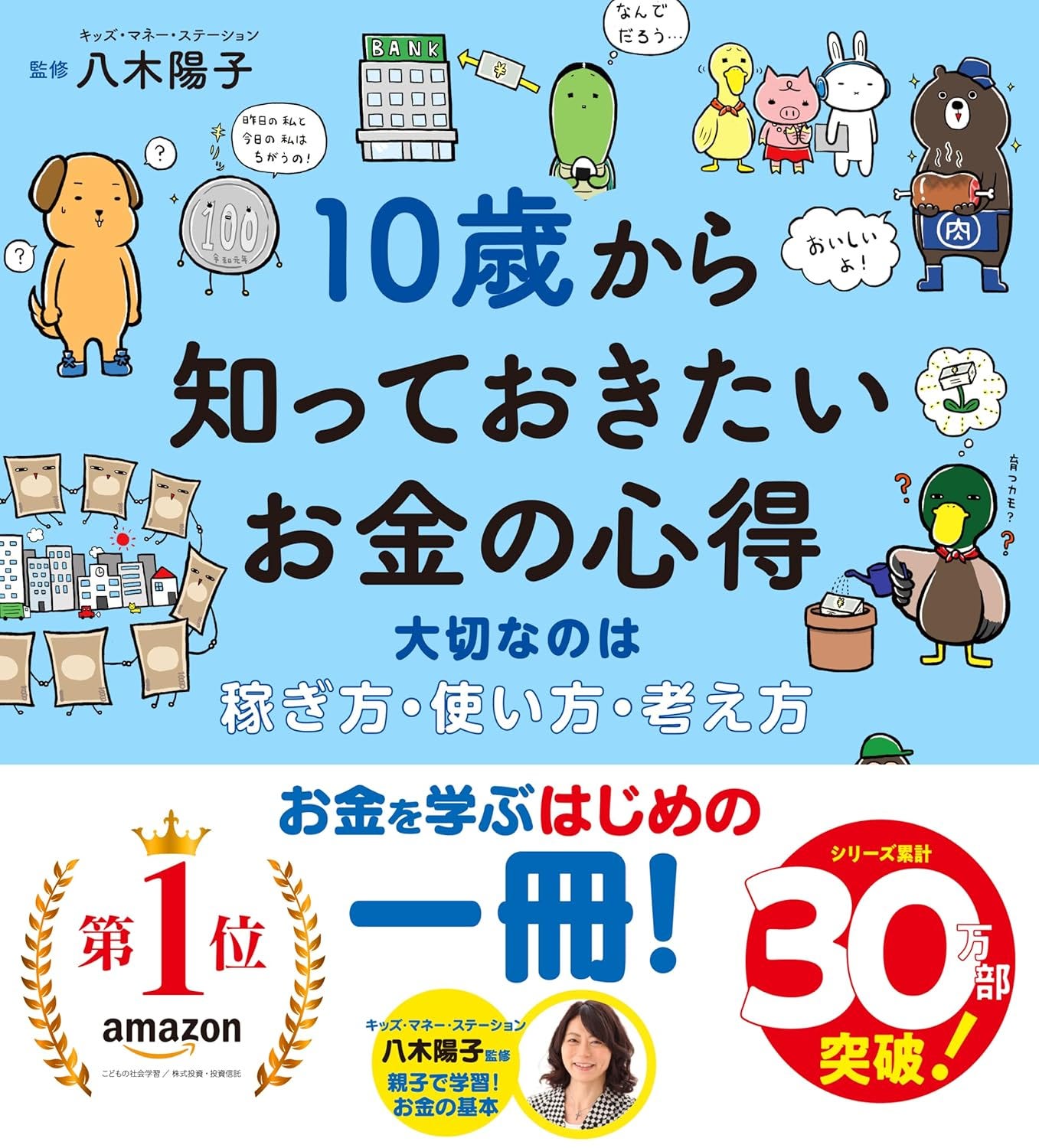
Editor’s Note: Japan actually has a number of books written for children encouraging them to invest like 10歳から知っておきたいお金の心得〜大切なのは、稼ぎ方・使い方・考え方 (”Money Wisdom You Should Know From Age 10 — What Matters Most: How to Earn It, How to Use It, How to Think About It). If you’re studying Japanese as a second language they usually have furigana (makes it easier to read the kanji)and are written to make complex matters easy to understand. If I had read books like this when I was ten, I would be retired by now. Maybe. 10歳から知っておきたいお金の心得〜大切なのは、稼ぎ方・使い方・考え方 (10 10歳から知っておきたいお金の心得〜大切なのは、稼ぎ方・使い方・考え方 (10
Here is one of my favorites: “パックンの森のお金塾: こども投資” (which I’d loosely translate as “Pakkun’s Forest Academy of Money: Kids Investing 101”).
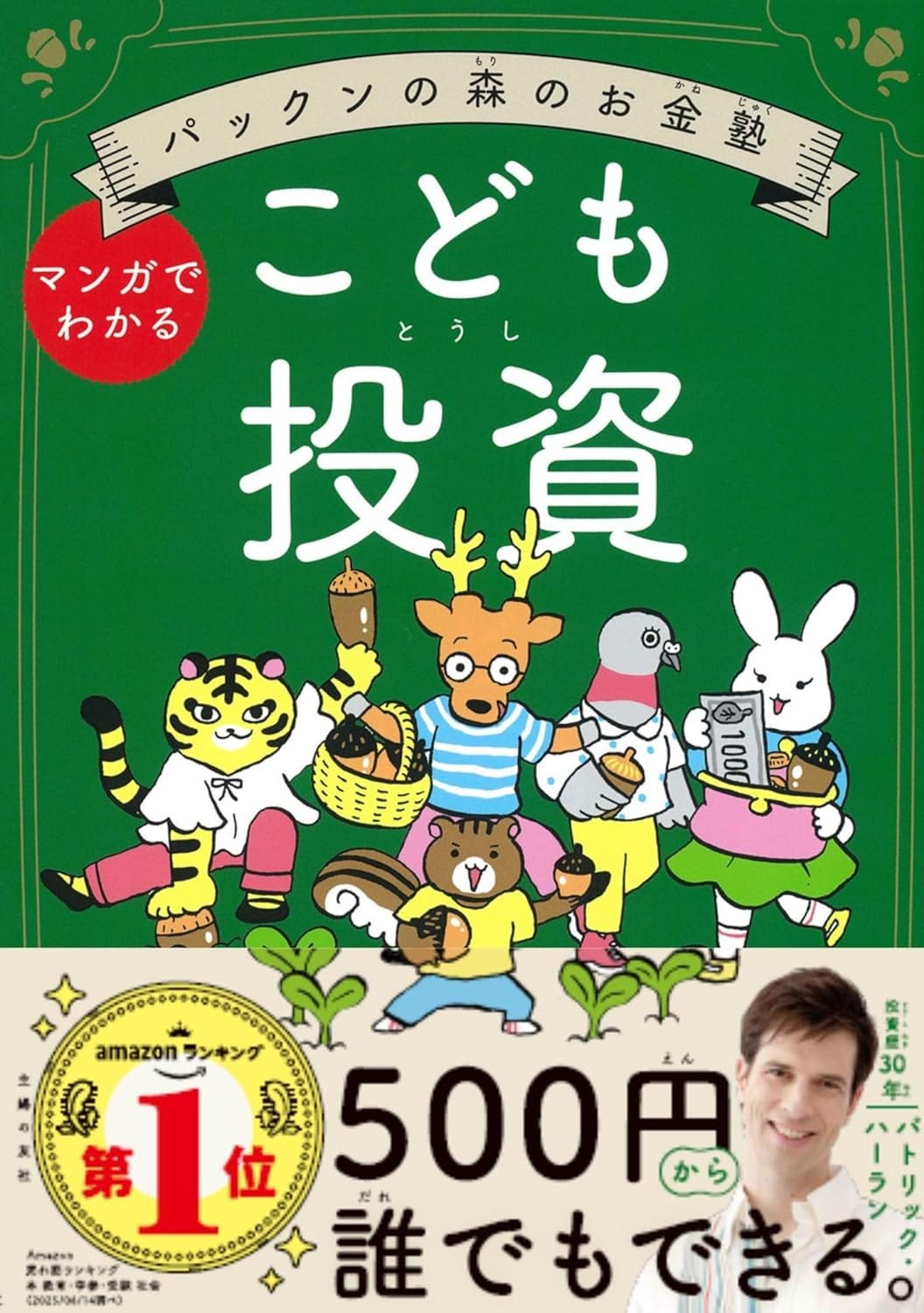
The premise is charming— Patrick Harlan, the Harvard-educated comedian who’s spent decades as half of the duo Pakkun Makkun and become Japan’s go-to explainer of all things American, walks kids through the basics of money via manga conversations. Those conversations are held with a tiger, a deer, a pigeon, a rabbit, and a squirrel, all done up in matching pastel outfits. Under a banner promising “Anyone can do it, starting from ¥500” and touting his three decades of investing experience, the book covers savings, the mechanics of compound interest, budgeting, and the actual nuts and bolts of opening a brokerage account and buying your first stock. It is pitched squarely at total beginners, or for a parent and child reading together.
Capitalism has never been cuter.
I like Pat. I occasionally used to appear on a TBS news show hosted by him to discuss current events. So it’s a nice surprise seeing him pop up here too, translating Wall Street into something a kid with an allowance, or a big fat お年玉/o-toshidama, can actually use.—Jake Adelstein