
Fidelity Investments Canada ULC Data Shows Advisors Questioning Record AI Spending
Beyond this immediate earnings season, financial advisors remain constructive on AI as a long-term investment theme.

TORONTO — According to new polling from Fidelity Investments Canada ULC (Fidelity) conducted during recent FidelityConnects webcasts, financial advisors reportedly believe the biggest questions facing the AI trade right now are:
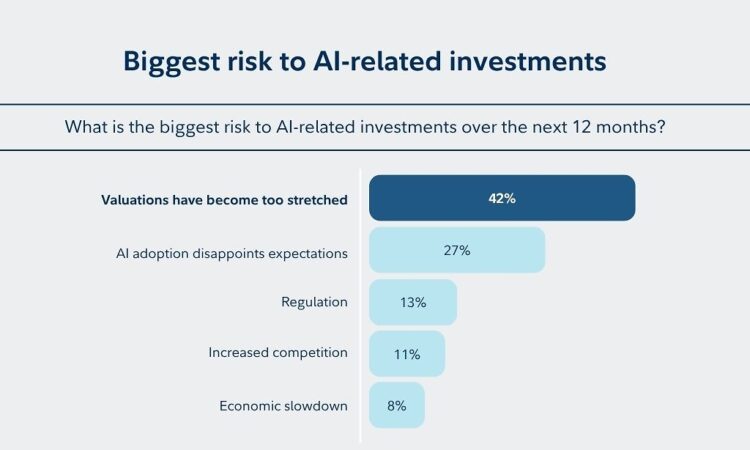
- Stretched valuations (42%) relative to expectations
- Slower adoption (27%) relative to expectations
Advisors are reportedly seeing stretched valuations (42%) and slower-than-expected AI adoption (27%) as the biggest risks to AI-related investments.
As advisors weigh the future of the AI trade, the metrics they’re watching most closely this earnings season, according to Fidelity Investments Canada data are:
- Revenue growth tied to AI products and services (42%)
- Corporate guidance (21%)
- Capital expenditure (18%)
- Profit margins (17%)
“To date, much of the excitement around AI has been driven by investment and expectations for what the technology could deliver,” said Chris Pepper, Vice President, Corporate Affairs, Fidelity.
“Now, advisors are increasingly focused on what companies are actually showing in their results. They’re looking for evidence that AI is driving growth, adoption and business outcomes as they guide clients through the next phase of the story.”
Beyond this immediate earnings season, financial advisors remain constructive on AI as a long-term investment theme. In fact, only a small number (8%) believe it is over hyped. A strong majority (84%) say AI remains attractive and is still in the early stages of its growth cycle.
Looking ahead, advisors reportedly see opportunities extending beyond AI infrastructure and semiconductors (34%). The largest share (43%) believes the biggest opportunity for clients lies in companies across all sectors using AI to improve productivity and drive growth.
“What we’re seeing through the research is that advisors remain optimistic about AI’s long-term potential for clients,” said Pepper.
“At the same time, they’re embracing the technology to improve their own businesses. They’re using AI to enhance their expertise, work more efficiently and spend more time on what matters most to clients.”
One advisor noted: “AI should enhance the advisor-client relationship, not replace it. The future belongs to advisors who use AI to become more efficient while delivering more human, strategic and trustworthy advice.”
Another advisor added: “AI can process information faster than humans, but it cannot replace trust, empathy and professional judgment. The greatest value advisors provide is helping clients make confident financial decisions by combining AI-powered insights with personalized advice that reflects their goals, risk tolerance and long-term priorities.”


