
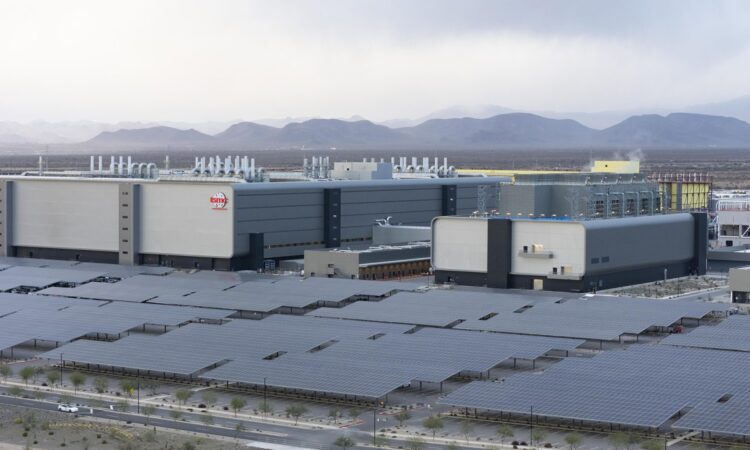
In July, I sat among roughly 100 people in a packed conference room in Taipei as a speaker highlighted the industrial parks and tax rates of an American city nearly 7,000 miles away.
“There are ribbon-cutting ceremonies almost every week. Everywhere you look, something is being built. This trend will continue for the next 20 to 30 years.”
Steve Hsu, head of the Arizona Commerce Authority’s Taiwan office, was pitching real estate opportunities in Phoenix — the desert city that is undergoing a huge economic transformation known as the “TSMC effect.”
Taiwan Semiconductor Manufacturing Company, the world’s leading chipmaker, had announced its plans to construct fabrication plants in Arizona in 2020. Today, the expanding TSMC project in the state represents the largest single foreign investment project in U.S. history.
As Arizona’s economic fortunes have become increasingly tied to TSMC and its chip supply chain, it’s been keen to diversify the roster of investors beyond tech companies.
At the event, Hsu urged Taiwanese property developers and family offices to invest in the support infrastructure — warehouses, logistics centers, hotels, commercial buildings, and science parks — needed for the growing network of suppliers following TSMC to the desert.
If only tech companies are building there while we ignore the appreciation in land values, we’ll be missing a once-in-a-lifetime opportunity.”Steve Hsu, head of the Arizona Commerce Authority’s Taiwan office
“The investment opportunity in Arizona is not just available for tech companies — it’s an opportunity for everyone, including investors in hospitality, family offices, and other industries,” Hsu told the room. “If only tech companies are building there while we ignore the appreciation in land values, we’ll be missing a once-in-a-lifetime opportunity.”
Driven by tariffs and U.S. efforts to reshore semiconductor manufacturing, TSMC has steadily expanded its Arizona plans. Earlier in July, the company announced an additional $100 billion investment, bringing its planned U.S. spending to $265 billion across 12 facilities. At least 25 Taiwanese suppliers have established operations in the U.S. as they follow their biggest customer overseas, according to Taiwanese newspaper Economic Daily News.
Arizona’s increasing focus on Taiwan comes as trade between the two jumped from $4.9 billion in 2024 to $21.2 billion in 2025. Last year, Taiwan bypassed Canada and China to become Arizona’s second-largest trading partner in terms of volume after Mexico, but top partner in terms of trading value.
Tapping into the U.S. market offers huge potential, but international investors still have to consider a tricky web of taxes, regulations, and red tape. During the coffee break at the conference, I wandered around the room to ask attendees if they were actually planning to invest.
Several venture capital and family office representatives seemed excited and told me they plan to join investment delegation trips to Arizona soon.
For some other attendees, the future of Arizona was much more personal. The chief financial officer of a Taiwanese real estate company told me her firm was probably too small to invest on that scale.
“But my son studies in Arizona now,” she said. “I want to understand what the future for a Taiwanese person might look like over there if he decides to stay.”


