
RBI Deputy Governor Shirish Chandra Murmu has revealed that there are around 176 billion banknotes in circulation. Meanwhile, the US has 56 billion dollar bills, and Europe has approximately 30 billion euro banknotes in circulation. The reason for this huge difference is the country’s preference for lower-value notes
The Indian rupee has beaten the US dollar and Euro… not in value, but in circulation. Speaking at the Global Cash Management 2026 conference organised by Bank Indonesia in Jakarta, Reserve Bank of India (RBI) Deputy Governor Shirish Chandra Murmu noted that the country currently has around 176 billion banknotes in circulation — much, much more than the US dollar and the euro.
Addressing the bankers of the world, he also pointed out India’s ‘cash paradox’ — currency in circulation continues to rise at double-digit rates even as cash’s share of individual transactions declines amid the rapid adoption of digital payments.
So, how much of India’s currency is in circulation? And how does it compare to the dollar and the Euro?
How many Indian rupee notes are in circulation?
>> According to RBI Deputy Governor Shirish Chandra Murmu, the Indian rupee far exceeds the US dollar and euro in circulation.
>> Speaking in Jakarta, he noted that India has a total of 176 billion banknotes in circulation in various denominations — starting as low as a Rs 2 note and going up as high as a Rs 2,000 note.
 More from Explainers
>> “Over the past few years, we have produced between 28 and 30 billion banknotes annually, across six denominations, and disposed of roughly 21 billion pieces a year,” said Murmu at the conference.
>> RBI data further reveals the breakdown of the 176 billion banknotes that are in circulation. According to the figures, the Rs 500 denomination has emerged as the dominant note in India’s currency stock. As of August 7, there were 7,25,755 Rs 500 notes in circulation, having a total value of Rs 36.29 lakh crore.
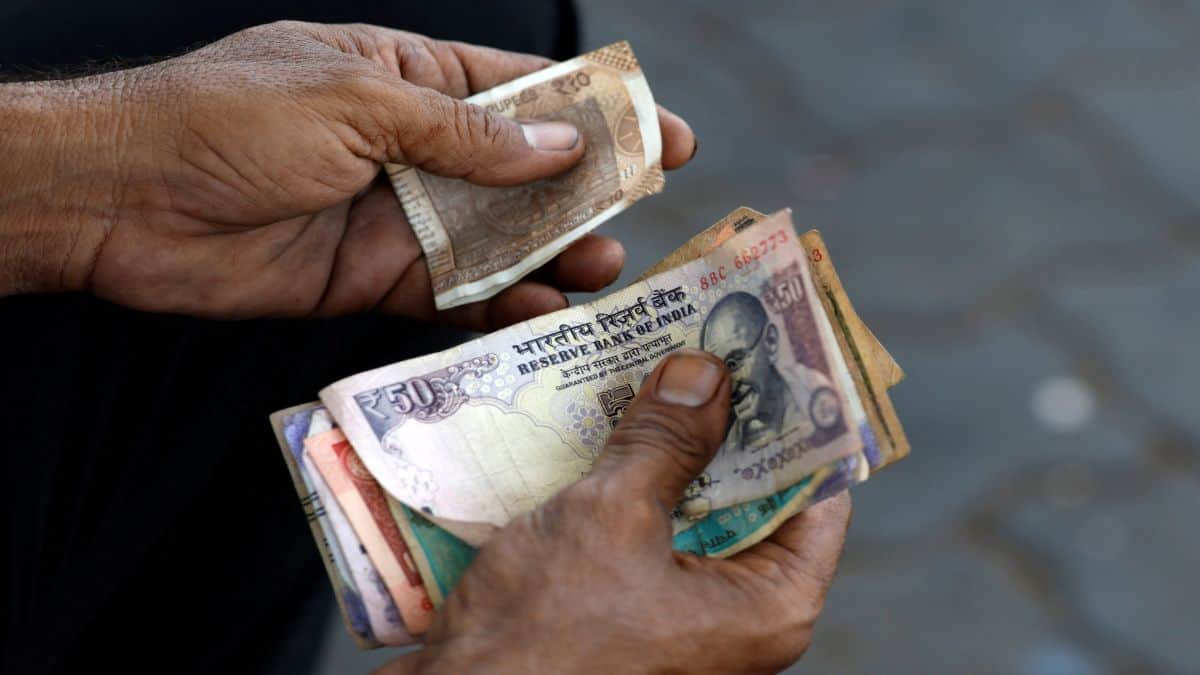
Each year, India prints between 28 and 30 billion banknotes, across six denominations. File image/Reuters
>> Following the Rs 500 was the Rs 100 note. There were a total of 2,80,206 notes of this denomination. Meanwhile, there were only 265 of Rs 2000 notes in circulation, as per RBI data.
>> Speaking on the same, Murmu noted, “The volume gives you a sense of the scale of the logistics we manage every day.”
>> Notably, India prints its currency at four printing presses across the country — one in Maharashtra, another in Madhya Pradesh, the third in Karnataka and the fourth in West Bengal.
How does India’s currency compare to the dollar and euro?
>> While India boasts of having 176 billion banknotes in circulation, there are roughly 56 billion US dollar bills, said Murmu. This means that India’s currency is three times that of the US dollar bills.
>> Meanwhile, there are approximately 30 billion euro banknotes in circulation, with the European Central Bank noting that there are two series of euro banknotes. The first series comprises seven different denominations: €5, €10, €20, €50, €100, €200 and €500. The second, also known as the Europa series, consists of six denominations, as the €500 banknotes were discontinued.

According to data, there are roughly 56 billion US dollar bills and 30 billion euro banknotes in circulation. File image/Reuters
Why is there such a huge difference though?
>> Murmu noted that India’s higher number is partly due to its denomination mix, which is weighted towards lower-value notes.
>> At the Jakarta conference, he added, “One caveat, in fairness to the comparison: our count is driven partly by a denomination mix weighted toward lower-value notes, which naturally means more pieces change hands for the same value of transactions.”
How does India decide its currency demand?
>> For RBI to print currency, it prepares a five-year forward projection of currency demand every year, based on transactional and replacement demand.
>> And as Murmu noted, “Transactional demand is estimated from expected changes in currency in circulation, driven by GDP growth, interest rates, food inflation, and the pace of digital payment adoption, etc. Replacement demand is different: it reflects the need to retire older notes and keep the notes in people’s hands fit for use.”
>> He further added that the RBI has observed a ‘cash paradox’ in the country; despite the declining share of cash in individual transactions, currency in circulation continues to grow at double-digit rates.
>> As per RBI data, currency in circulation has continued to rise despite the growing adoption of digital payments, increasing to Rs 42.76 trillion as of July 31, 2026, from Rs 41.66 trillion at the end of 2025-26 (FY26).
>> Madan Sabnavis, chief economist, Bank of Baroda, stated that this is because cash is still the preferred mode of payment when it comes to high-value transactions involving precious metals and real estate.
>> In a Business Standard report, he added, “Additionally, many senior citizens are increasingly opting for cash over digital payments amid rising instances of fraud. Add to this the increased demand for cash during elections every year, and the demand for physical currency remains high.”
>> As per Murmu, this is making future cash demand harder to predict and is complicating the RBI’s planning for cash production and distribution capacity.
With inputs from agencies