Six failed deals, 24 years and $19 million: Inside Portland’s Centennial Mills saga
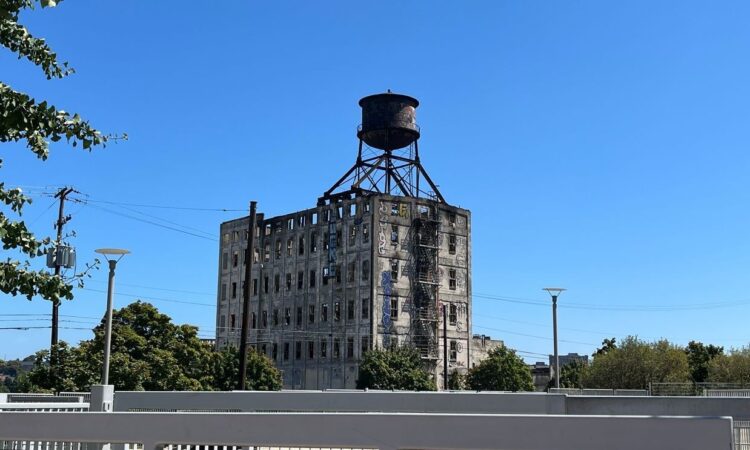
PORTLAND, Ore. (KATU) — For 24 years, Portland taxpayers owned Centennial Mills while city officials repeatedly tried — and failed — to find a path forward for the historic waterfront property.
Prosper Portland says the city spent approximately $19 million on Centennial Mills during the 24 years it owned the property. According to the agency, that figure includes the cost of purchasing the property, demolition work and maintenance.
KATU News filed a public records request seeking a detailed accounting of that spending to independently verify how those taxpayer dollars were used.
The site went through changing visions, unsuccessful redevelopment efforts and years of public expense before Prosper Portland ultimately sold it in 2024.
The story begins in the 1990s, when the plan was to turn Centennial Mills into public space. Prosper Portland, then known as the Portland Development Commission, purchased the property in 2000.
Within a few years, however, that vision changed.
From 2006 to 2016, the focus shifted toward redevelopment. Prosper Portland worked with private developers, but those efforts did not result in a successful redevelopment. As the aging property deteriorated, the agency eventually demolished portions of the site.
From 2017 through 2021, Prosper Portland continued searching for a developer. More private parties expressed interest, but proposed deals repeatedly failed to make it across the finish line.
READ MORE | Portland spent more than $12 million on Centennial Mills in six years as plans halted
By 2021, the agency changed its approach again, loosening some of the requirements surrounding the property as it moved toward a sale.
Prosper Portland ultimately sold the property in 2024, ending roughly 24 years of public ownership.
Our central question to Prosper Portland was simple: Why did taxpayers have to own the property for 24 years at significant expense rather than selling it sooner?
KATU News requested an on-camera interview with Prosper Portland three times over three days.
After communicating with an agency spokesperson by email, we went to Prosper Portland’s offices Thursday and asked to speak on camera with the agency’s executive director. Prosper Portland staff told us interview requests needed to go through the communications representative we had already contacted.
We later connected with that spokesperson by phone and asked why the property hadn’t been sold earlier and why private developers hadn’t been given more opportunities to revive the site. He issued the following statement:
“The answer is that Prosper Portland engaged in serious conversations to sell the property to private developers on at least six separate occasions. In each instance a combination of the existing conditions including site contamination and physical limitations, shifting leadership priorities, federal/state/utility/local site obligations, and requests for significant additional public investments led to the decision by the developer to not purchase the property or for the agency to decline to move forward with the proposal.”
Still seeking an on-camera response, KATU News attended an unrelated Prosper Portland news conference on Thursday, Aug. 20, and put the question directly to Sarah Harpole, the agency’s interim grants manager.
“Why spend millions of dollars on maintenance as opposed to just selling it off or giving developers a fair shot to spruce it up?” KATU asked.
“We have spent decades trying to sell that property,” Harpole responded.
Harpole said Centennial Mills presented unusual challenges that made redevelopment difficult and expensive.
“It comes with a lot of very unique challenges and site conditions,” Harpole said.
She said the agency originally acquired Centennial Mills with a different vision for the property, but later changed course in response to community preferences.
“It was supposed to be a public realm opportunity,” Harpole said. “But in response to community interest to pivot to development, we worked very earnestly … a very long period of time to put it in the hands of the private sector for development.”
According to Harpole, the site’s conditions continued to make redevelopment cost-prohibitive despite those efforts.
The answer helps explain why Centennial Mills remained in public hands for so long: Prosper Portland says it was trying to move the property into private development, but the challenges associated with the site repeatedly stood in the way.
The result was a process that stretched across more than two decades — from a vision for public space to redevelopment, repeated attempts to attract private investment and, finally, a sale in 2024.