
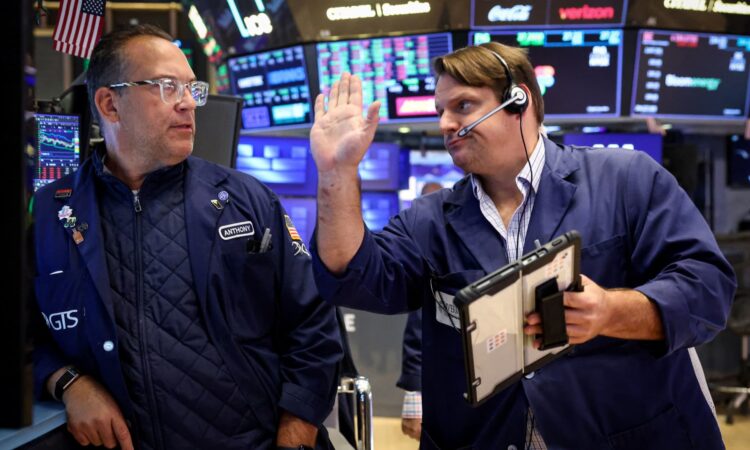
Traders work on the floor at the New York Stock Exchange (NYSE) in New York City, U.S., Aug. 24, 2026.
Brendan McDermid | Reuters
The S&P 500 rose slightly Tuesday, as Treasury yields fell for a second day. A rally in semiconductor stocks lifted the Nasdaq Composite.
The broader index gained 0.32% to close at 7,677.28, while the Nasdaq Composite advanced 0.66% to 26,151.30. The Dow Jones Industrial Average was up 160.24 points, or 0.3%, to close at 53,577.40 and notch its third straight winning session.
Bond yields slid, with the benchmark 10-year Treasury note yield falling more than 7 basis points to 4.625%. Yields also retreated Monday after CNBC reported that the Treasury Department could use its $1 trillion General Account to fund bond repurchases. On Tuesday, West Texas Intermediate crude futures dropped more than 3%.
Chip stocks rallied ahead of Nvidia‘s results due out after the close on Wednesday. Shares of the Jensen Huang-helmed company were up 2%, snapping a seven-day decline. Advanced Micro Devices and Micron Technology added 4.9% and 2.5%, respectively.
Consumer names were a notable laggard, with shares of Dick’s Sporting Goods plunging 30% following disappointing results. The sports equipment retailer posted its worst day on record. Other retailers such as Walmart and Target were also under pressure, falling 1% and nearly 4%, respectively.
Sentiment was hurt by a worse-than-expected consumer confidence reading and a worsening trade conflict between the U.S. and Canada. Consumer confidence edged lower in August and grew particularly downbeat about the look further down the road. The Conference Board’s Consumer Confidence Index moved to 89.4, down 0.8 points and below the Dow Jones consensus for 90.2.
Canada on Tuesday announced retaliatory tariffs against the United States, with the government saying it will match the 50% levies that President Donald Trump imposed over the weekend “dollar for dollar.”
“So far, corporate conference calls have talked about a resilient consumer, so while the vibes may be sour, the spending has held up — and spending, not sentiment, is what shows up in corporate earnings. Markets can look past a bad mood. They can’t look past a consumer who actually stops spending,” said Bret Kenwell, eToro US investment analyst. “Investors won’t have to wait long for the next update, with tomorrow’s GDP and PCE inflation reports shedding further light on the economy.”
Investors are now awaiting the personal consumption expenditure price index reading for July out on Wednesday.
Federal Reserve Chairman Kevin Warsh ends the week Friday with a speech at the Fed’s annual symposium in Jackson Hole, Wyoming, a potentially market moving catalyst. His address comes the week after a Treasury Department plan to double the size of planned bond repurchases, part of an effort to tame long-dated Treasury yields.


