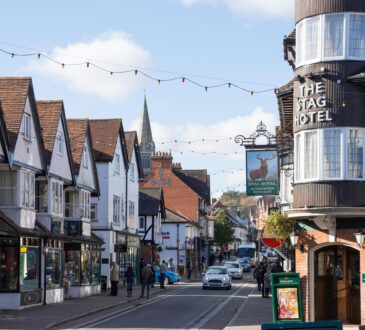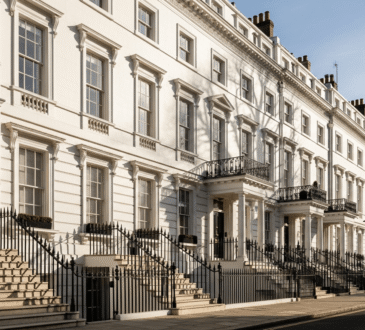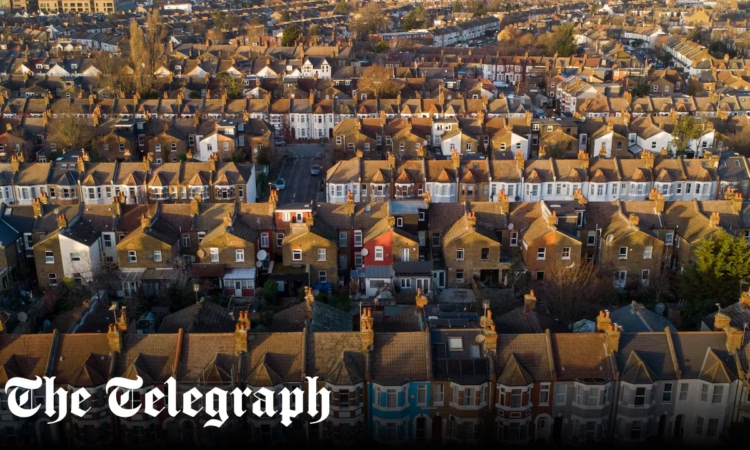
As a result, England has effectively failed to record any real house price growth in more than two decades.
David Fell, a senior analyst at Hamptons, said: “While most homeowners haven’t seen the value of their property fall in cash terms, inflation has eroded previous gains, leaving house prices across much of southern England below their inflation-adjusted peak.”
Paul Cheshire, an emeritus professor at the London School of Economics and a former government adviser, said: “Houses are not in any decent sense assets. They are certainly not investment assets. [That idea] is a bit of a self-deception.”
It signals a significant shift in the property market, which for years was seen as a way to build wealth.
‘Real incomes haven’t risen’
Since 1982, data from the Organisation for Economic Cooperation and Development show that UK house prices have risen by 300pc above inflation, by far the highest pace of growth across the G7. In Italy, by contrast, the increase was just 11pc in the same period.
This rapid growth has now stopped. Official figures showed house prices climbed by 2pc in June, below the current 2.9pc level of inflation.
Mr Cheshire said a collapse in real income growth since the global financial crisis was a key factor constraining buyer demand.
He said: “What changed was the bloody UK economy. We had the crash in 2008 and the main thing is that real incomes haven’t risen.”
Analysts warned that falling real house prices could threaten economic growth through a so-called reverse wealth effect.
When house prices rise relative to what mortgage borrowers paid for them, homeowners become more confident to spend and can also increase the size of their home loans. When house prices fall, the opposite happens.
Mr Schmidt said: “If an asset is not growing as much as it did in the past, for the people who own those assets, it will affect their spending behaviours and make them less willing to spend. If your wealth is not growing as fast as before, you will eventually also consume less.”
House prices have slumped in real terms across all regions of the UK, but the most stark falls are concentrated in the South of England.