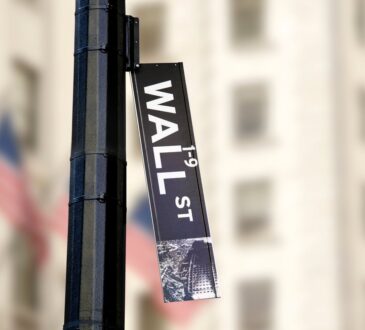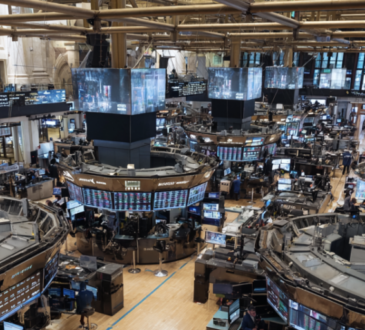
Stocks were bought and sold in person. Clerks manually recorded transactions. And fleets of messengers hand-delivered bond certificates. Trading hours were limited to five to six hours a day so that the rest of the financial industry could keep up with the paperwork.
Today, technology has reduced all of these frictions to near zero. From anywhere in the world, an institution or individual can buy or sell financial securities almost instantaneously. Asset prices and market spreads adjust on the fly; bookkeeping and settlement happen in electronic ledgers.
And even though U.S. markets still largely follow the same business hours that they did in the late 19th century, the trading doesn’t really stop after the closing bell. Futures markets, exchanges’ pre-market and after-hours sessions, and alternative trading systems offer extended hours for some securities. These factors have prompted a broader push to widen the official trading window, with both Nasdaq and NYSE Arca planning to move from the current 6½-hour trading day to 23-hour/5-day schedules by the end of 2026.
Such a dramatic shift would likely disrupt the familiar rhythms of the daily stock market. But just how it would change trading behaviors—and whom longer days would benefit—isn’t yet clear.
So Kellogg’s Alexander Ober, and assistant professor of finance, and Patrick Blonien of Carnegie Mellon University modeled it out. The researchers found that no matter how much traders and exchanges want round-the-clock access to markets, it will always be beneficial to enforce a break.
“We find that the constraint of closing the market, even if it’s only for a brief period of time, can be a good thing for traders,” Ober says.
A U-shaped day
Activity on any typical stock-market day follows a predictable “smirk” pattern: a burst of trading activity after the opening bell rings, followed by hours of relative calm, then a final flurry of volume in the minutes before the market closes. It’s commonly assumed that these dynamics are driven by the exchanges’ schedules, with investors derisking their positions before the closure and then buying or selling in the morning based on news and data that dropped after-hours.
The financial world conforms its practices to fit this daily routine: companies announce their quarterly earnings before or after market hours to try to avoid stock-price overreactions, and institutional investors use complicated hedging strategies to safeguard against market-shifting news when they are unable to act. If a public company misses its revenue target or a war breaks out while the major exchanges are closed, billions of dollars could vanish, literally overnight.
So traders are incentivized to want longer trading hours, or even the ability to trade 24/7. But if the traditional 6½-hour day changed, presumably market dynamics would as well. Ober and Blonien built a model to see what that shift might look like and whether there was an optimal open–close pattern for markets.
Their model analyzes the behavior of large, institutional traders—investment banks and hedge funds that regularly buy and sell massive lots of stocks and bonds. Because of the size of these transactions, executing the entire trade at once can move the price of the asset against them; buying thousands of shares of a stock will gradually increase the price, while aggressive selling will lower it. To avoid this price impact, large traders try to execute trades at times of high market liquidity, when a lot of shares are already changing hands.
In the researchers’ model, the lead-up to the close creates these desirable conditions, an illustration of the market adage that “liquidity begets liquidity.”
“The primary benefit of closing the market is that you get this coordinated liquidity,” Ober says. “If I know that there’s a time when a lot of people are going to be buying and selling, and I’m going to move a lot of shares, it’s to my benefit to get my business done during that time.”
But in a market that’s open 24 hours a day, 7 days a week, the lack of downtime flattens out liquidity. So while it may be risky in the current system for investors to hold large positions while markets are closed, the proposed longer trading hours would also carry a cost.
“If you extend hours, on average, liquidity throughout the day becomes worse,” Ober says. “And as a result, large traders are incentivized to break up their orders and hold their unwanted inventory for longer.”
Open for business
That said, the 9:30 a.m.–4:00 p.m. U.S. market schedule remains an artifact of old-fashioned, analog practices. And while it’s a reasonable workday for New York finance professionals, it also disadvantages traders in other countries and time zones. Could there be a better trading-period length between the status quo and the 24/7 extreme?
The researchers found that it depends on the type of market. On the always-busy major stock exchanges, where $500 billion of assets are traded on an average day and even a “slow” midday still means tens of millions of shares changing hands each hour, there’s enough liquidity to sustain a nearly perennial schedule. A longer day also suits assets where there are frequent shocks, such as cryptocurrency or foreign exchange markets.
For these markets, “the optimal length of closure is only a few minutes,” Ober says. “Although in the model there is always technically a length of closure that is better than 24/7 trading, in faster markets with more participation, the optimal trading day is approximately 24/7.”
In quieter markets where there are fewer participants and lower trade volumes, the model suggests an even shorter day than the current standard may be optimal. For instance, the electronic corporate bond market only does a small fraction of the equity market’s volume. Limiting the e-bond market to just a couple hours a day would concentrate that low liquidity and reduce the price impact of big trades, outweighing the cost of being unable to trade bonds during the other 22 hours.
Nonstop trading may be inevitable
Regardless of the recommendations of Ober and Blonien’s model, all signs point to extended trading eventually becoming the norm. The rise of cryptocurrency exchanges—which operate 24/7—have accustomed many younger investors to the convenience of buying and selling at all hours. In response, trading platforms such as Robinhood and Webull have added 24-hour stock trading, albeit built on alternative trading systems where prices may drift substantially from more-recognized exchanges.
But even traditional giants like Nasdaq and NYSE feel the pressure, Ober says. In their model, the researchers also tested how exchange competition would drive changes to trading hours. Because exchanges profit from trading volume, they’re motivated to stay open when their peers are closed.
“Even in thin markets where extended hours don’t make sense, competition among exchanges drives trading hours to 24/7 in the model, which can be against the best interest of traders in those markets,” Ober says.
Further ramifications of this nonstop trading environment are hard to predict. Lower liquidity makes market manipulation easier—a phenomenon seen frequently in cryptocurrency markets—so stretching thinner markets across the entire day could make fraud easier and regulation more difficult. And some established market processes, like index funds rebalancing based on end-of-day prices and companies reporting their earnings when markets are closed, will have to change, with unknown consequences.
“If the major exchanges carry out their plan to extend their hours to 23/5, then companies will only have one hour to make those announcements,” Ober says. “If investors have less time to react, what does that mean? That’s not clear, and it’s something we want to study.”