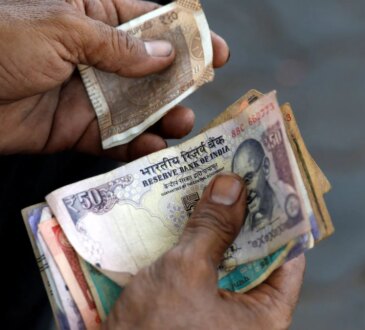
India’s central bank just pulled off something that would make most finance ministers weep with joy. The Reserve Bank of India mobilized $127.23 billion in Foreign Currency Non-Resident Bank deposits, known as FCNR(B), from its overseas diaspora through a special dollar-swap facility that launched on June 8, 2026.
The program was originally supposed to run through September 30. It closed on August 31 instead, a full month ahead of schedule, because the response was so overwhelming that keeping the window open felt redundant.
How the swap facility worked
The RBI opened a special window allowing Indian banks to accept foreign-currency deposits from Non-Resident Indians, with the central bank absorbing the hedging costs on those deposits. By taking on the currency risk itself, the RBI effectively let banks offer NRIs competitive deposit rates without the usual drag of hedging expenses.
The $127.23 billion figure covers just the FCNR(B) deposits. When you add in overseas foreign-currency borrowings and external commercial borrowings that flowed through the same window, total inflows hit approximately $136.38 billion.
Initial projections had pegged the facility’s likely haul at somewhere between $50 billion and $100 billion. The actual number blew past the top end of that range by more than a third.
A familiar playbook, dramatically scaled up
India has done this before. During the 2013 taper tantrum, when the Federal Reserve’s hints about winding down quantitative easing sent emerging-market currencies into a tailspin, the RBI launched a similar FCNR(B) scheme to shore up the rupee. That effort brought in between $26 billion and $34 billion.
This time around, the haul was roughly four times larger. Part of that reflects the sheer growth of India’s diaspora, now estimated at 35 to 37 million people spread across the US, UK, Singapore, Hong Kong, West Asia, and beyond.
By mid-August, the facility had already crossed $52.3 billion in FCNR(B) deposits. The remaining $75 billion poured in over the final two weeks of the month, suggesting a snowball effect as word spread and confidence in the program solidified.
What this means for India’s currency position
The swap facility’s swaps remain executable until mid-October, giving banks a few more weeks to settle the operational mechanics.
The risk is that FCNR(B) deposits are time-bound. When they mature, typically after one to five years, the money can flow back out. The RBI will need to manage the maturity profile carefully to avoid a sudden drain on reserves down the line. India learned this lesson in 2016 when a chunk of the 2013-era FCNR(B) deposits matured simultaneously, creating temporary pressure on the rupee.