Forget Savings Accounts: The Stock Market Is Still the Best Wealth Builder, and This Is My Top Pick for 2026

Where should you put your extra cash — into a savings account, or invest it in the stock market? It depends on how much money you have and how long you can leave that money alone. It depends on when you need that money, if you want to keep your money safe, or make your money grow.
The stock market is not the same as a savings account. Savings accounts are mostly risk-free: Your money in the bank is typically protected by FDIC insurance. You’re guaranteed to get paid a certain rate of interest on your savings.
So what is the stock market? It might be the best wealth-builder the world has ever seen. And it’s easier than ever before to invest in stocks. You can participate in the stock market with just a few dollars at a time.
Let’s look at why the stock market could be a better place for your money than a savings account, and which low-cost index fund I recommend to most investors who want to build wealth in 2026 and beyond.

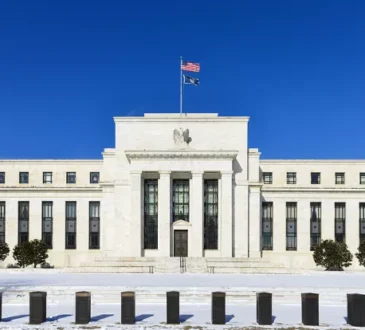
Image source: Getty Images.
The stock market can lose money in the short run
When you put money into a typical FDIC-insured bank account, you don’t have to worry about losing your money. And you get paid interest on the savings. But one downside of a savings account is that it probably won’t pay you much. As of Sept. 21, the national average savings account rate was only 0.37%. That means $1,000 deposited in an average savings account would earn only $3.70 in one year. That’s not enough to retire on — or keep up with inflation. Savings accounts can keep your money safe, but they won’t make your money grow.
The stock market is different. When you invest in stocks, there are no guarantees. The stock market might go down by 20% (or more) in a year. It might only deliver a 1% return, or less, or more. No one can predict its returns. The stock market is a complex, chaotic, worldwide marketplace of ideas where millions of investors make billions of decisions about trillions of dollars. It’s where the world goes to build the future and build wealth along the way.
When is a good time to invest in stocks?
Deciding when to invest in stocks instead of a savings account depends on your time horizon — how long you’re willing and able to leave your money invested. So don’t put money into the stock market if you need it tomorrow, or this year, or maybe even five years from now.
Emergency savings funds should not be invested in stocks. Money that you’re saving for a down payment on a house, a wedding, or other big purchase in a few years might not be the right fit for stocks, either. It’s risky to invest in stocks. You might lose money in the short run. Any individual company’s stock can decline or be worth almost nothing, causing you to lose your entire investment in that stock.
But over the long run, investing in the broad stock market by owning a diversified portfolio of high-quality stocks tends to deliver strong returns. There’s almost never a “bad time to buy stocks” if you’re in it for the long term.
How much the stock market can grow your money
In the past 98 years, the S&P 500 index (^GSPC +0.58%) has delivered average annual returns of 10%. At that rate, money you invested would double in value every 7.2 years. For example, $10,000 would grow to $20,000 after 7.2 years. Doesn’t that sound like a better deal than a 0.37% annual-percentage-yield savings account?
Even with all the ups and downs, bear markets, crises, and crashes that have happened since 1928, investors in simple, low-cost S&P 500 ETFs have seen big gains. The stock market has done even better recently. In the past 16 years since September 2010, the Vanguard S&P 500 ETF (VOO +0.55%) has delivered average annual returns of 14.94%. At that rate of return, $1,000 invested in September 2010 would have grown to about $9,280 today.
My top pick for stock market investors in 2026: VTI
The S&P 500 is one of the most-watched stock indexes because it holds the top 500 largest publicly traded companies in the United States. Buying S&P 500 ETFs like VOO is a great idea. But I like another low-cost index fund even more. My top pick for my own portfolio, and something that could be a great choice for many other investors, is the Vanguard Morningstar Total Stock Market ETF (VTI +0.51%). It’s delivered annualized returns of 12.56% for the past five years.

Vanguard Morningstar Total Stock Market ETF
Today’s Change
(0.51%) $1.94
Current Price
$382.54
Key Data Points
AUM
$2.3T
Dividend Yield
1.03%
Expense Ratio
0.03%
Top Holdings
NVDA
6.88%
AAPL
6.30%
MSFT
5.11%
VTI is different from VOO in one important way: VTI holds many more stocks. The portfolio of the Vanguard Morningstar Total Stock Market ETF includes 3,507 stocks. And instead of “only” 500 large companies, VTI includes small-cap stocks (which have the potential to grow into tomorrow’s household-name companies), mid-cap stocks (mid-sized companies that sometimes beat the biggest stocks), growth stocks, and value stocks (which might be underpriced and poised to outperform).
Recent research from Vanguard says that U.S. small caps and value stocks are likely to significantly outperform U.S. large-cap and growth stocks for the next 10 years and the next 30 years. If that happens, VTI might do better than the S&P 500 — because VTI holds a wider range of those small caps and value stocks.