HE GCCSG: The GCC States Are Open to the World, Advancing Towards Deeper Economic Integration, and Looking Forward to Building Long-Term Investment Partnerships That Achieve Mutual Interests

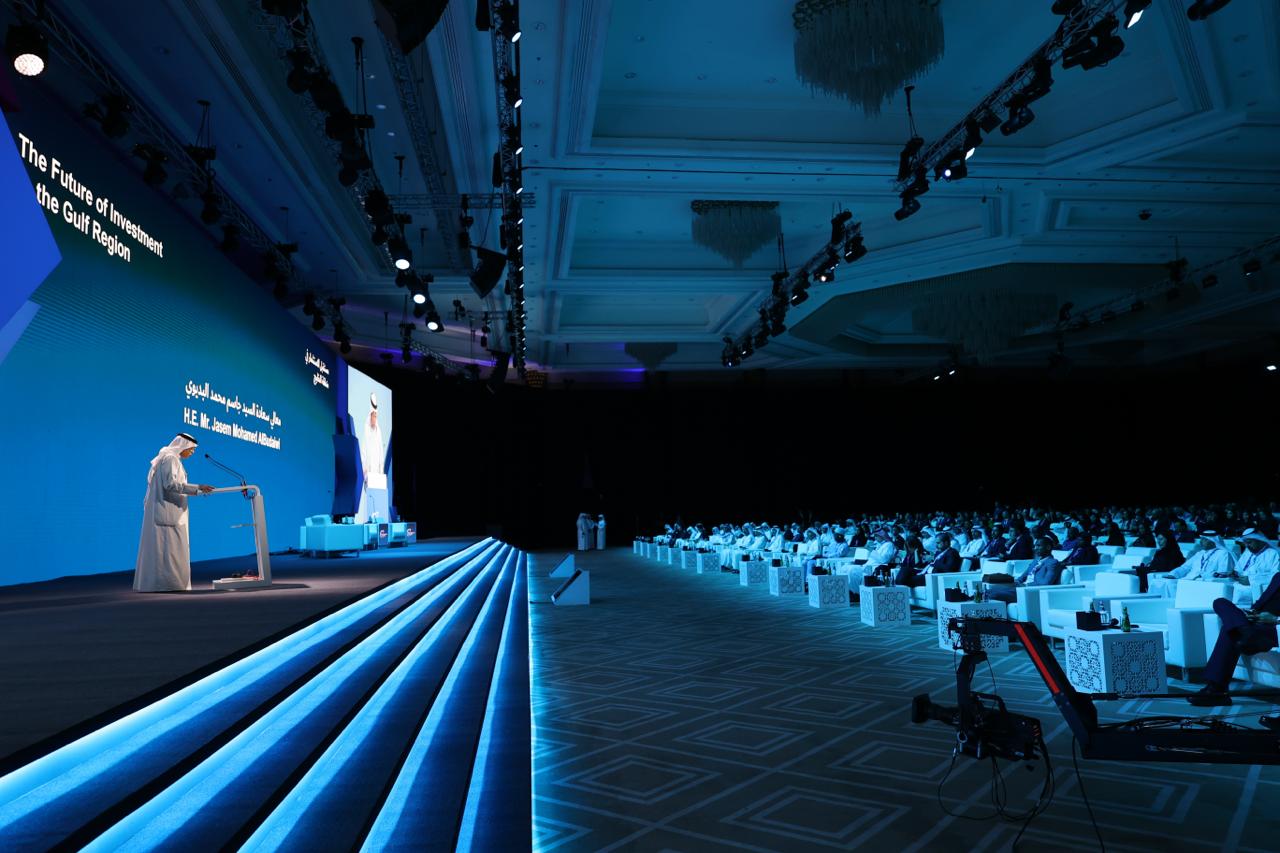
His Excellency Mr Jasem Mohamed Albudaiwi, Secretary General of the Gulf Cooperation Council (GCC), stated that the GCC states are open to the world, advancing towards deeper economic integration, and looking forward to building long-term investment partnerships that achieve mutual interests.
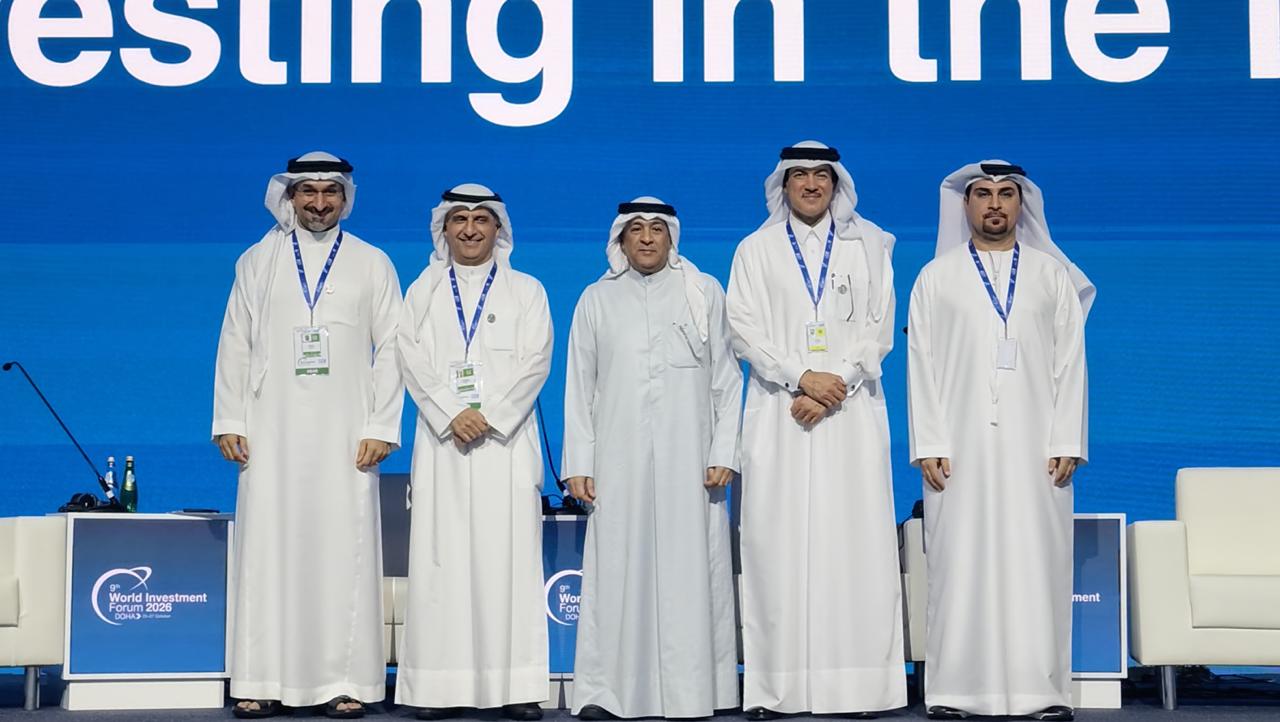
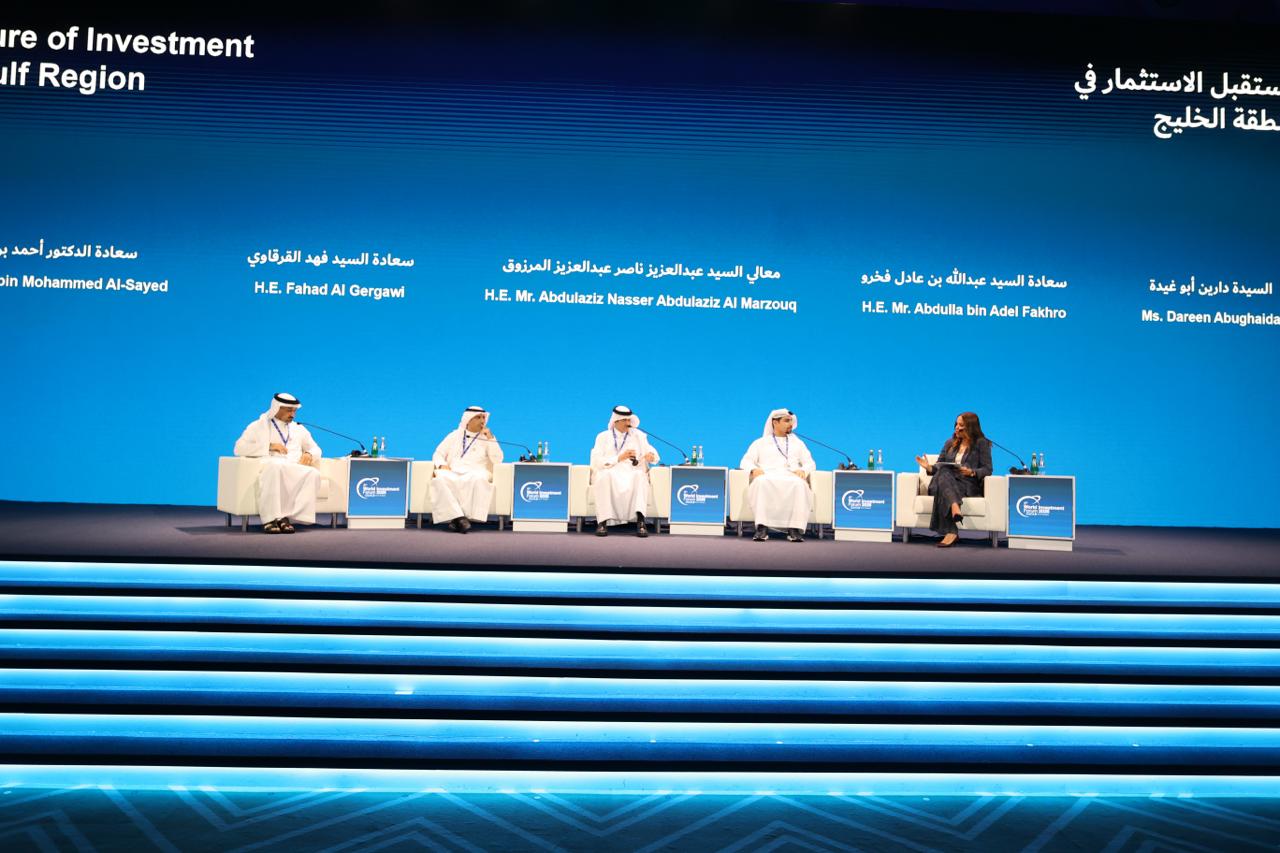
His Excellency’s remarks came during his participation in the “Future of Investment in the Gulf” session on Sunday, 25 October 2026, on the sidelines of the 9th World Investment Forum (WIF2026), in the presence and participation of a number of Their Excellencies ministers and officials.
At the outset of his speech, His Excellency the Secretary General expressed his sincere thanks and appreciation to the State of Qatar, under the leadership of His Highness Shaikh Tamim bin Hamad Al Thani, Amir of the State of Qatar, for its continuous efforts in cementing international economic and investment dialogue, and contributing to solidifying the GCC’s presence and standing regionally and internationally.
He also expressed his appreciation to the United Nations Conference on Trade and Development (UNCTAD) for its cooperation with the GCC General Secretariat in organising this session, which represents an important opportunity to foresee the future of investment and elevate Gulf economic integration.
“Hosting this edition of the Forum on the soil of the State of Qatar holds special significance, as the State of Qatar has presented an inspiring model in translating ambitious visions into global achievements. Through its pioneering developmental experience, Qatar has proven that when ambition is coupled with a clear vision, a firm will, and strategic planning, it does not merely create achievements, but shapes the future, transforming challenges into opportunities, and opportunities into sustainable successes,” His Excellency underscored.
In the same context, His Excellency stated that this Forum is being held amid rapid transformations witnessed by the global economy, where supply chains are being reshaped and emerging technologies are contributing to defining the features of future economies, while competition to attract investments intensifies. “In the midst of these transformations, a fundamental question arises: how can we bolster investor confidence and ensure the sustainability of investment flows in a world where geopolitical challenges are increasing, and maritime corridors and global supply chains are impacted?” His Excellency remarked.
He pointed out that the answer to this question lies in three key points. “First, the GCC states have proven their ability to confront these challenges and mitigate their repercussions by elevating joint coordination, diversifying commercial and logistical routes, and supporting the continuity of economic activities and supply chains. Second, recent developments, accompanied by challenges to the security of maritime corridors—foremost among them the Strait of Hormuz—have confirmed that the stability of energy flows, trade, and supply chains is not merely a regional matter, but a fundamental pillar for the stability of the global economy and investor confidence. Third, economic integration is no longer merely a developmental choice, but has become a strategic necessity to bolster the capacity to face challenges, sustain growth, and solidify confidence in the investment environment. This interconnectedness is based on an established integration journey, spearheaded by the Customs Union, the Gulf Common Market, the linkage of payment systems among the GCC states, and the GCC Railway Project, all of which enhance the efficiency of supply chains and lower the cost of doing business,” His Excellency highlighted.
His Excellency the Secretary General further said: “Today, the GCC states can no longer be viewed as six separate markets, but rather as an interconnected Gulf economic and investment ecosystem, underpinned by a substantial economic, financial and investment base. This is clearly reflected in several key indicators: the GCC economy ranks among the 10 largest economies in the world, with a GDP of USD2.4 trillion, while its foreign trade exceeds USD1.8 trillion, placing the GCC states collectively fifth worldwide. Meanwhile, the assets of GCC sovereign wealth funds are estimated at more than USD5 trillion. However, the strength of the GCC economies lies not only in their size and financial capabilities, but also in the nature of the transformation they are undergoing.”
In this context, His Excellency underlined that the ambitious national visions of the GCC states have reshaped the Gulf economic landscape, expanded the role of the private sector, enhanced legislative and regulatory frameworks, and opened up extensive investment opportunities in future-oriented sectors, including AI and advanced technologies, renewable energy and industries, transport and logistics, tourism, and financial services.
His Excellency the Secretary General called on investors and partners around the world to view the GCC states not merely as an investment destination, but as a partner in shaping the future of global investment: a future founded on trust, built through partnership, driven by knowledge and innovation, and measured by the sustainable development and prosperity it delivers.
“One of the clearest indicators of the growing interconnectedness of the GCC economies is the flow of investment between member states. In 2025, the total inward FDI stock in the GCC states exceeded USD792 billion, of which more than USD171 billion represented intra-GCC investments. This means that intra-GCC investment accounted for approximately 22% of the total stock, underscoring an important reality, which is investors entering any GCC state are not simply accessing an individual national market, but an interconnected regional ecosystem that links Gulf markets with one another and with the global economy,” he concluded.