
Listen to this article
Estimated 4 minutes
The audio version of this article is generated by AI-based technology. Mispronunciations can occur. We are working with our partners to continually review and improve the results.
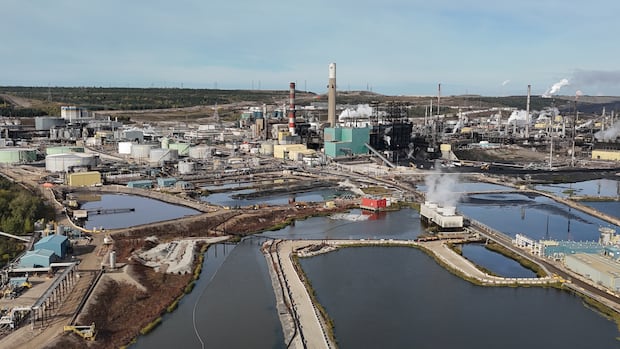
The Alberta government is introducing a lower-rate royalty program it says will help ease the capital investment needed to kickstart new developments and expansions in the oilsands.
Through the Oil Sands Growth Program (OGP), approved projects will get a reduced two-per cent royalty rate during their first five years of production. The rates will increase by one percentage point annually until they reach six per cent during the ninth and tenth years.
Premier Danielle Smith predicts the program will lure investors, especially as the province aims to hit 8 million barrels of oil per day by 2035. On Friday, Smith said Alberta is generating around 5 million barrels.
“To meet our goal of doubling oilsands production in the coming decade or so, we need hundreds of billions of dollars in new investment and we need to do that while competing with the United States and Venezuela,” Smith said during a news conference in Calgary, where the government announced the new program.
“The competition for global investment is real. Major energy projects require billions of dollars in capital and years of planning.”
Smith says the OGP will lower upfront financial barriers to new projects and expansions, particularly as proponents of the Pacific Link pipeline look for companies to fill upcoming capacity.

Alberta Premier Danielle Smith, flanked by Pembina Pipeline CEO Scott Burrows and Prime Minister Mark Carney, at a press conference north of Fort McMurray, Alta. on Oct. 1, 2026 to announce the declaration of the Pacific Link pipeline as a project in the national interest. (Vincent McDermott/CBC)
The OGP won’t replace the existing royalty program or guarantee a project’s approval, Smith said, adding it also won’t sidestep environmental or Indigenous consultation requirements.
Eligibility will not be limited to the five members of the Oil Sands Alliance, which represents the country’s five largest oilsands companies. Approvals will be based by project and can include expansions.
Companies will return to the regular royalty regime after 10 years, or if they cannot meet production, environmental or regulatory requirements.

Steam-assisted gravity drainage (SAGD) pads at Cenovus Energy’s Christina Lake oilsands facility, located southeast of Fort McMurray, Alta., on Wednesday, April 24, 2024. Company representatives say this pad, using the most current technology, requires less energy per wellhead to harvest bitumen than earlier versions. (Amber Bracken/The Canadian Press)
The Alberta government plans to launch the OGP this spring, but says qualifying projects announced after Nov. 15 will still be eligible. Smith says the province will review the program’s effectiveness three years from now, in December 2029.
Unlike the current royalty plan, the OGP will not tie rates to West Texas Intermediate oil prices. Alberta Energy Minister Brian Jean said, if the standard provincial royalty rate happens to be less than the incentive rate, the company will pay the lower rate.
“Oilsands projects are among the largest and most capital intensive energy investments in the entire world. Companies need a very competitive investment environment and confidence in that fiscal framework,” Jean said.

The Alberta government is introducing a royalty incentive program, the Oil Sands Growth Program, that it says will help the province meet its 2035 goal of doubling current oilsands production by easing the capital investment needed to kick-start new developments.
Smith pointed to several regulatory rollbacks as victories for the oilsands, such as the federal government’s cancellation of its oil-and-gas emissions cap and net-zero power regulations. She praised the progress so far on the Pacific Link pipeline, and said recent polls suggest Canadians and Indigenous peoples strongly support developing the country’s oil and gas sector.
According to Kendall Dilling, president and CEO of the Oil Sands Alliance, there is much left to do for the sector to reach its full potential, including updating and streamlining regulatory systems. But governments and industry have been working to address those challenges and investment conditions improved over the past year as a result.
“Today, I am more encouraged than ever,” Dilling said during Friday’s news conference.
Janetta McKenzie, oil-and-gas director at the Pembina Institute, a clean-energy think tank, isn’t convinced the OGP is needed to drive investment, “especially on top of a taxpayer-funded pipeline and several other tax deductions that have been announced by the federal government recently,” she told CBC News.
“The oilsands sector is very profitable — has been for a long time. It’s very well established … this is not an industry that has been struggling for revenues in the last few years.”
She worries Alberta could end up losing out on oil revenue by removing price changes, as oil companies earn high profits, she said. McKenzie also wonders how increased production could impact the environment.