A sweeping permitting reform package moved closer to a final Senate vote Monday, when lawmakers voted 70–27 to limit debate on legislation that could weaken a federal safeguard for historic places.
At issue is Section 106 of the National Historic Preservation Act, which requires federal agencies to consider how projects they fund, approve, or permit might affect historic properties—and consult with those affected before proceeding.
The proposed changes would exempt most projects whose only federal connection is financial assistance, while imposing tighter deadlines and restricting legal challenges.
As the nation confronts a shortage of 4.03 million homes and an aging energy grid, supporters argue that reducing regulatory hurdles will accelerate infrastructure development. But preservation advocates warn the changes could leave communities with less influence over what gets built—and what gets lost.
“Preservation is not a hindrance to progress,” Heather Veneziano, director of Tulane University’s Historic Preservation Program, told Realtor.com® during a recent walking interview through Bayou St. John, one of New Orleans’ oldest neighborhoods.
Rather than keeping neighborhoods frozen in time, she argued, preservation can help communities determine how they evolve.
“Keeping things static is impossible,” Veneziano said.

Preserving the past without preventing the future
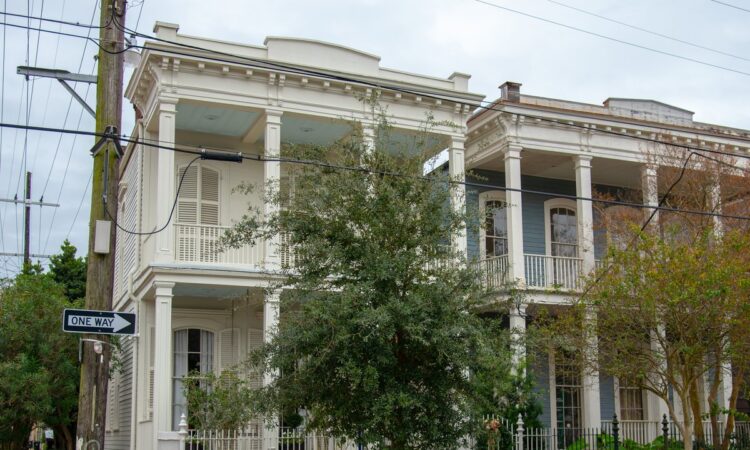
New Orleans provides a particularly salient standpoint from which to understand Veneziano’s perspective.
The city is home to 26 nationally recognized historic districts encompassing more than 45,000 properties and roughly 40% of its urbanized area, according to the city. Indeed, its architectural heritage is so extensive that it became the only entire city included on the World Monuments Fund’s Irreplaceable America list.
Veneziano helped lead the nomination, informed in part by the aftermath of Hurricane Katrina and the connections to place that could not be rebuilt elsewhere.
“You lose all your really strong ties and connections to place, but also to people,” she said of the communities uprooted after the devastating 2005 superstorm. “And places don’t matter without people.”
But Veneziano sees the buildings themselves as part of what makes those communities viable.
“It’s an economic driver for the community, it’s housing at a basic level for the community,” she said. “Those are the containers for all of the services that happen in your community.”
Along Bayou St. John, Veneziano pointed to the Pitot House, built in 1799, as an example of another kind of value older buildings retain.
Its elevated living quarters reflect a time when residents built knowing water would eventually come, while its surviving materials offer lessons in constructing homes suited to Louisiana‘s flood risks.
“You have to build for place,” she said.
Yet, those lessons might have been erased had preservationists not found a way to accommodate another pressing community need.
In 1964, the religious order that owned the property needed land for a girls’ school. Rather than allow its demolition, preservationists raised money to move the house 220 feet down the street on flatbed trucks.
The compromise allowed both the school and the house to continue serving the community. And today, the deal serves as a reminder of how preservation can accommodate development rather than prevent it.
When saving an old house complicates building new ones
Not every historic property can be relocated, however, and the expense of finding alternatives can test even the most committed to protecting a neighborhood’s housing resources.
In March, Jane Place Neighborhood Sustainability Initiative, a community land trust dedicated to permanently affordable housing, sought permission to demolish a century-old shotgun house in Mid-City.
The nonprofit argued that rehabilitation would be prohibitively expensive and higher-density construction would better serve the property.
Preservation authorities disagreed, finding insufficient evidence that the house was beyond repair. Jane Place eventually withdrew its appeal without a finalized replacement development plan.
The spat concerned local demolition rules, not Section 106. But it exposed competing interpretations of how best to protect a neighborhood’s housing resources: Preserve an existing home or make room for more?
Veneziano acknowledged that unclear local requirements can frustrate homeowners trying to maintain or renovate their properties.
“If your municipality doesn’t have their act together and isn’t clear about what their guidelines are,” she said, “it can be very challenging to homeowners.”
In a city facing an estimated shortage of 44,000 affordable rental units, the case for preserving old buildings can be difficult to reconcile with the urgent need for new homes. But elsewhere in the Big Easy, a long-vacant public building offers another approach.
In September, a century-old firehouse reopened after decades of vacancy, transformed into seven affordable apartments above an early-childhood education center.
The mixed-use redevelopment cost approximately $8 million, including $1.35 million in state historic tax credits and $725,000 in federal disaster recovery funds.
“The Louisiana Avenue Firehouse shows us that demolition of historic buildings is not always the answer,” Louisiana Housing Corporation Executive Director Kevin Delahoussaye said.
But the very public investment that helped save the building also triggered Section 106 review—and that additional requirement is what housing advocates argue can make federally assisted developments more expensive and difficult to finance.
Their argument is simple: More reviews take more time. More time costs more money. And combined, that can make a project not worth it.
YIMBY Action, which supports the proposed Section 106 exemption, estimates that at least $10 billion annually in federal housing and community development funding could move faster under the broader permitting package, citing delays that can jeopardize financing or discourage developers from accepting public money altogether.
What preservation reviews can reveal
Veneziano emphasized that preservationists aren’t simply trying to “save this fancy house.” Their work, she explained, is “really community engagement”—helping residents recognize and protect histories that might otherwise be overlooked.
That concern brought hundreds of preservationists, civil rights advocates, and tribal representatives to the U.S. Capitol on Nov. 9 to oppose changes to Section 106.
“Our sacred places are living places of prayer,” Harry Antonio Jr., governor of the Pueblo of Laguna in New Mexico, told the crowd.
The Senate proposal would narrow consideration of certain effects on historic places, including noise and visual impacts, raising concerns about the protection of sacred landscapes, burial grounds, and other culturally significant sites.
Veneziano pointed to a conflict farther upriver in Wallace, LA, where federal scrutiny exposed problems with a developer’s assessment of a proposed grain terminal.
There, descendants of enslaved residents opposed the project, which would have been built near historic plantations, burial grounds, and their predominantly Black community.
A ProPublica investigation revealed that an archaeological consultant’s original findings about potential harm to historic sites had been stripped from a report prepared for the developer. The Army Corps of Engineers subsequently rejected the assessment as insufficient and demanded further investigation.
In April 2024, the Corps determined that noise, light pollution, and the terminal’s industrial appearance would adversely affect Wallace’s historic character—precisely the kinds of impacts the Senate proposal would subject to a narrower standard of review.
The company behind the terminal abandoned the project later that year, blaming prolonged permitting delays. Residents celebrated the outcome as a victory.
Such lengthy reviews, however, may be the exception rather than the rule.
An October analysis by Virginia’s Department of Historic Resources found that 85% of nearly 9,900 projects completed Section 106 review within 30 days. Just 6% took longer than 90 days, primarily because they required additional surveys or involved potential harm to historic properties.
Those figures aren’t necessarily representative nationwide, nor do they establish whether reviews actually delayed construction.
“If you’re trying to get a project through, yeah, it’s annoying,” Veneziano acknowledged.
Still, Section 106 doesn’t prohibit development. It requires agencies to consider the consequences and potential alternatives before proceeding.
And as Congress weighs how to accelerate construction, lawmakers will also confront a more fundamental question: Who gets to determine what a community can afford to lose?
Veneziano posed a question of her own: “How do we take the best of what we have, and build upon it into the future?”