If a Stock Market Crash Is Coming, Warren Buffett Says This Is the No. 1 Move All Investors Should Make
Key Points
-
Stocks have largely thrived this year, but the market has wobbled recently.
-
Not all stocks will survive a downturn, so the investments you choose are more important than ever.
-
Warren Buffett has one simple rule for investing in times like these.
It’s been a lucrative year for the stock market, with the S&P 500(SNPINDEX:^GSPC) notching more than two dozen record highs in 2026.
However, the headwinds have been coming in strong lately. Volatility within the tech sector has rattled Wall Street, and the tech-focused Nasdaq Composite(NASDAQINDEX:^IXIC) fell into correction territory after plunging nearly 12% from its recent peak, as of this writing.
Missed AI’s “Act 1”? Act 2 Could Be 15x Bigger. Most investors think they missed the AI boat because they didn’t buy Nvidia in 2005. But according to our analysts, we’re only at the end of “Act 1″—the R&D phase. “Act 2” is the global rollout. Continue »
The bad news for investors is that no bull market can last forever, and it’s only a matter of time before we face a pullback. However, Warren Buffett has some timeless advice about how to prepare your portfolio for a potential market crash or recession.
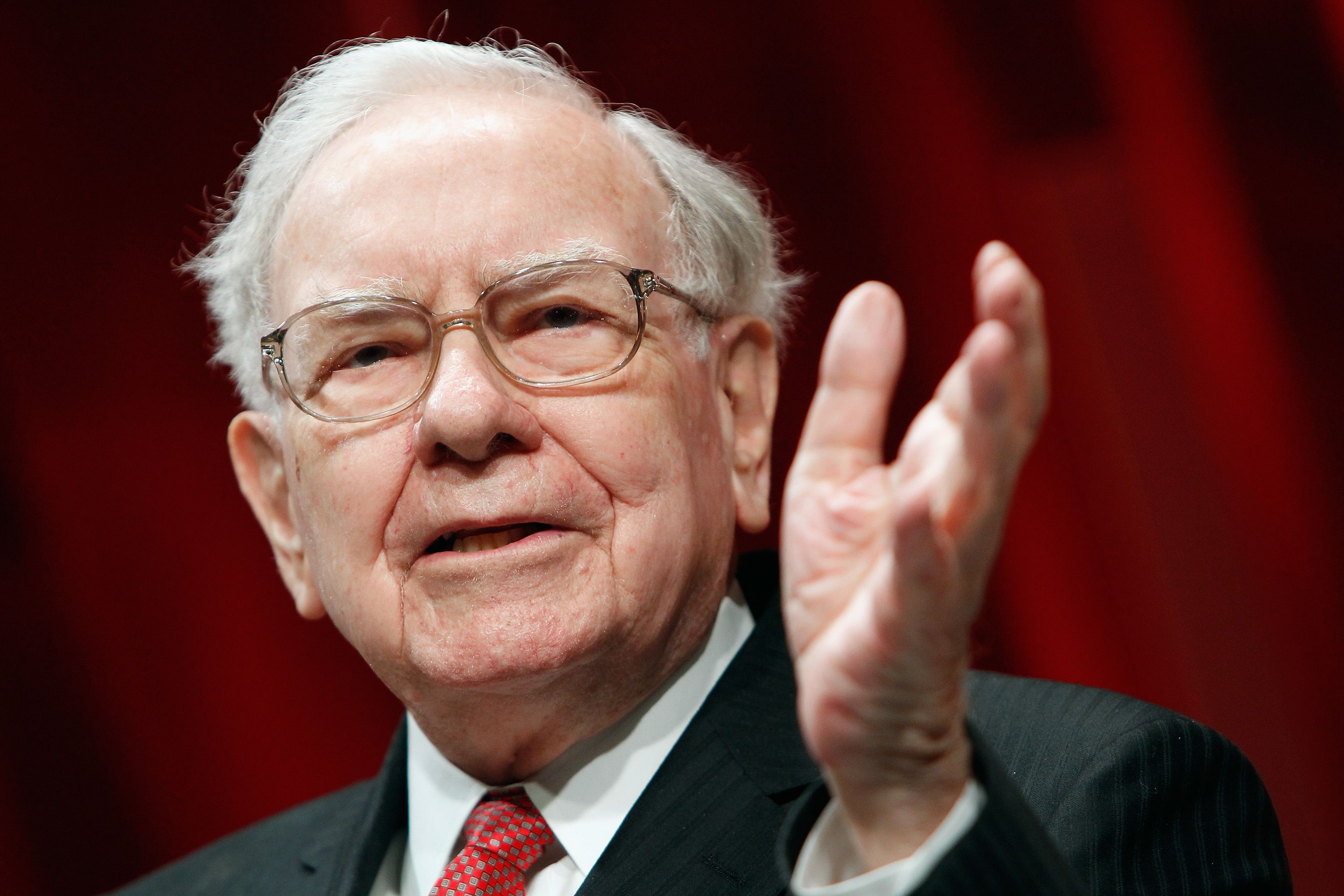
Warren Buffett. Image source: Getty Images.
The “key to investing,” according to Buffett
In late 1999, just four months before the dot-com bubble officially popped, Warren Buffett issued a warning to investors in an essay for Fortune. He emphasized that while new advancements in technology could transform society, that doesn’t necessarily make them smart investments.
Using airlines as an example, Buffett noted that although air travel was revolutionary, 129 airlines had gone bankrupt over the previous 20 years. Televisions and radios fell into the same category as “glamorous businesses that dramatically changed our lives but concurrently failed to deliver rewards to U.S. investors.”
The dot-com bubble eventually proved Buffett’s point. While the internet went on to fundamentally transform the world, countless tech stocks crashed and burned in the early 2000s.
“The key to investing is not assessing how much an industry is going to affect society, or how much it will grow,” Buffett explained, “but rather determining the competitive advantage of any given company and, above all, the durability of that advantage.”
History says this is the best investing strategy right now
While it’s impossible to say how the market will fare in the coming months, the dot-com bubble serves as a valuable lesson. Artificial intelligence (AI) as a technology could be revolutionary, but that doesn’t mean every AI stock will be a good investment. Inevitably, some stocks will flounder during the next downturn.
The best move investors can make now is to load up on a wide variety of quality stocks with robust business fundamentals. While all stocks are vulnerable to short-term volatility, those with strong competitive advantages are the most likely to recover and deliver long-term growth.
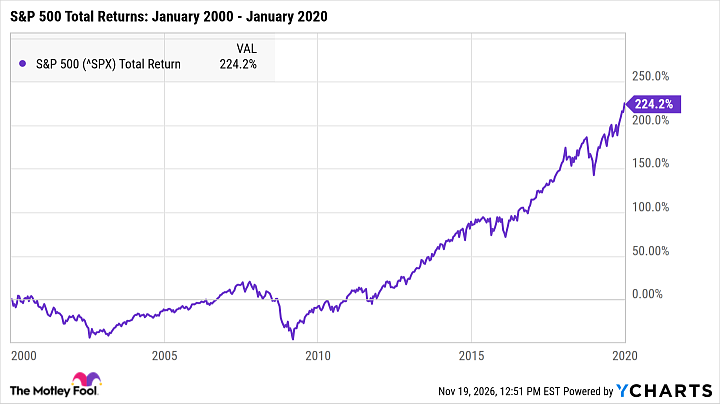
Healthy companies will likely thrive over time. Although the S&P 500 lost almost half of its value between 2000 and 2002, the index soared by more than 200% in the two decades following the dot-com bubble.
If we’re headed toward a similar bear market, not all stocks will recover. But healthy companies will fuel decades of growth, and the investors who look past the hype and focus on quality stocks will reap the biggest rewards.
Should you buy stock in S&P 500 Index right now?
Before you buy stock in S&P 500 Index, consider this:
The Motley Fool Stock Advisor analyst team just identified what they believe are the 10 best stocks for investors to buy now… and S&P 500 Index wasn’t one of them. The 10 stocks that made the cut could produce monster returns in the coming years.
Consider when Netflix made this list on December 17, 2004… if you invested $1,000 at the time of our recommendation, you’d have $305,941!* Or when Nvidia made this list on April 15, 2005… if you invested $1,000 at the time of our recommendation, you’d have $771,325!*
Now, it’s worth noting Stock Advisor’s total average return is 719% — a market-crushing outperformance compared to 192% for the S&P 500. Don’t miss the latest top 10 list, available with Stock Advisor, and join an investing community built by individual investors for individual investors.
*Stock Advisor returns as of November 21, 2026.
Katie Brockman has no position in any of the stocks mentioned. The Motley Fool has no position in any of the stocks mentioned. The Motley Fool has a disclosure policy.