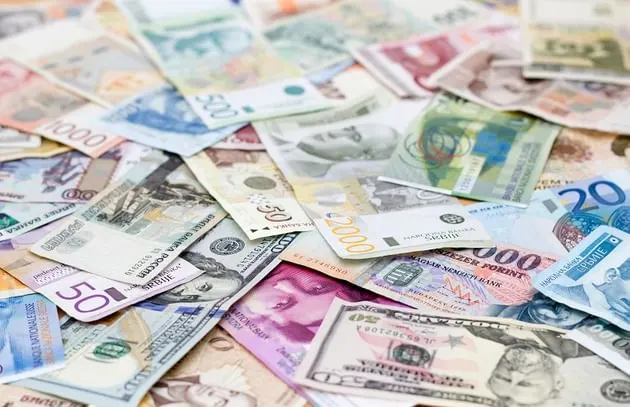
While the currency pairs we hear about most often are the major and minor pairs, there are actually far more exotic currency pairs to trade. In this introduction, we will define the types of currency pairs and cover some of the basics you’ll need to know before you begin trading the ‘exotics’.
Firstly, we should define major and minor currency pairs. The following are regarded as major currencies:
-
US Dollar (USD)
-
Euro (EUR)
-
Japanese Yen (JPY)
-
British Pound (GBP)
-
Swiss Franc (CHF)
-
Canadian Dollar (CAD)
-
Australian Dollar (AUD)
-
New Zealand Dollar (NZD)
Major currency pairs refer to any pair containing one of these currencies and the US Dollar – so while there are eight major currencies, there are only seven major currency pairs.
An important issue in the currency market is liquidity – i.e. the amount of any currency being bought or sold at any time. The most liquid currency pairs tend to have natural supply and demand from exporters and importers in addition to the supply and demand generated by speculators and investors. Since all the countries listed above have substantial trading relationships with the US, constant liquidity is provided by exporters and importers.
Minor currency pairs include any two of the major currencies apart from the USD. Some of these pairs, including GBP/EUR and AUD/JPY represent pairs of countries with active trade relationships, providing significant liquidity. Others, like CHF/JPY and EUR/JPY, have less active natural supply and demand.
Before we move on to exotic currencies it’s important to understand that there are two major forces driving the exchange rate between two currencies; natural supply and demand, and the relationship between those two currencies and other currencies – most notably the USD. If you exchange GBP for EUR, importers, and exporters in both the UK and Europe will be buying and selling both currencies, providing an active market. On the other hand, if you exchange GBP for NZD, there will be fewer importers and exporters active in the market – the quotes will more likely be a combination of the GBPUSD rate and the USDNZD rate. With currencies that are even less liquid, exchanging one currency for another will inevitably involve exchanging the first currency for USD and then exchanging USD for the second currency.
Most forex brokers offer clients forex trading either in the direct currency market or via CFDs (contracts for difference). Either way, the spreads they offer depend on the liquidity of the underlying currency market. Even though you may see a pair quoted as just two currencies, for the trades to take place in the underlying market, at some point an extra leg may have to be executed by a market maker.