Good morning. It’s a busy Friday. Russian President Vladimir Putin wraps up his two-day visit to India, and later today we’ll have the Reserve Bank of India’s interest rate decision. My colleagues and I will be keeping an eye on both these developments. Look out for our reports.
In today’s newsletter, Adani is doubling down on its airports business. But first, the only direction the rupee is going is down.
Down, down, down
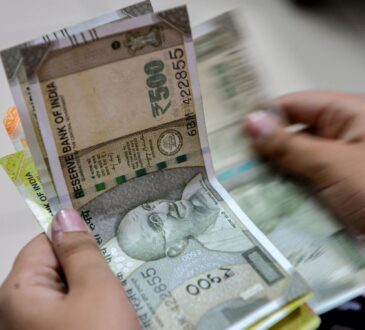
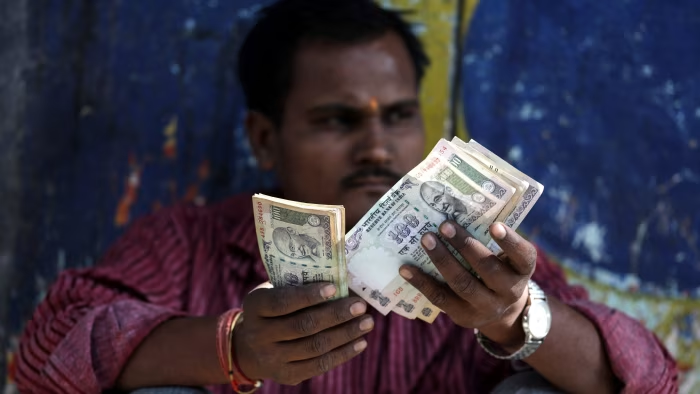
The rupee has now breached the psychologically significant threshold of 90 to the US dollar, its lowest level ever, and is likely to weaken even further. The currency has been sliding all year, falling more than 5 per cent, making it the worst-performing Asian currency.
A trade deal with the US was the one development that could have helped soften the southward journey, but that has proved elusive. The primary culprit, however, is the Indian stock market, which has underperformed other emerging markets by the widest margin since 1993. The MSCI India index’s dollar return this year was 2.5 per cent, while the larger emerging markets index returned 27.7 per cent. As a result, foreign portfolio investors have moved $16bn out of the country and into better performing markets.
One of the few beneficiaries of a weak rupee is exporters, who have been feeling the pinch of US tariffs. India’s tech stocks, which have been stuck in a rangebound trade for several quarters now, enjoyed a brief bounce this week. Apart from that, it is hard to find any positives. Data released last week showed that although India’s current account gap has narrowed, the gap in merchandise trade was the highest ever in October at $41.7bn. As the rupee slides, fuel imports will become costlier, as will foreign borrowings and other input costs for various sectors such as airlines, electronics and automobiles. The costs of foreign travel and foreign education, too, have been getting dearer.
India’s chief economic adviser V Anantha Nageswaran said he was “not losing sleep” over the decline in the value of the rupee. Low inflation and higher than expected GDP growth have contributed to his restful nights. While weakness of the rupee was one of Narendra Modi’s big campaign talking points ahead of his first prime ministerial run, his government has subsequently brushed off the economic impact of the declining value of the currency. (The rupee was 60.5 to the US dollar in 2013 when Modi was campaigning and 61 the year he took office).

While domestic economic indicators will help mask the impact and aid the government in managing the narrative for now (the best I heard today was an analyst dismissing this as a devaluation and not a depreciation), continued weakness in the currency is a matter of concern. The RBI has been stepping in with interventions, but these have been rather arbitrary. I’m curious to hear what the governor will say today after the conclusion of the monetary policy committee’s meeting. His comments on interest rates will be important, but this time around, the central bank’s stance on the currency will be more crucial. It’d be a comfort to hear that someone is losing at least a little sleep over this.
Are you worried about the rupee’s weakness? Hit reply or email me at indiabrief@ft.com
Recommended stories
-
Next year, India’s oil consumption will grow more quickly than China’s, predicts Trafigura.
-
India reversed an order to install government app on all smartphones.
-
Japanese 10-year bond yields rise to highest level since 2007.
-
How Brendan Nelson became HSBC’s stop-gap chair. Also, chief Georges Elhedery pledges to be “ruthless” in elevating the bank to top five status.
-
The EU plans to launch an antitrust probe into Meta over the use of AI in WhatsApp.
Flying high

The Adani group is putting more eggs in its airports basket. The conglomerate is committing $15bn to expanding its operations in the aviation sector, according to local media, including upgrading capacity at its airports in smaller Indian cities such as Ahmedabad, Jaipur and Lucknow. It is also proposing an additional runway at the new airport in a suburb of Mumbai, which is scheduled to open later this month. This will be the group’s eighth airport in India.
The news of the big investment plan follows the company’s $90mn acquisition last week of Flight Simulation Technique Centre, one of India’s largest flight training and simulation providers in the private sector. The company has simulation centres in Hyderabad and Gurugram, and a large flying school in Bhiwani in Haryana. It is hoping to increase its scale of operations in training pilots for India’s defence and civilian domains. The acquisition, which has been done through Adani Defence, is internally seen as one that will help the group develop a fully integrated aviation services platform.
Air travel in India has been booming, and the government estimates that the number of annual passengers will nearly double to 300mn by 2030. Despite the rising numbers, domestic passengers currently account for only 2 per cent of the global total. The sector has grown substantially in the past two decades, and now both aviation services companies and airlines are investing for the next phase of growth. Market leader Indigo — which has a nearly 65 per cent share of the domestic market — has an order book of 900 aircraft as well as additional leasing agreements in order to keep up with growing demand.
Under these conditions, Adani’s interest is expected. The government has expressed its intent of privatising 11 more airports, and the company is unsurprisingly a forerunner in many of these deals. The only question is how it will fund this growth. The $15bn is reportedly going to be mostly debt. Allegations by short seller Hindenburg, since cleared by Sebi, and a bribery investigation in the US (which Adani has dismissed) have hindered the company’s ability to raise foreign debt in the past couple of years. But the tide is now turning, and the group is moving fast to cash in on it.
Go figure
It’s time to sound the alarm on growing fiscal and financial risk, writes the FT’s Martin Wolf. Ratios of sovereign debt to GDP in many advanced economies are at post-second world war highs, and in the absence of an AI-fuelled acceleration in economic growth, there is good reason to believe these will continue to rise.

Read, hear, watch
I spent this week in Mumbai, where the air quality is poor but not as bad as Delhi. My morning runs by the sea in Bandstand have me wondering if I should relocate to the city, something I will definitely regret when the rains begin.
I am watching the Claire Danes thriller The Beast in Me on Netflix. It is interesting but I am not as blown away by it as some of the reviews suggested.
It’s nearing the end of what has been a challenging year for me. I am rounding it up by re-reading Joan Didion’s The Year of Magical Thinking — a book that allows me to wallow in despair and yet gives me hope. If you’re interested in what my colleagues have been reading this past year, check out our annual round-up of top titles.
Buzzer round
Which former head of state has started a 27-year sentence for plotting a coup after losing an election?
Send your answer to indiabrief@ft.com and check Tuesday’s newsletter to see if you were the first one to get it right.
Quick answer
On Tuesday we asked if you thought the RBI would cut interest rates this week. Here are the results. Half of you are betting it will.

Thank you for reading. India Business Briefing is edited by Tee Zhuo. Please send feedback, suggestions (and gossip) to indiabrief@ft.com.