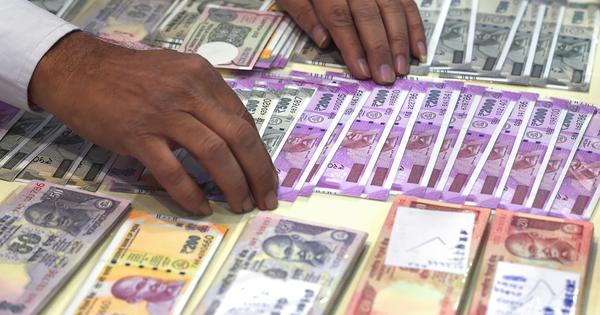
The Indian rupee on Thursday fell to an all-time low of 90.4 against the United States dollar amid the continued outflow of foreign capital from the equity market, Reuters reported. As of 12.30 pm, it had recovered marginally to 90.1.
The Indian currency has come under pressure because of punitive tariffs by the United States and uncertainty about a trade deal between New Delhi and Washington.
The rupee had breached the 90-mark on Wednesday.
It has fallen about 5% in 2025, putting it on track to record the sharpest decline in a year since 2022, Reuters reported. This makes the rupee the worst-performing Asian currency this year.
On Thursday, Congress chief Mallikarjun Kharge alleged that the rupee was weakening because of the policies of the Prime Minister Narendra Modi-led government. “If the government’s policy were good, the value of the rupee would increase,” he told reporters outside Parliament.
“The weakening of the rupee shows that our economic condition is not good,” the Congress leader said. “The government may pat itself on the back, but our currency has no value in the world.”
Not impacting inflation or exports, says economic advisor
Chief Economic Advisor V Anantha Nageswaran said on Wednesday that he was “not losing sleep” over the fall in the value of the rupee.
“It [rupee] will come back next year,” The Indian Express quoted Nageswaran as having told reporters. “Right now, it is not impacting inflation or exports.”
Nageswaran said that there had been an abrupt increase in the interest rates of developed countries in the last three years, which has “raised not only the cost of capital in those countries for investing overseas, but also incentivised some of those monies to stay back”.
While foreign investments are facing geopolitical challenges, “we need to up our game with respect to courting FDI, courting global supply chain companies to come here”, Nageswaran was quoted as saying.
Foreign investors have pulled out more than $16 billion from the Indian equity market this year, Reuters reported on Monday. The merchandise trade deficit, or when imports of goods exceed exports, had also hit an all-time high in October.
The Reserve Bank of India’s Monetary Policy Committee began its three-day meeting on Wednesday to decide on the interest rate. The decision will be announced on Friday.