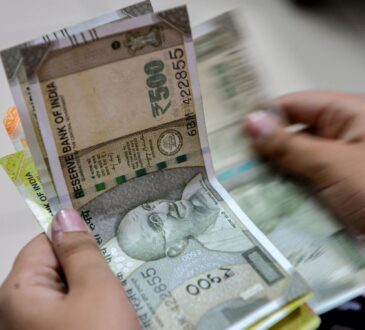
The Reserve Bank of India and the government may officially deny or even pretend to ignore the adverse impact of the continuous downhill journey of the Indian Rupee against the US Dollar on the economy, the disturbing trend, if not contained, is bound to lead the heavily import-reliant nation to high inflation and slower economic growth. On March 30, 2026, the Indian Rupee (INR) breached the 95-level against the US Dollar for the first time, touching a record low of 95.20–95.23. The situation is quite alarming. In fact, it is high time that the RBI raises the interest rate and the government slashes import of non-essentials to prevent further erosion of INR and the continuous exit of foreign portfolio investment. The latter is principally responsible for Rupee’s downtrend.
Foreign investors (FPI) made a record-breaking withdrawal from Indian equities in March 2026, pulling out over Rs.1.14 lakh crore ($12+ billion), the highest monthly sell-off ever. Last year, foreign Institutional Investors (FIIs) recorded their highest-ever annual exit from Indian equities, withdrawing over Rs.1.58 lakh crore (approx. $18 billion) as of late December, driven by high valuations, geopolitical tensions, and over five percent INR depreciation. This massive FPI exodus, affecting IT and large-cap stocks, is one of the key reasons behind Rupee’s downhill journey.
Globally, only three other currencies have done as badly as Indian Rupee in the current year. They are: Iranian Rial (IRR), Lebanese Pound (LBP) and Zambian Kwacha (JMW). By market-based pricing, the Iranian Rial is the weakest currency globally, trading around one million rials per US dollar. LBP continues to be among the world’s weakest currencies, with extremely low value in the local economy. ZMW has been experiencing volatility. The Zambian currency faces persistent risks to its value, particularly with recent increases in corporate demand for US dollars. Indian Rupee is labelled as one of Asia’s worst-performing currencies against the US dollar.
The INR is facing continuous downward pressure against the US dollar during the current year, hitting record lows, primarily driven by massive FPI outflows and severe geopolitical tensions in West Asia, a traditional source of India’s oil import and destination of merchandise export. The surge in oil prices due to the Iran war has significantly increased India’s import bill requiring more dollars and further weakening the INR. India’s total exports to West Asia and the Gulf are under severe strain. Last year, India’s exports to the region totalled around $65 billion while imports amounted to nearly $125 billion. Agricultural products exports alone accounted for $11.8 billion. The trade is facing a big disruption due to regional conflicts and rising shipping costs.
The main reason behind the major FPI outflow during 2025 is the RBI’s interest cut of 125 basis points through multiple cuts, including February, April, June, and a final 25 basis point cut in December. On the contrary, a strong US$, combined with its status as a safe-haven asset, has attracted capital away from emerging markets, including India. A lack of progress on the US-India trade deal and the threat of high tariffs on Indian goods have hampered export prospects, placing further pressure on the Indian currency. Also, there are concerns over economic momentum, including potential downgrades of India’s economic outlook (e.g., Goldman Sachs reducing the Nifty 50 target), which have increased investor caution.
Despite the RBI’s intervention to manage volatility, these combined structural and global pressures have made the INR one of the worst-performing currencies in Asia in early 2026. The INR has underperformed against almost all major currencies amidst India’s suffering from a persistent current account deficit. The country’s heavy reliance on imports (energy, gold and electronics) compared to low levels of export continues to put pressure on the currency. A robust US dollar, supported by safe-haven demand and potential rate decisions, has caused foreign investors to sell Indian assets, leading to consistent outflows. The weakening INR is further increasing the cost of vital imports like crude oil, resulting in higher domestic inflation for fuel and essential goods. The RBI has actively used foreign-exchange reserves to curb excessive volatility, causing reserves to drop significantly in the first quarter of 2026. If geopolitical tensions persist, the INR could face continued pressure, potentially approaching even weaker levels.
Despite the RBI’s recent restrictions on banks’ net open positions in the foreign exchange market to control volatility, the INR continues to slide. Higher domestic interest rates can induce Foreign Portfolio Investors (FPIs) to return to the Indian market, primarily by increasing the interest rate differential between India and developed economies like the US. A higher differential makes Indian assets—particularly debt instruments—more attractive, creating opportunities for “carry trades” where investors borrow cheaply elsewhere and invest in India for higher yields. When the RBI raises the repo rate or keeps domestic bond yields high, foreign investors often return, attracted by the improved risk-adjusted returns on Indian government securities (G-Secs) and corporate bonds.
However, while high rates are generally attractive, the return of FPIs is not driven by interest rates alone. Other factors, such as high equity valuations, global risk-off sentiments, and sharp currency fluctuations, can counteract the appeal of higher rates. For instance, if higher rates stifle domestic economic growth or cause a sharp depreciation of the Rupee, it may actually lead to FPI selling. Higher domestic rates do encourage FPI inflows (especially into debt), but their return to equities depends heavily on India’s growth prospects, earnings stability, and the global interest rate environment.
To prevent further slide of the INR amid volatility, the RBI should make more aggressive forex intervention and curb speculative bets on the currency by restricting bank positions while the government must heavily cut imports to reduce the trade gap, ensure a stable economic environment and, if necessary, issue NRI bonds. The INR needs to be stabilised fast as its decline implies higher import costs for oil, electronic components, and machinery, which could lead to higher domestic inflation. It also complicates the central bank’s efforts to balance inflation control with economic growth. (IPA Service)
The article Indian Rupee’s Continuous Downtrend Is A Big Concern appeared first on Latest India news, analysis and reports on Newspack by India Press Agency).