[NEW YORK] Asian economies are not just shifting their trading ties to fight against US tariffs, they’re also increasingly moving their financing to other markets, underscoring how President Donald Trump’s policies risk eroding American dominance of capital raising.
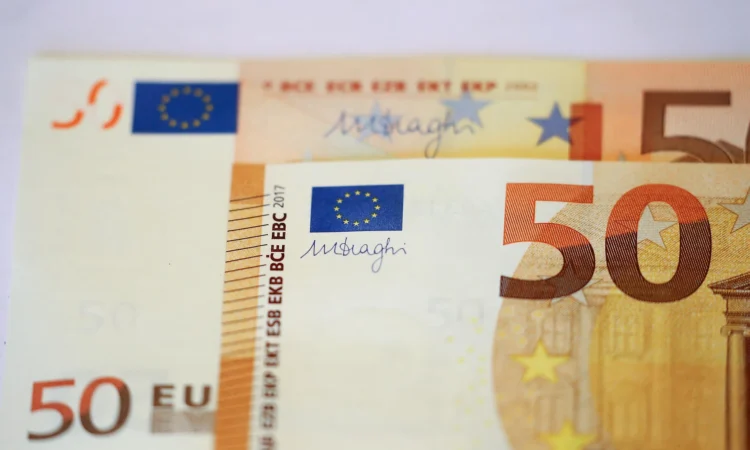
Asia-Pacific borrowers increased euro-denominated issuance to a record 23 per cent of the total across both currencies this year, up six percentage points from 2024, according to Bloomberg-compiled data. Euro note sales by companies and governments rose 75 per cent in 2025 to 86.4 billion euros (S$130.1 billion).
Multiple Asian deals ranked as the most oversubscribed in Europe’s publicly syndicated debt market during their launch week, the data showed. US dollar deals still make up the majority of financing deals, and borrowing in the greenback is up 29 per cent by Asian issuers this year. But the market share declined, and the American edge for funding may be slowly eroding.
“A key driver is the need to diversify away from US dollar concentration,” said Daniel Kim, co-head of debt capital markets for Asia-Pacific at HSBC. “This year’s surge in euro-denominated bond issuance stems from a confluence of strategic motives that go beyond the routine refinancing.”
US President Trump’s trade moves this year, and his pressure on the Federal Reserve to cut interest rates despite inflation concerns, has shaken investors’ confidence in the US dollar’s pre-eminence, prompting investors to lean into euro assets.
Asian borrowers have followed suit, with euro bond issuance surging to meet demand for diversification, while the greenback slid 11 per cent against the euro.
“De-US dollarisation or diversification of investment portfolios to have more deployment in non-US dollar currencies is a theme we have witnessed this year,” said Ben Wang, head of offshore China debt capital markets at Deutsche Bank AG.
The euro accounted for a smaller portion of Deutsche Bank’s Apac bond trading volume at the beginning of the year, but accounted for “more than 10 per cent, even 20 per cent” after entering the second half, he said.
The boom is also being driven by lower funding costs, with some Asian borrowers able to raise money more cheaply in euros than in US dollars or their home currencies. The premium that investors pay to swap euros into US dollars is at a near five-year low of 3.1 basis points, data compiled by Bloomberg showed.
SEE ALSO
Naysayers have been forecasting the end of the US dollar as the reserve currency for years, and have been terribly wrong. For years, greenback issuance has been surging, and it’s unclear whether the latest reversal is a blip or a long-term trend.
As of June, the greenback had accounted for 63 per cent of bonds issued by borrowers outside their home currency, a 20 percentage-point increase since the end of 2007, according to data from Bank for International Settlements. The euro’s share had dropped to 25 per cent from 32 per cent during the period.
But the increasing attractiveness of the euro to Asian market participants for funding and debt investment reflects a “normalisation” following that boom in US dollar sales, said Martin Schulz, chief economist at Fujitsu in Japan. “We have a more multipolar world,” he said.
Standout deals in Europe this year include China’s €4 billion bond sale that attracted bids topping €100 billion, and Japanese telecom giant NTT Inc.’s €5.5 billion offering, the largest corporate euro issuance from Asia in 2025.
“It gives you a broader market to invest in, with cash flows from different regions and different types of companies,” said Chris Iggo, London-based chief investment officer for core investments at Axa Investment Managers. “It is a fairly healthy development.”
The continent’s appeal as a funding destination is expected to persist into next year. Owen Gallimore, APAC head of credit analysis at Deutsche Bank, forecasts Asian borrowers’ euro issuance will climb to US$125 billion in 2026, a more than 20 per cent gain.
“We see issuers on the whole looking to expand their footprint, not just within Asia but also outside, with Europe continuing to be a key marketplace,” said Henry Loh, head of Asia credit at Aberdeen Investments. “We expect to see growing interest in euro issuance to finance this growth.” BLOOMBERG
Decoding Asia newsletter: your guide to navigating Asia in a new global order. Sign up here to get Decoding Asia newsletter. Delivered to your inbox. Free.