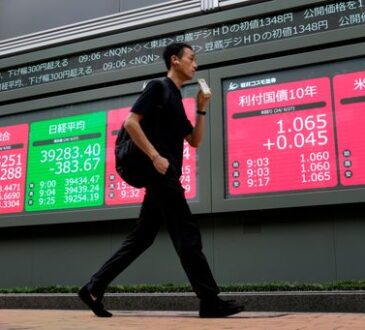
For many investors, January represents optimism and renewal. In 2026, that optimism has returned closer to home for Asia.
Asian equities have started the year strongly. Asia ex-Japan outperformed the US by around 15 percentage points in 2025, and has extended its gains into 2026. Year to date, the MSCI All Country Asia ex-Japan Index is up nearly 6 per cent in US dollar terms, comfortably outpacing a range-bound S&P 500.
For investors long accustomed to US exceptionalism, this reversal has been striking. After a decade marked by trade tensions, regulatory resets in China and relentless US outperformance, many investors steadily trimmed Asia exposure – some abandoning it altogether.
The recent rebound has prompted a reassessment: Is Asia’s comeback merely cyclical, or something more durable? We believe it is the latter.
Over the past year, Asian markets have benefited from policy shifts by both the Federal Reserve and China, sustained momentum in artificial intelligence (AI), and tangible progress in corporate reforms. Far from fleeting, these tailwinds make a compelling case for Asia as a long-term engine of diversification and growth in global portfolios.
We expect Asian equities to deliver mid-teen gains through the year end, underpinned by the region’s deep industrial base, pro-growth policy measures and a weaker US dollar.
Crucially, structural trends are increasingly supported. Technology localisation and innovation are accelerating, intra-regional trade is deepening as supply chains reconfigure, and governance reforms are unlocking shareholder value.
China remains central to this story. Chinese technology companies are on track to deliver close to 40 per cent earnings growth in 2026 and 20 per cent the year after, while the broader market is supported by ample liquidity, ongoing market reforms, and valuations that remain reasonable by historical standards.
To balance potential growth drawdowns should the AI boom falter, we continue to favour Asian investment-grade bonds of around 4½ years’ duration. Emerging market sovereign bonds are also attractive, offering compelling expected returns of 7 per cent to 8 per cent amid stable fundamentals.
Currencies tell a similar story. While the US dollar fell over 9 per cent in 2025, we expect further, albeit more modest, depreciation. Core Asian currencies should appreciate by around 2 per cent on average against the greenback, though dispersion should be wide. The Korean won and Taiwanese dollar could see 5 per cent to 7 per cent upside, while the Chinese renminbi, Singapore dollar and Malaysian ringgit may rise more gradually at 2 per cent to 3 per cent.
Globally, the Australian dollar is our favourite currency. Strong jobs, economic growth and likely Reserve Bank of Australia hikes in the first half of 2026 are set to keep it strong against its Group of 10 peers.
Still, an Asian sector drawing scrutiny is volatile Japanese government bonds (JGBs). The
sharp sell-off at the long end
after Prime Minister Sanae Takaichi’s election pitches highlights how fiscal concerns can unsettle markets.
a “Liz Truss moment”
. Japan remains a net creditor nation, with a strong net international investment position and a large current account surplus nearing 4 per cent of gross domestic product (GDP).
We expect yields to remain elevated in the near term, before easing as fiscal clarity gradually improves after
the Feb 8 election
. Even higher yields are not an immediate fiscal threat, with effective interest rates at around 0.6 per cent to 0.7 per cent, well below a sustainable nominal GDP growth rate of around 2.5 per cent as the economy reflates.
Moreover, spillovers should be limited, given tools to contain disorderly yields. We expect the 10-year JGB yield at 2 per cent and Treasuries at 3.75 per cent by mid-year. But yen volatility should stay high until fiscal confidence is fully restored.
We continue to favour Japanese equities, supported by reflationary momentum and ongoing corporate reform, particularly if the ruling Liberal Democratic Party emerges stronger from the election as we expect.
Meanwhile, geopolitical flashpoints remain defining aspects of today’s investment landscape. Emergence of
the “Donroe Doctrine”
and strains within NATO all signal that the era of unpredictability is far from over.
As we traverse the Asia-Pacific in our “Year Ahead” outlook events – spanning some 27 cities by the time we conclude – geopolitics has consistently emerged as the dominant client concern. In Hong Kong, 43 per cent of attendees cited an unspecified “Trump surprise” as their top risk, while a further 28 per cent pointed to the risk of “a geopolitical flare-up”.
History offers some reassurance. Absent a fundamental regime shift, geopolitical shocks tend to have short-lived effects on markets. US President Donald Trump’s decision to step back from a trade conflict with Europe
over Greenland
aligns with a broader pattern of eventual resolution and de-escalation before meaningful economic fallout.
More broadly, these developments point to a more fragmented global order, where strategic autonomy in supply chains, energy security and defence will be prized, creating beneficiaries in chip localisation leaders, nuclear energy in Japan, and defence companies in Europe.
All said, recent risks have not derailed our positive stance on 2026, but reinforce our views that elevated government debt, geopolitics and AI remain the key drivers ahead. Our core approach is to position for a broadening of the global equity rally while embedding thoughtful portfolio diversification.
The US market remains a core engine for equities – our S&P 500 target remains 7,700. Pro-growth policies should support further gains and lift laggards like financials, healthcare and consumer discretionary. We expect AI leadership to broaden from the infrastructure layer to commercialising firms in the application layer.
Elsewhere, the earnings backdrop has also improved in Europe. After three stagnant years, euro zone earnings are poised to rise to 7 per cent in 2026 and 18 per cent in 2027, driven by industrial reshoring, electrification and a surge in defence spending.
Finally, we favour a 5 per cent allocation to gold, with prices reaching US$7,200 per ounce in our upside scenario. Unlike other precious metals like silver, we prefer gold for its lower volatility, hedging properties and sustained central-bank demand. For broader commodity exposure, copper and aluminium remain attractive, supported by structural undersupply.
As we approach the Chinese New Year, I wish you a year of prosperity – with portfolios primed to capture the opportunities ahead.
-
The writer is the Asia-Pacific head of UBS Global Wealth Management’s Chief Investment Office.