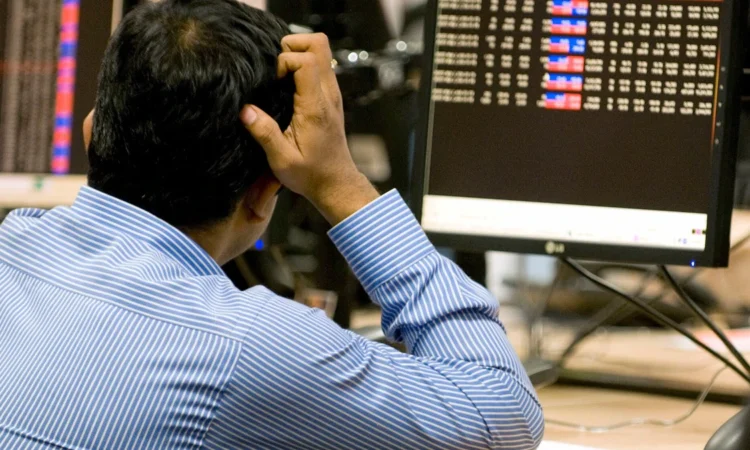
Union Budget 2026: While the Union Budget 2026 is expected to be a non-event for markets, analysts said traders must stay extra cautious on February 1, as heightened volatility is likely this time. The Budget on a Sunday made market dynamics a bit unique. Institutional investors, who typically provide the necessary liquidity and stability, may remain largely absent or inactive, warned Santosh Meena, Head of Research at Swastika Investmart. “This absence can lead to thinner order books and even more erratic movements, driven primarily by retail sentiment,” he said, adding that historically also Budget is one of the most volatile days for the Indian markets.
Meena said the initial reaction seen during the Sunday’s special session may be noise, and the market is more likely to provide a clear, sustainable reaction on Monday, once big players have had the chance to fully digest the fine print of the policy changes.
Budget day moves are often short-lived noise, with true trends emerging post-event based on implementation and broader economic cues, said Ponmudi R, CEO at Enrich Money.
Budget day market returns: Historical data
Historical analysis over the past 25 years (2001–2025) reveals a mixed but predominantly negative bias on Budget Day itself. Nifty closed lower on 15 occasions and higher on 10, with an average absolute move of approximately 0.19 per cent (positive or negative). “There were larger swings exceeding 1 per cent occurred in 16 instances, underscoring the event’s potential for sharp, unpredictable movements,” Ponmudi said.
Ponmudi said: “Points-based changes have scaled with the index’s growth modest in early years (e.g., when Nifty hovered around 3,000–5,000) and more pronounced recently (with Nifty above 25,000). Pre-2006 data shows notable volatility, including a -4% drop in 2002 amid economic slowdown fears and a -3.1% fall in 2004 due to post-election policy uncertainty. However, Budget Day moves are often short-lived “noise,” with true trends emerging post-event based on implementation and broader economic cues.”
Market strategy
As far as the market strategy is concerned, a strong base for Nifty has continued to develop in the 24,900-25,000 band, which coincides with the 200-DMA. This remains the bulls’ final line of defence, said Dhupesh Dhameja, Derivatives Research Analyst at SAMCO Securities.
Dhameja said derivatives data suggests a cautious yet gradually improving undertone, adding that Call writers have aggressively added fresh positions at at-the-money and nearby strikes, effectively capping immediate upside potential.
“Conversely, put writers have started building positions at lower strikes, indicating expectations of a range-bound market with clearly defined support levels. A significant open-interest build-up of around 72.55 lakh contracts at the 25,500 call strike reinforces this level as a formidable resistance,” he said.
Aakash Shah, Research Analyst at Choice Broking said markets are positioning for a capex-heavy, execution-focused Budget, with priority on defence, infrastructure, rural consumption, FMCG and financial sector stability. He expects defence outlay to rise 8-10 per cent, while he sees continued focus on indigenisation, and rural/urban demand revival via tax relief and spending.
Meena said traders should keep a close watch on key levels. For Nifty, the immediate support lies at 24,900, followed by a stronger base at 24,500, while upside resistance is pegged at 25,500 and 25,800. For Bank Nifty, support levels are identified at 59,000 and 58,000, with major hurdles at 60,600 and 61,800. Breaking these levels on high volume will be critical for determining the post-budget trend.
Disclaimer: Business Today provides stock market news for informational purposes only and should not be construed as investment advice. Readers are encouraged to consult with a qualified financial advisor before making any investment decisions.