Stock Market

Dow, S&P 500, Nasdaq jump to kick off February as gold, silver, bitcoin remain volatile


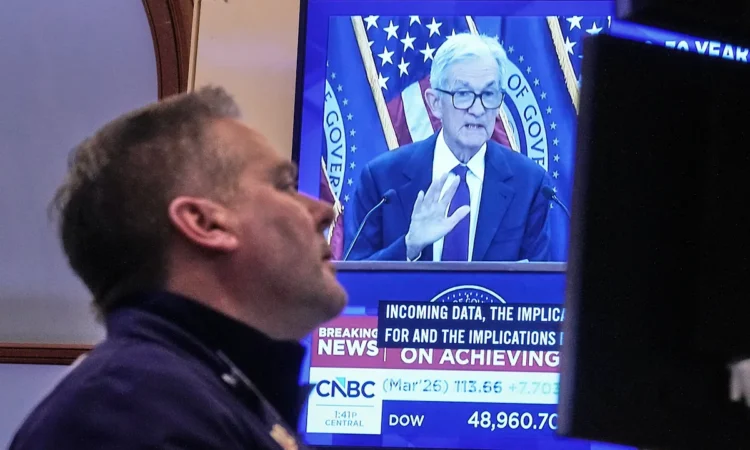
US stocks ended Monday’s trading session on a positive note, shaking off AI trade worries as earnings flooded in and Federal Reserve uncertainty swirled.

The Dow Jones Industrial Average (^DJI) rose around 1%, or over 500 points, while the S&P 500 (^GSPC) added roughly 0.5%. Meanwhile, the tech-heavy Nasdaq Composite (^IXIC) moved up 0.6%, shaking off early malaise for techs. All three indexes suffered a sharp reversal on Friday as precious metals skidded.

Meanwhile, precious metals continued a roller-coaster ride that has unwound much of 2026’s most rip-roaring rally. Gold (GC=F) and silver (SI=F) seesawed on Monday, following a Friday wipeout that saw silver post its biggest single-day drop on record.

Over the weekend, bitcoin (BTC-USD) sank below the $80,000 mark for the first time since April, extending losses after a volatile end to last week. The cryptocurrency was last trading above $78,000 per token.

Meanwhile, Wall Street digested fresh uncertainty around Nvidia (NVDA) and the broader artificial intelligence trade. CEO Jensen Huang played down the chipmaker’s pledge to invest $100 billion in OpenAI (OPAI.PVT) after The Wall Street Journal reported the plan was on ice. Shares fell over 2%.

Big Tech has led market moves throughout the start of 2026, with earnings leading companies in opposing directions. Quarterly reports from Amazon (AMZN), Alphabet (GOOG), and Advanced Micro Devices (AMD) lie ahead on the docket this week in a wave of corporate earnings, and Palantir (PLTR) reporting after the bell on Monday. Elsewhere, shares in Disney (DIS) fell more than 7% after the company reported that profits fell from a year ago amid higher costs across its business units.

Investors are also wondering what comes next after President Trump chose Kevin Warsh as his nominee to lead the Fed. On the macro front, stocks rose after two readings of manufacturing sector activity unexpectedly improved in January. Purchasing Managers’ Indexes from S&P Global and the Institute for Supply Management saw their sharpest increase in production since May 2022.

The White House also announced on Monday that President Trump had reached a trade deal with Indian leader Narendra Modi, dropping the baseline US tariff rate on goods from India to 18% from 25% and removing an additional 25% “secondary” tariff after Modi agreed to halt purchases of Russian oil.

Meanwhile, this week’s economic data highlight — Friday’s all-important monthly jobs report — is set to be postponed after the US government entered another partial shutdown.

LIVE 26 updates

  • Jake Conley

    US stocks end Monday on strong manufacturing data, US-India trade deal

    US stocks ended Monday’s trading session up after shaking off a dramatic sell-off in gold and silver and AI trade worries as major companies reported fourth quarter earnings and investors got positive macro readings on manufacturing.

    The Dow Jones Industrial Average (^DJI) rose around 1%, or over 500 points, while the S&P 500 (^GSPC) added roughly 0.5%. Meanwhile, the tech-heavy Nasdaq Composite (^IXIC) moved up 0.6%.

    Shares in Disney (DIS) fell more than 7% after the company reported that it beat on adjusted earnings per share and revenue but recorded falling profits for the fourth quarter. In commodity markets, gold (GC=F) and silver (SI=F) seesawed on Monday, while oil prices (BZ=F, CL=F) dropped on a seeming cooling of tensions over potential military conflict between the US and Iran.

    The White House also announced on Monday that President Trump had reached a trade deal with Indian leader Narendra Modi, dropping the baseline US tariff rate on goods from India to 18% from 25% and removing an additional 25% “secondary” tariff after Modi agreed to halt purchases of Russian oil.

  • Stocks seeing a US-India trade deal bump: Infosys, Signet, William-Sonoma

    Several stocks saw an immediate bump on Monday after President Trump announced the US had reached a trade deal with India that would lower tariffs between the two countries.

    Infosys (INFY), a digital and IT services company headquartered in Bengaluru, India, jumped 4% with the stock’s biggest spike occurring at noon, when Trump shared the deal announcement.

    Jewelers Signet (SIG) and Brilliant Earth (BRLT), which rely on India’s diamond cutting and polishing industry for many of their products, rose 1.5% and 0.6%, respectively.

    In the furniture industry, Williams-Sonoma (WSM) rose by more than 4% following the news. The company sources 16% of its merchandise for its brands, such as West Elm and Pottery Barn, from India, which is its third-largest supplier.

    The trade deal announced Monday would lower the US’s tariff rate on Indian goods to 18% from around 50%. Williams-Sonoma previously said that a reduced US tariff on Indian imports would be a boon to the business.

    “As we look forward to the future, predictability in the tariff environment and a reduction in the India tariff would certainly be a positive for us,” Williams-Sonoma CEO Laura Alber said on the company’s previous earnings call.

  • What an extended standoff over Kevin Warsh in the Senate could look like

    Yahoo Finance’s Ben Werschkul reports:

    Read more here.

  • Jake Conley

    Oil prices tumble as geopolitical risk premium on Iran cools down, commodities sell off

    Oil prices tumbled on Monday as geopolitical tensions seemed to ease after comments from President Trump downplayed threats of conflicts between Washington and Tehran.

    Futures on Brent crude (BZ=F), the international pricing benchmark, plunged by more than 4.6% hover just above $66. Those on the US benchmark West Texas Intermediate (WTI) crude oil (CL=F) fell an even deeper 5% to fall below $62.

    The price drop marks a reversal from the past month’s quick climb in prices as traders priced in the geopolitical risk premium of US strikes on Iran and a potential disruption to the Strait of Hormuz, a critical shipping point that sees 20 billion barrels’ worth of petroleum products pass its waters every day.

    In comments to reporters over the weekend, Trump — who has taken a hardline approach to nuclear enrichment by Iran — said he was hopeful the two countries would be able to reach a deal.

    The plunge in oil prices also comes as the wider commodity market has sharply sold off, backpedaling on what has been a record rally throughout the metals complex. Gold (GC=F), silver (SI=F), and copper (HG=F) all drastically sold off on Friday.

    “In the absence of threats of military action in Iran, Brent prices should quickly converge to the pre-crisis range of $60-65 per barrel, especially after OPEC confirmed its ‘wait and see’ strategy on Sunday,” said Claudio Galimberti, chief economist at Rystad Energy.

    “The market is closely watching the feasibility of a ‘middle powers’ path, with the new EU-India free trade agreement not explicitly distancing either partner from the US or China but establishing additional economic ballast to reduce reliance on US markets and Chinese goods.”

  • Gold, silver losses ease after ‘disturbing’ safe haven sell-off

    Yahoo Finance’s Ines Ferré reports:

    Read more here.

  • Trump says US, India reached trade deal

    US stocks pushed higher after President Trump said the US and India agreed to a trade deal in a post on Truth Social.

    As part of the deal, the US will drop the baseline tariff rate on imports from India to 18% from 25% previously. In turn, India will stop buying Russian oil and “move forward to reduce their Tariffs and Non Tariff Barriers against the United States, to ZERO,” Trump posted.

    The deal arrived after Trump spoke with India’s Prime Minister, Narendra Modi.

    Just last week, India secured a trade deal with the European Union — called the “mother of all deals.” The strengthening of EU ties with India was seen as a rebuke of the United States, as the economic bloc has sought to diversify its trading partners.

  • Brett LoGiurato

    Jobs report set to be delayed by government shutdown

    The Bureau of Labor Statistics will delay the scheduled Friday release of the nonfarm payrolls report because of the government shutdown.

    “The release will be rescheduled upon the resumption of government funding,” Emily Liddel, an associate commissioner at BLS, said in a statement, per Bloomberg. “Due to the partial federal government shutdown, the Bureau of Labor Statistics will suspend data collection, processing, and dissemination.”

    The US government entered a partial shutdown on Saturday, just more than two months after reopening following the longest shutdown in history. That shutdown wreaked havoc on economic data releases, with agencies still playing catch-up.

    Most analysts expect this one to be short-lived. Republican House Speaker Mike Johnson has expressed confidence that he has enough votes to pass a reopening measure that has already sailed through the Senate.

    Read more here.

  • Tesla, US automakers under threat by Chinese joint ventures

    Yahoo Finance’s Pras Subramanian reports:

    Read more here.

  • Target, Walmart start February with new CEOs

    Two major retailers are entering a new era after their new CEOs took over at the same time.

    At Walmart (WMT), the US’s largest private-sector employer, John Furner stepped into the CEO role following Doug McMillon’s retirement on Jan. 31 after more than a decade helming the company. Furner is a longtime Walmart employee who started as an hourly associate in 1993 and served in various roles in the Sam’s Club division before taking over US operations.

    Meanwhile, at Target (TGT), former COO Michael Fiddelke succeeded Brian Cornell as CEO after Cornell stepped down after more than a decade running the company. Fiddelke faces a series of challenges at the beginning of his tenure, ranging from flagging sales to a crisis in Minneapolis near Target’s downtown headquarters.

    While once considered close big box store rivals, the two retailers’ fortunes have diverged in recent years.

    Target’s stock is down 42% over the past five years after seeing a major boost during the pandemic. Walmart’s stock is up more than 150% over the past five years as it has leaned into staples like grocery, e-commerce, and delivery.

    Target’s market cap stands near $48 billion, while Walmart’s market cap of $970 billion is nearing the $1 trillion mark.

  • Manufacturing sector unexpectedly picks up in January, PMIs show

    Activity in the US manufacturing sector grew for the first time in a year, signaling unexpected improvement and resilience as companies built up inventory.

    The Institute for Supply Management’s Purchasing Managers’ Index (PMI) expanded to 52.6% in January, above estimates of 48.3% and last month’s reading of 47.9%. Another reading of PMI from S&P Global recorded 52.4 in January, up from 51.8 in the previous month.

    Manufacturing PMI is considered a leading indicator for broader US economic activity. Readings above 50% indicate an expansion in activity, while readings below 50% signal contraction.

    ISM’s New Orders Index grew for the first time since August, increasing 9.7 percentage points to 57.1% from December’s reading. The Production Index rose 5.2 percentage points to 55.9%, while the Prices Index also moderately climbed.

    Tariffs and elevated prices (often linked by survey respondents to tariffs) remained key themes among purchasing managers, S&P Global’s Chris Williamson said. Although businesses are hopeful demand will pick up later this year and expectations have held up, political uncertainty has continued to drag on sentiment in the near term.

    “Over the past three months, the survey indicates that factories have typically produced more goods than they have sold to a degree we have not previously seen since the global financial crisis back in early 2009,” Williamson said. “This highly unusual situation is clearly unsustainable, hinting at risks of a production slowdown and a potential knock-on effect on employment, unless demand improves markedly in the coming months.”

  • Dollar recovers after Fed announcement, ahead of jobs report later this week

    The US dollar index (DX-Y.NYB) continued to recover after Friday’s announcement that President Trump would nominate Kevin Warsh to be the next Federal Reserve chair.

    The index, which measures the dollar against several currencies, including the euro, Japanese yen, and British pound, rose 0.4% to 97.41 on Monday morning after the markets opened.

    The dollar’s stabilization comes after the currency declined in the back half of January amid geopolitical concerns around Greenland. But some viewed the sell-off as potentially having gone too far, too fast.

    “We’re certainly going to see bouts of dollar strength, especially if the Federal Reserve would have to go on to an extended pause or if inflation were to turn around later,” Madison Investments chief investment strategist Patrick Ryan told Yahoo Finance. “But right now, we’re positioning portfolios to take advantage of dollar weakness. … [The] dollar should be a tailwind for kind of investing overseas and looking for other kind of weak dollar dollar plays, and we’ve been taking advantage of that in our portfolios.”

    A strong jobs report on Friday could provide additional support for the dollar’s stabilization.

  • Laura Bratton

    Stocks dip at the market open

    Stocks nudged lower at the market open amid a sell-off in precious metals, AI trade fears, and uncertainty over the Federal Reserve.

    The Nasdaq Composite (^IXIC) dropped 0.2%, while the S&P 500 (^GSPC) fell about 0.1%. The Dow Jones Industrial Average (^DJI) hovered just below the flat line before reversing direction to trade up 0.2%.

  • Jenny McCall

    Obesity market sales potential tightens as Novo and Lilly enter new era

    Wall Street’s expectation that the obesity market will reach $150 billion in the next 10 years is no longer a certainty. With US prices for GLP-1 treatments from Eli Lilly (LLY) and Novo Nordisk (NVO) dropping, and competition rising, the market sales potential is tightening.

    As new drugs and generic medicines enter the market, analysts are starting to re-examine initial forecasts for the sector and whether those numbers can be reached.

    Reuters reports:

    Read more here.

  • Jake Conley

    Devon Energy and Coterra Energy sign $58 billion merger, biggest O&G deal in years

    US shale gas giant Devon Energy (DVN) will merge with rival producer Coterra Energy (CTRA) in an all-stock deal valued at $58 billion, the companies said on Monday, marking one of the biggest M&A deals in the oil and gas sector in years.

    Shares in Devon and Coterra lost over 2% and 3%, respectively, in premarket trading on Monday.

    As crude oil prices have dropped over the past year and legacy shale plays throughout the US have begun to flatline, the deal buys Devon complementary shale acreage to add to the company’s portfolio, especially in the oil-rich Delaware Basin throughout West Texas and southeastern New Mexico.

    The merger of the two operators “will create one of the world’s leading shale producers,” Devon’s announcement said, with pro forma production for the third quarter of 2025 “exceeding 1.6 million barrels of oil equivalent per day, including over 550 thousand barrels of oil per day and 4.3 billion cubic feet of gas per day.”

    The $58 billion merger — which has an equity value of roughly $21.4 billion, according to Reuters — is the largest merger in the US shale industry since Diamondback Energy’s $26 billion acquisition of Endeavor Energy in 2024.

    Under the terms of the transaction, which is expected to close in the second quarter, Coterra shareholders will receive a fixed exchange ratio of 0.7 shares of Devon common stock for each share of Coterra common stock. Devon shareholders will own approximately 54% of the combined entity, while Coterra shareholders will own approximately 46% on a fully diluted basis.

    “This transformative merger combines two companies with proud histories and cultures of operational excellence, creating a premier shale operator,” Clay Gaspar, Devon’s president and CEO, said in the deal announcement.

  • Disney parks business shines as CEO search narrows

    Yahoo Finance’s Brooke DiPalma reports:

    Read more here.

  • Strategy and other crypto-related stocks follow bitcoin lower

    Strategy (MSTR) and other crypto stocks sank on Monday morning in the wake of bitcoin’s recent rout, which has sent the price of the world’s largest cryptocurrency below $78,000.

    Shares of Strategy, which pioneered the bitcoin treasury model, dropped more than 7% to $138 per share. Over the past year, the stock is down 55%.

    Brokerages and exchanges tied up in the crypto ecosystem also fell. Robinhood (HOOD) declined by 3%, while Coinbase (COIN) shed 4%. Bitcoin miner Marathon Digital (MARA) slid 5%.

    Ether (ETH-USD) and other digital tokens also declined as pressure on the crypto space grew following the announcement of President Trump’s Fed chair pick.

  • Jenny McCall

    Goldman: US earnings forecasts are looking healthy

    Strategists at Goldman Sachs said on Monday that earnings outlooks from US companies appear strong, easing concerns. Strategist Ben Snider said that more than half of earnings released have been above analyst expectations, beating the historical average of 40%.

    Bloomberg News reports:

    Read more here.

  • Jenny McCall

    Good morning. Here’s what’s happening today.

  • Oracle aims to raise up to $50 billion in 2026 for cloud buildout

    From Bloomberg:

    Read more here.

  • Oil plunges as Iran risks ease after Trump comments

    From Bloomberg:

    Oil plunged as geopolitical risk premiums faded after US President Donald Trump said Washington is talking with Iran, while a broader commodities sell-off exacerbated the slide.

    Brent (BZ=F) plummeted more than 5% at one point and was trading near $66 a barrel, while US crude futures (CL=F) also nosedived. Trump downplayed Iran supreme leader Ayatollah Ali Khamenei’s threats of a regional war over the weekend, reiterating he’s hopeful they’ll make a deal.

    The Islamic Republic’s foreign ministry said it hopes diplomatic efforts will avert a war. The Tasnim news agency said talks between the US and Iran are likely in the coming days.

    “The move lower looks more like a positioning reset than a fundamental shift,” said Haris Khurshid, chief investment officer at Karobaar Capital LP. “With no new supply shock, oil is giving back some risk premium as the market recalibrates after pricing in near-term disruption that just didn’t materialize.”

    Read more here.


Source link

Leave a Response