Sensex crashes 1,350 points, investors lose ₹6 lakh crore— Why is the stock market falling? Explained with 5 key factors

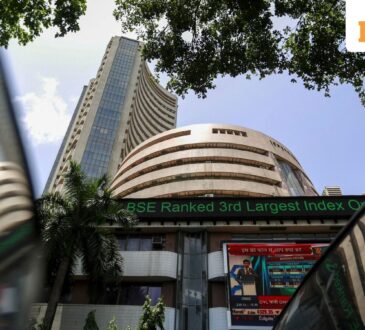
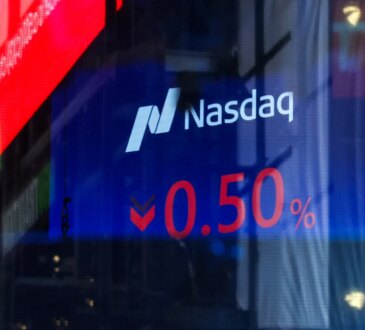
Frontline indices, the Sensex and the Nifty 50, suffered strong losses in morning deals on Tuesday, February 24, as investors booked profits across sectors, tracking weak global cues.
The Sensex crashed over 1,350 points to hit an intraday low of 81,934, while the NSE counterpart Nifty 50 fell 1.5% to 25,327 during the session.
The sell-off was broad-based, with the mid- and small-cap indices dropping more than 1% each.
Investors lost over ₹6 lakh crore as the overall market capitalisation of BSE-listed firms fell to ₹463 lakh crore from ₹469 lakh crore in the previous session.
Why is the stock market falling? 5 key factors
Let’s take a look at five key factors behind the market selloff:
1. The spectre of US tariffs
The Supreme Court of the United States (SCOTUS) struck down Trump tariffs last week, but that seems to have made the Trump administration more aggressive about its tariff strategy.
As per a Bloomberg report, the Trump administration is planning to use Section 232 of the Trade Expansion Act of 1962 to replace the global tariffs struck down by the Supreme Court.
Trump has threatened foreign nations that if they side with the US Supreme Court’s judgment, they may face higher tariffs on goods imported into the US.
Meanwhile, all eyes are on the US President Donald Trump’s first official State of the Union address of his second term on 24 February.
“President Trump’s State of the Union address today and the message that he will convey will be keenly watched by markets globally. The EU freezing the deal with the US in the light of the tariff changes following the US Supreme Court verdict and Trump’s warnings to countries backing away from deals indicate that the tariff drama has more in store for economies and markets,” VK Vijayakumar, Chief Investment Strategist, Geojit Investments Limited, observed.
Stock market crash: Sensex, Nifty 50 live updates
2. The US-Iran saga
The evolving situation in Iran is keeping investors cautious, as protests spread all over Iran and the government’s violent response reportedly killed thousands of people. The United States has threatened Iran with military action.
The next round of nuclear talks between Washington and Tehran is scheduled for Thursday, February 26.
3. Selloff in IT stock continues
A sharp selloff in IT stocks is weighing on overall market sentiment. The Nifty IT index crashed by almost 4% in intraday trade on Tuesday and has fallen nearly 20% in February so far amid concerns over AI-led disruptions and elevated US interest rates.
IT stocks are witnessing a selloff globally. For example, IBM’s stock price on Monday plunged to its lowest level in nearly three decades after Anthropic said its Claude Code tool can help modernise Cobol, a dated programming language that runs on IBM computers.
Anthropic said that Claude Code could now be used to automate the exploration and analysis that underpin the complexities of Cobol modernisation.
Notably, Claude Code is the same AI tool that triggered a massive selloff in IT stocks over the past few weeks.
“The main reason for this correction was the continued weakness in IT stocks. The recent decline has been largely driven by concerns over AI-led disruptions, particularly following the launch of Anthropic’s new Claude AI security tool, which has added to uncertainty around the sector’s earnings outlook,” Vishnu Kant Upadhyay, AVP – Research Advisory, Master Capital Services, observed.
“The trend of weakness in tech stocks stemming from the potential AI impact continues. The weakness in the ADRs of Indian IT companies indicates that this segment will continue to remain under pressure,” said Vijayakumar.
4. Crude oil prices rise
Brent crude prices jumped by 1% to surpass $72 per barrel mark on Tuesday, hovering near a six-month high, ahead of the third round of nuclear talks between the U.S. and Iran.
Elevated crude oil prices are weighing on market sentiment, as India is one of the world’s largest importers of the commodity. Higher prices can strain the country’s macroeconomic stability, fuel inflation, and weaken the currency.
5. Stronger dollar
The dollar index rose 0.20% and appears poised to reclaim the 98 mark. A stronger dollar is typically negative for emerging markets like India, as it increases the risk of foreign capital outflows.
Foreign institutional investors (FIIs) have started buying Indian equities in the cash segment this month following the announcement of the India–US trade deal.
However, valuations remain elevated, and a material earnings recovery is yet to take shape. A sustained rise in the dollar could derail the recent FII inflows into Indian equities.
Read all market-related news here
Read more stories by Nishant Kumar
Disclaimer: This story is for educational purposes only. The views and recommendations expressed are those of individual analysts or broking firms, not Mint. We advise investors to consult with certified experts before making any investment decisions, as market conditions can change rapidly and circumstances may vary.