Live Updates
Shares of Five Below are up 10%, or by $21.53 a share, on strong earnings and guidance. In the fourth quarter, revenue of $1.73 billion was above estimates of $1.7 billion. Adjusted EPS of $4.31 was above estimates of $3.98.
“With a growing store base, strong new store performance, and a differentiated customer value proposition, we believe we are well positioned to drive sustainable sales growth, margin expansion, and long-term shareholder value,” said Winnie Park, CEO of Five Below.
Looking ahead, the company expects revenue to range from $1.18 billion to $1.2 billion, as compared to estimates of $1.1 billion. It also forecast adjusted EPS of between $1.57 and $1.69, as compared to estimates of 98 cents.
Wells Fargo reiterated an Overweight rating and raised the price target to $260.
Analysts at JPMorgan just cut their price target on the S&P 500, noting that the oil price shock has not been priced into the market. In fact, the firm just cut its year-end target for the index to 7,500 from 7,200 on the “geopolitical overhang.”
“JPMorgan warned that if the S&P 500 selloff extends below the 200-day moving average of approximately 6,600, strong support may not emerge until the index reaches the 6,000 to 6,200 range,” added Investing.com.
Shares of Micron are down 5.6%, or by $26 a share, even with impressive earnings.
EPS of $12.20 beat by $3.54. Revenue of $23.86 billion, up 196.4% year over year, beat by $4.56 billion. Analysts were looking for EPS of $8.66 on revenue of $19.74 billion. The company also declared a quarterly dividend of 15 cents per share, which is payable on April 15 to shareholders of record as of March 30.
“Micron is a strong buy. We can see it earning around $40 in the current fiscal year, growing to at least $50. If we apply a 10–15x price-to-earnings ratio, there is still meaningful upside based on that valuation approach,” said Hendi Susanto, portfolio manager at Gabelli Funds, according to Barron’s.
Unfortunately, stock is down because supply is so tight; it can supply only a fraction of what its key customers need.
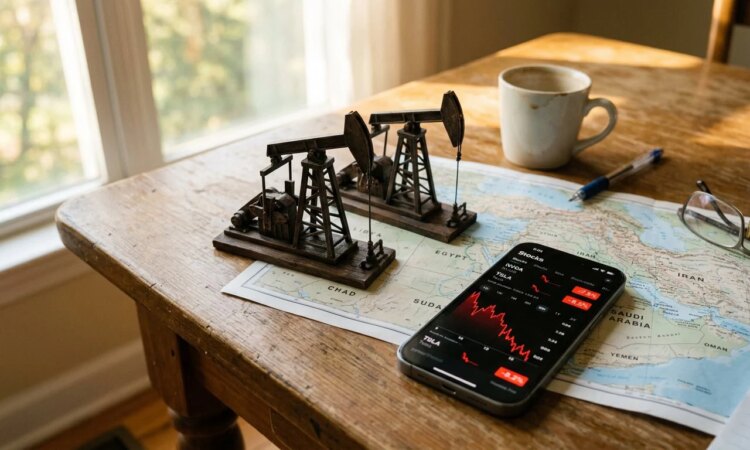
With the U.S.-Iran war showing no signs of cooling, oil prices are gushing higher again.
In fact, last checked, crude oil was up about $1 at $97.30. Brent crude is up $4.62 at $112. All after Iran intensified its attacks on oil and natural gas facilities around the Gulf. An Iranian drone also hit a Saudi refinery in the Red Sea.
And, according to the Associated Press, “Qatar, a key source of natural gas for world markets, said firefighters put out a blaze at the Ras Laffan LNG facility after it was hit by Iranian missiles. Production had already been halted there after earlier attacks.” Not helping, the idea of $200 oil isn’t looking so far-fetched – as Middle East exports and production collapse, removing about seven to 10 million bpd of global supply.
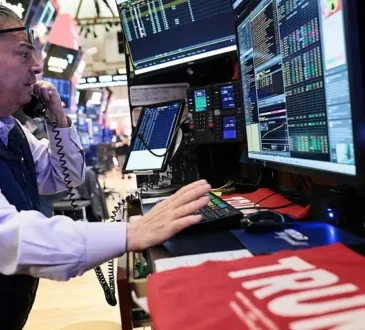
As a result, the S&P 500 is down another 0.9%, or 60 points. The SPDR S&P 500 ETF (SPY) is down 0.9%, or by $6. The Dow is down 0.73%, or by 328 points. The Nasdaq is down 1.13%, or by 250 points. Gold prices are down by $322 to $4,569, as Bitcoin slips back under $70,000.
Gold and Silver Dive on Inflation Fears
Safe havens, such as gold and silver, are taking a massive dive thanks to the Iranian conflict and higher inflation.
All as the war fuels concerns about an energy shock that could easily add inflationary pressures to economies all over the world. Central banks are also watching developments, with the U.S. Federal Reserve citing uncertain impacts from the war. The Bank of Japan also kept interest rates steady, noting that inflationary risks are elevated.
And, according to economist EJ Antoni, as quoted by the Financial Times, “I don’t think this is an economy that is going to be able to handle $100 a barrel for oil, it’s just not.”
He added, “The economy is weaker than we thought it was, and inflation is worse than we thought it was. The lower energy prices that we saw in 2025 helped put downward pressure on prices throughout the economy. Now, we’re going to see higher energy prices have exactly the opposite effect and put upward pressure on prices throughout the economy.”