If you — like me — are enmeshed in the day-to-day swings of the market, it can be easy to take the volatility for granted. Between COVID and Trump 2.0, chaotic market gyrations have become the norm.
Still, you simply must appreciate days like Wednesday, which show the market rewiring itself in real time.
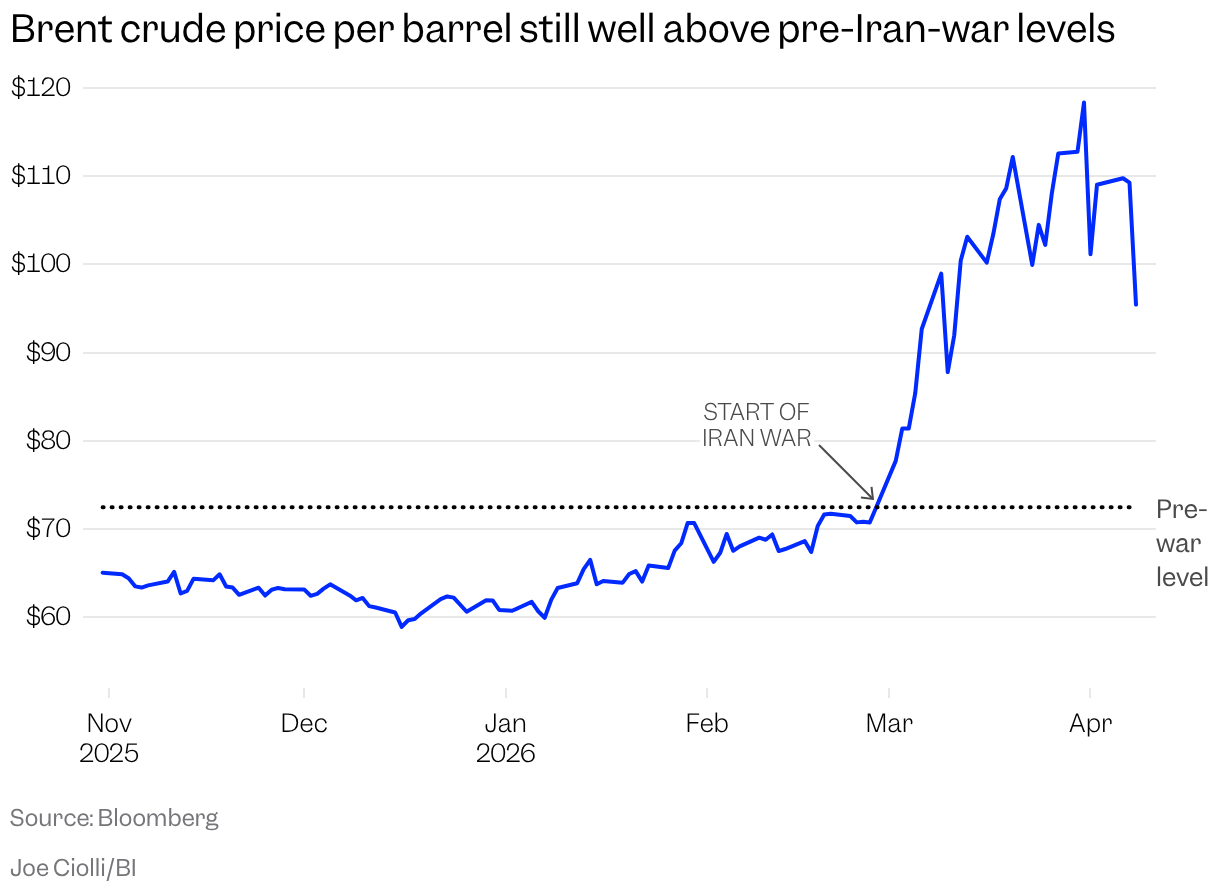
The wildest action came in oil, which absorbed its biggest drop since the 2020 COVID era. Brent crude tumbled below $100 per barrel and then continued lower, settling around $95.
There was also a 2.5% gain in the S&P 500, which would be a big deal if it hadn’t surged even more just eight days ago. The common thread: signs of war deescalation.
That all combined to make Wednesday a fun day in the market, and also one that offered some useful insights. Here are three things the relief bonanza taught us about markets going forward:
1. We got confirmation of Strait-reopening winners and losers
Wednesday was hardly the market’s first rodeo when it came to Iran-war relief. But it still offered a look at areas of the stock sectors poised to thrive if the war deescalates further.
Some of the winners will see relief in the form of lower commodity prices, following a wartime spike. Others are expected to benefit from lower interest rates if the inflationary pressures of the war subside.
Winners:
- Home-improvement stores (Home Depot, Lowe’s)
- Airlines (United, Southwest, Delta) and cruise lines (Carnival, Norwegian)
- Mega-cap tech (Intel, Meta, Micron)
Losers:
- Energy (Dow, Marathon, ExxonMobil)
2. We have an idea of what premium is still priced into oil
The drop in crude prices was certainly eye-popping, but oil is still trading well above where it was before the war.
While that premium is essentially investors pricing in a lengthy oil-market recovery, Wednesday’s decline is them acknowledging the timetable just got clearer and possibly shorter.
3. We were reminded that gold is fully mask-off as a risk asset
After moving in tandem with stocks throughout the Iran war, and for months leading up, gold rose as much as 4% on Wednesday. The gain again proved that the metal trades more like a risk asset than anything.
In theory, a dialing-down of geopolitical tension might make gold fall, because investors no longer need safe-haven protection. Instead, investors are choosing to look at increased odds of rate cuts as a reason to buy gold, which doesn’t pay interest.
Going up on the prospect of rate cuts? That’s very risk asset-y.
But despite the celebratory mood of Wednesday, there’s still a lot we don’t know — most notably, when the Strait of Hormuz will actually open.
All of the fervor from Wednesday was predicated on the assumption that tanker flow will resume. But it hasn’t yet. And the longer it takes, the more impatient those same traders that drove Wednesday’s optimism will get.