The Stock Market Drops as Oil Prices Flash a Warning Last Seen in 2022. History Says This Will Happen Next.
Key Points
-
The S&P 500 declined 2% during the first week of March after the U.S. and Israel launched attacks on Iran.
-
Brent crude oil recently hit $94 per barrel, the highest price since late 2022, as Iran has targeted oil infrastructure and tankers near the Strait of Hormuz.
-
Historically, geopolitical shocks have generally been buying opportunities because stocks tend to fall for reasons unrelated to the core business.
The S&P 500 (SNPINDEX: ^GSPC), a benchmark for the U.S. stock market, more or less traded sideways through the first two months of the year. Its lackluster performance was due in large part to uncertainty surrounding President Donald Trump’s trade policies.
Trump says his tariffs have “created an American economic miracle.” But economic data tells a different story. U.S. gross domestic product increased just 2.2% last year, and the economy added only 181,000 jobs. In both cases, those are the worst numbers since the pandemic in 2020.
Will AI create the world’s first trillionaire? Our team just released a report on the one little-known company, called an “Indispensable Monopoly” providing the critical technology Nvidia and Intel both need. Continue »
The situation got more complicated last weekend when the U.S. and Israel attacked Iran. The S&P 500 has since dropped 2%, and oil prices have increased about 30% to $94 per barrel, the highest level since late 2022. However, the stock market rebounded fairly quickly the last time oil prices spiked in response to geopolitical uncertainty.
Here’s what investors should know.

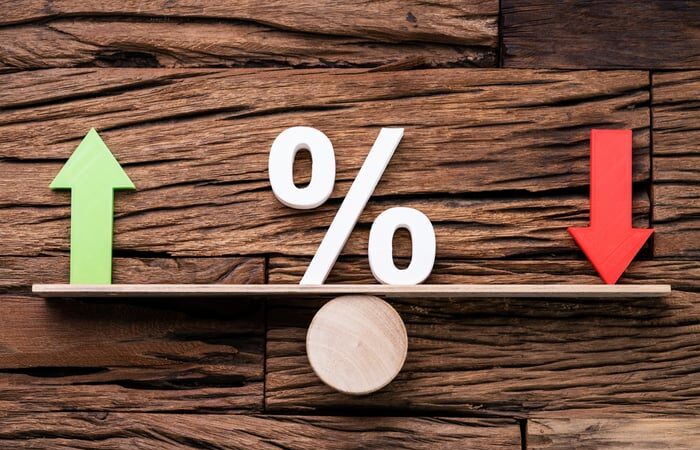
A green up arrow and a red down arrow are arranged on opposite ends of a fulcrum, and a percent sign sits between the two.
Image source: Getty Images.
The Iran war has pushed oil prices to levels last seen in late 2022
The U.S. and Israel launched joint attacks on Iran on Feb. 28, intending to cripple its nuclear and ballistic missile programs. Iran has responded with counterstrikes aimed at U.S. and Israeli military facilities across the Middle East, drawing more countries into the conflict.
Iranian missiles and drones have targeted oil infrastructure and tankers around the Strait of Hormuz, a key waterway that moves about 20% of the global oil and liquified natural gas in transit each day. Brent crude (a benchmark for international oil prices) has increased more than 30% to $94 per barrel, the highest level since late 2022.
However, with thousands of ships stuck around the Strait of Hormuz, producers have been forced to slash output. That means oil supply may not bounce back for a few weeks, even if the conflict ends tomorrow, which leaves room for oil prices to increase further even in the best-case scenario.
That has Wall Street vexed. Higher oil prices hurt the economy by lowering corporate profit margins and reducing consumer spending. Also, elevated oil prices add to inflation, which could force the Federal Reserve to keep interest rates higher for longer. That’s bad news for the stock market, and the situation may get worse. President Trump says the operation may take four or five weeks, if not longer.
The S&P 500 rebounded fairly quickly the last time oil prices were this high
The S&P 500 usually drops during periods of geopolitical uncertainty, but the index can also recover quickly. When Russia invaded Ukraine in 2022, Brent crude topped $120 per barrel, and prices remained elevated throughout the year. But once Brent crude fell below $80 per barrel in December 2022, the S&P 500 added 17% in the next year.
“If you go back many decades and tease out major geopolitical events, the markets on average have had peak-to-trough declines of maybe 5% to 10%,” according to Stuart Katz, chief investment officer at Robertson Stephens. “But 12 months after those trigger events, the markets have generally been in positive territory.”
In this scenario, how far the S&P 500 drops and how quickly the index recovers depend on whether the Iran war escalates or de-escalates in the coming days and weeks. Stocks may fall further if oil prices continue to climb. But the S&P 500 has recovered from every past drawdown, and there is no reason to believe this one will be any different.
“Historically, geopolitical shocks create sharp, short-term market dislocations, but rarely do they meaningfully alter long-term earnings trajectories,” according to Anshul Sharma, chief investment officer at Savvy Wealth. Put differently, periods of geopolitical uncertainty are often buying opportunities in hindsight because stock prices drop for reasons unrelated to their long-term growth prospects.
Should you buy stock in S&P 500 Index right now?
Before you buy stock in S&P 500 Index, consider this:
The Motley Fool Stock Advisor analyst team just identified what they believe are the 10 best stocks for investors to buy now… and S&P 500 Index wasn’t one of them. The 10 stocks that made the cut could produce monster returns in the coming years.
Consider when Netflix made this list on December 17, 2004… if you invested $1,000 at the time of our recommendation, you’d have $534,008!* Or when Nvidia made this list on April 15, 2005… if you invested $1,000 at the time of our recommendation, you’d have $1,090,073!*
Now, it’s worth noting Stock Advisor’s total average return is 949% — a market-crushing outperformance compared to 192% for the S&P 500. Don’t miss the latest top 10 list, available with Stock Advisor, and join an investing community built by individual investors for individual investors.
*Stock Advisor returns as of March 8, 2026.
Trevor Jennewine has no position in any of the stocks mentioned. The Motley Fool has no position in any of the stocks mentioned. The Motley Fool has a disclosure policy.