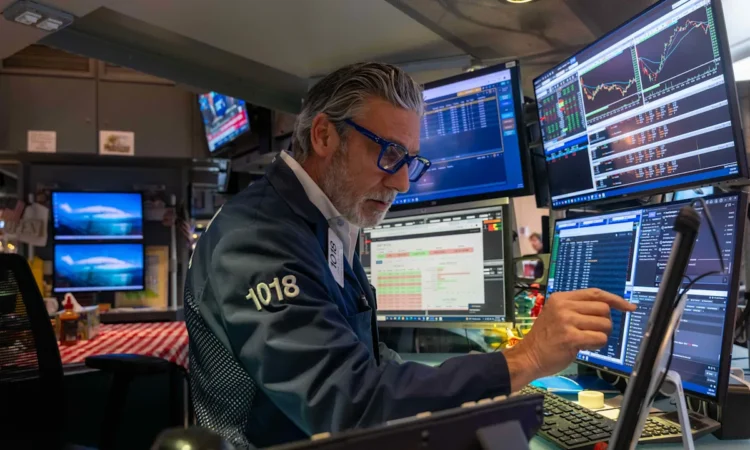

Spencer Platt / Getty Images
Bank of America expects the S&P 500 to rise a modest 4% over the next year.
-
Bank of America’s lead U.S. equity strategist predicted the S&P 500 would end next year around 7,100, just 4% above its level on Monday.
-
Earnings growth is expected to remain strong, but softness in mega-cap tech stocks and less liquidity could be a drag on stocks. BofA’s forecast is among the most bearish on Wall Street.
The stock market defied expectations again this year. One Wall Street analyst is telling investors not to expect it to happen in 2026.
“Our year-end target is pretty lackluster,” said Savita Subramanian, Head of U.S. Equity and Quantitative Strategy at Bank of America, on CNBC Monday. Subramanian’s team predicts the S&P 500 will finish next year at 7100, just 4% above today’s close—a pessimistic forecast by Street standards.
The S&P 500 has gained about 16% so far this year, putting the benchmark index on track to post its third straight year of double-digit gains. Like last year, strength in tech shares, and those of other companies exposed to the AI boom, has been the driving force behind this year’s gains.
Analysts are generally optimistic about the stock market heading into 2026, with even the most cautious experts forecasting a slightly positive year. Still, some experts are predicting a bumpy path to gains, and Bank of America is looking for things to finish far cooler than they appear on track to end 2025.
Subramanian expects earnings to grow at a healthy clip next year, a reflection of a surprisingly resilient economy that’s weathered soaring inflation, elevated interest rates, and an unpredictable global trade war. But Subramanian predicts multiples will contract next year as investors’ growth expectations moderate.
The run-up in AI stocks may become a headwind next year. The high valuations of mega- and large-cap tech stocks is one of the reasons Vanguard recently forecast the S&P 500 would average mid-single-digit returns over the next decade or so.
Subramanian on Monday said “buy-the-dream” AI stocks are “maybe headed for a little bit of an air pocket.” The AI trade has been pressured recently by concerns that tech companies are spending too much on a technology with uncertain commercial potential. Subramanian acknowledged similarities between today’s market and the Dotcom Bubble of the 1990s, but noted that several factors, including tech’s strong earnings, make today’s setup less risky.
Less liquidity could also keep a lid on the stock market next year, said Subramanian. “Everything looks really good right now from a liquidity perspective, from a Fed perspective,” she said. “Economic data is still relatively healthy. But when you think about liquidity over the next 12 months, it’s getting worse rather than better.”