The dollar's decline extended into Tuesday, as the Federal Reserve's cautious stance on the economic landscape and prospective U.S.-Japan dialogues weighed in. This marked a continuation of plummeting values after Moody's downgraded the U.S. sovereign rating, heightening traders' concerns over the nation's fiscal health.In focus are anticipated U.S.-Japan conversations, where Japanese Finance Minister Katsunobu Kato expects discussions with U.S. Treasury Secretary Scott Bessent to tackle currency volatility. Similar issues are likely to surface at the G7 finance meeting in Canada this week.While Australia's decision to cut interest rates saw...
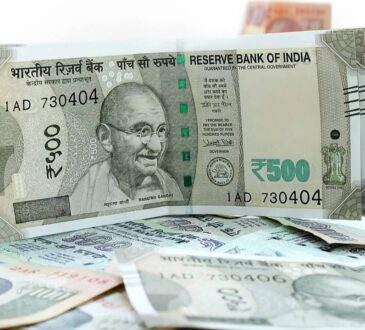
The rupee depreciated 30 paise to 85.88 against the US dollar in early trade on Friday, weighed down by intensifying geopolitical tensions between India and Pakistan.Forex traders said geopolitical tensions between India and Pakistan have sparked risk-off sentiment in the market leading to the rupee weakness. Besides, increased demand for the US dollar further dented investor sentiments. At the interbank foreign exchange, the domestic unit opened at 85.88 against the greenback, registering a fall of 30 paise over its previous close. On Thursday, the rupee saw its steepest single-day fall...
(Bloomberg) -- Asian currencies ripped higher against the US dollar Monday, extending a move that’s hurting exporters, weighing on equities and forcing central banks to intervene in the market to curb excessive gains. Most Read from Bloomberg Taiwan’s dollar surged the most since 1988, sending the nation’s benchmark stock index to its steepest slide in nearly a month. The offshore yuan climbed to its highest level in almost six months as exporters repatriated dollar earnings. The Hong Kong dollar held at the strong end of its allowed trading band for...
The dollar drifted lower on Monday after an early bump off a three-year low, as investor confidence in the world’s reserve currency remained in question following a stream of tariff-related pronouncements from US President Donald Trump.Investors braced for another volatile week as Trump’s imposition and then abrupt postponement of tariffs on goods imported to the US continued to sow confusion.The dollar reversed early gains as the Asian trading session got under way, languishing near a 10-year low against the Swiss franc at 0.8188.Sterling held to most of its 1.7 per...
According to RBI data, forex reserves have increased cumulatively by $20.1 billion over the past three weeks and by about $6.6 billion in the latest reporting week In a significant development, India's foreign exchange reserves rose from $6.596 billion to $665.396 billion in the week that ended on March 28, extending gains for the fourth straight week, official data released by RBI showed.This significant jump is the highest in nearly five months, after witnessing a period of downturn.According to RBI data, forex reserves have increased cumulatively by $20.1 billion over...
India’s foreign exchange (forex) reserves rose by $305 million to $654.271 billion for the week ending March 14, according to data released by the Reserve Bank of India (RBI) on Friday. This comes after a sharp increase of $15.267 billion in the previous week, marking the highest weekly surge in two years. The recent growth in reserves follows a period of decline due to forex market interventions and revaluation effects aimed at stabilizing the rupee. The RBI’s $10 billion forex swap played a significant role in the previous week’s spike....
Asia hours surge complicates FX options market-making - Risk.net End of drawer navigation content Skip to main content Late tariff announcements in US trigger hedging headaches during less-liquid Asia sessions Since the start of Donald Trump’s second US presidency, many of his tariff-related social media posts have tended to appear late New York time.This piles extra pressure on the Asia trading session when G10 currencies are less liquid and creates risk management challenges for foreign exchange options market-makers.Barry McCarthy, head of FX derivatives trading for North America at Deutsche Bank,...
Economic uncertainty across the globe has led to fluctuations in the currency markets, and there is still no clear understanding among analysts regarding which currencies are likely to become stable haven assets. Recent events, including the US tariff wars with Canada, Mexico, and China, the pause in American military aid to Ukraine, and changing global defense spending priorities, have only made the situation worse, as per CNBC. These factors are being watched very closely by market participants to see how they will impact foreign exchange rates in the coming months.British...