
‘Adak 2.0′: Private sector eyes former naval base investment with federal dollars pouring in
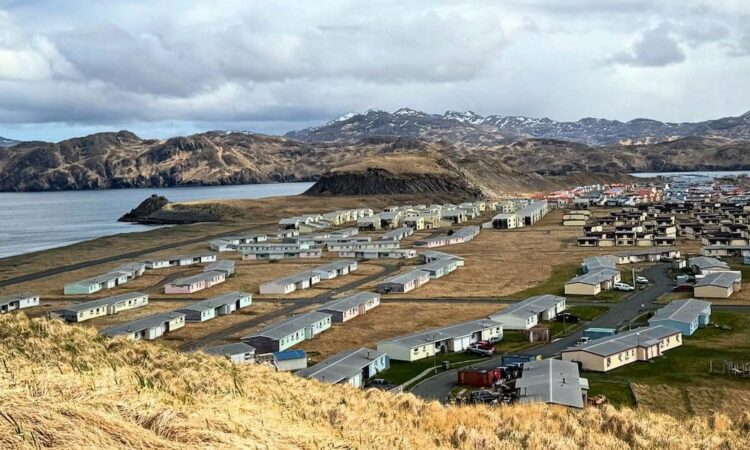
ANCHORAGE, Alaska (KTUU) – With federal investment trying to revitalize military buildup in Adak, the private sector is also keeping a close eye on those same developments.
Wanetta Ayers, Executive Director of the Southwest Alaska Municipal Conference, called the initiative “Adak 2.0.″
“Certainly where that level of spending goes, the private sector is going to be looking and be interested,” Ayers said. “There already is private sector interest in Adak because, again, it is really the most strategic location in the North Pacific.”
Adak is a Southwestern city in Alaska largely built on the ruins of a former Naval facility closed in 1997, according to the CDC. Through military operations, the state’s Department of Environmental Conservation says, the release of hazardous chemicals occurred, and the Navy has identified numerous sites with contamination from past Air Facility activities.
The city’s website says it is “inherently a more dangerous place to visit.”
Private sector leaders and Assistant Adjutant General Brian Kile spoke on the Adak developments and why its investments could be a boom for both national security and a weakening economy from depleting state revenues.
Sen. Dan Sullivan, R-Alaska, has long been a proponent of investing in the defunct naval base for its strategic position in the Arctic. It’s a position he held when he blocked a confirmation vote on Defense Secretary Pete Hegseth to pressure the department to reopen the Naval Base, Politico reports.
“Adak is 1,100 nautical miles closer to the Taiwan Strait than any of our bases in Hawaii,” said retired Gen. Joe Ralston, former vice chairman of the Joint Chiefs of Staff, in March during a field hearing on renewed funding chaired by Sullivan. “Arctic security cannot be effectively managed from outside of the region. A permanent presence is required to ensure we have military capability where we need it, when we need it.”
The Adak naval base has received $115 million to begin reopening from the 2026 National Defense Authorization Act. That federal funding could have a “dual use,” private sector leaders argue.
“We’re seeing a significant federal investment in Adak to increase or to build up the existing infrastructure that’s out there,” said Aleut Senior Director of Public Policy and Lands, Ethan Tyler.
In 2004, much of Adak was transferred to the Aleut corporation, including its downtown area, port facilities and residential areas, according to the state’s Department of Environmental Conservation.
“Combine that with private sector interest and commercial interests and what you have is you have a space where private sector investment can bolster that infrastructure on top of what the federal government is doing,” Tyler said.
With lower state revenues, more economic activity could mean more dollars and more people flowing in and out of the state — even in a place as remote as Adak.
“I think the investment that you’re seeing in Adak, you’ll see a ripple effect through the entire state,” Tyler said, adding that impacts could stretch into manufacturing, fisheries, logistics and support service industries.
“Every dollar that goes into Adak is going to have an outsized impact throughout the rest of the state.”
See a spelling or grammar error? Report it to web@ktuu.com
Copyright 2026 KTUU. All rights reserved.


