Private equity firms buying up local housing for rental property investments | Business
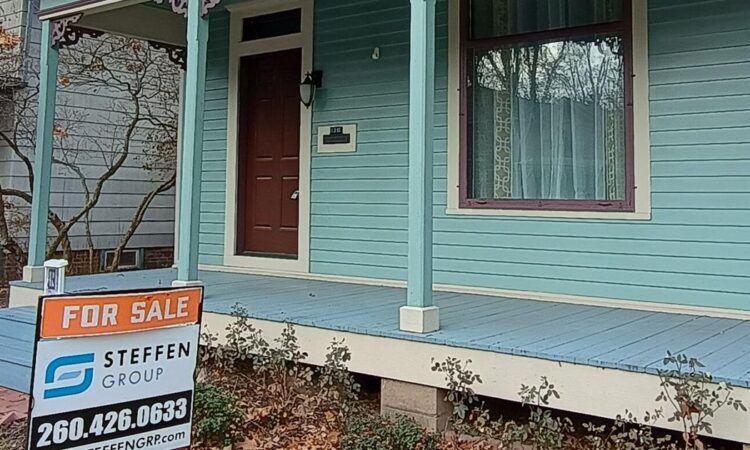
Fort Wayne’s first-time homebuyers are competing against bidders with deep pockets. Think hundreds of millions of dollars deep.
Private equity firms are increasingly investing in residential property in northeast Indiana with the goal of generating steady income, housing experts say.
Some homes are converted into rentals with a one-year lease, effectively taking them off the market for those looking to become homeowners, and others are advertised as short-term rentals through Airbnb or Vrbo. Either way, the properties are taken off the market at a time when communities nationwide are experiencing a shortage of affordable housing.
Private equity firms are estimated to own more than 500,000 homes across the U.S. and are expected to control 40% of the single-family rental market by 2030, according to AngelList. The software provider to investors and startups has offices in New York and San Francisco.
The boom in private equity ownership “is really controversial, especially among housing advocates,” said Charles Marohn, president of Strong Towns, a Minnesota-based nonprofit specializing in urban housing development.
Steve Zacher, The Zacher Co.’s president and managing broker, said occupancy in the office and retail slices of the commercial real estate market declined during the coronavirus pandemic and haven’t fully bounced back. As a result, he said, residential real estate has become more attractive to some investors.
Stunting growth
Heather Presley-Cowen is the CEO of Club 720, a platform for down payment assistance that helps communities reach their market potential by adding housing. Private equity ownership adds to the shortage of homes for sale, she said.
When local families move into newly constructed housing, their former homes could be sold to lower-income families, such as recent college graduates, Presley-Cowen said. But private equity firms are rushing in with all-cash offers that are hard for homeowners to turn down, she said.
“I can’t take on the big guys. Millennials can’t take them on,” she said during a phone interview.
Converting a percentage of starter homes into short-term rentals stunts population growth.
“The best way to attract talent to a community is to have great, beautiful rentals that they can afford,” Presley-Cowen said.
As for how many private equity-owned homes are long-term rentals rather than short-term, Marohn said, “I think that’s pretty much unknowable.”
At least one national research firm studies the trend.
AirDNA, a Denver-based firm, tracks the short-term rental market, calling it a $140 billion industry.
As of last week, it valued Fort Wayne market performance at 98 on a scale of 100. Bram Gallagher, AirDNA’s director of economics and forecasting, described the market performance metric as a proprietary statistic. It’s based on factors including whether the community has adopted restrictions on short-term rentals and the cost of housing.
The website lists 847 local short-term rental properties, with 441 labeled active within the past 28 days. Gallagher said the firm uses the metric to reflect properties that are available only seasonally.
The average daily rate is $130 – or $140 when an entire house is rented.
Annual occupancy in the Fort Wayne market is 54%, which matches the national average, Gallagher said. Daily rental rates peaked at $143 in June after a low of $114 in February, according to the website’s dashboard.
That kind of data is important to investors, who are AirDNA’s target customers. It helps them decide where to invest next and how to optimize their current listings, according to the website.
Revenue growth in the Fort Wayne market is rated by AirDNA at 99 on a scale of 100, making it an attractive place to buy residential properties because of the amount of income they generate, Gallagher said.
Average annual revenue in this market ranges from $14,600 for owners renting out apartments to $21,500 for those leasing entire houses, according to AirDNA.
‘Really fragile’
Just like teasing apart long-term and short-term rentals, it’s difficult to separate which properties are bought by out-of-state entities instead of local investors who want to increase their income by owning and renting out two or three homes, experts say. Presley-Cowen said it might require combing through the Allen County assessor’s office’s list of real estate transfers.
Redfin Corp. has approached the challenge of quantifying private equity investment through a side door.
The Seattle-based real estate brokerage and mortgage origination firm compiled data for the all-cash home sales in the U.S. metro areas with at least 4,000 residential sales this year. Although the results don’t offer a perfect picture of private equity activity, the thinking is that not many average homeowners can afford to write a check for hundreds of thousands of dollars.
The median sale price for an existing home in the U.S. was $404,500 in September, according to the National Association of Realtors.
Although Fort Wayne isn’t among the cities Redfin studied, the numbers reflect the nationwide trend. The highest percentage was in Naples, Florida, where 60% of residential properties were sold in all-cash transactions. The median listing price is currently almost $750,000 in Naples, where more than 4,800 homes are available to rent, according to Realtor.com.
It’s not just warm-weather communities that appear on Redfin’s list, however. Toledo which is 100 miles northeast of Fort Wayne, ranks 11th with 42% of this year’s residential buyers paying all cash. That’s a 68% surge from six years ago, when it was 25%.
Gallagher agreed that tracking all-cash deals might be a good way to get a sense of private equity activity.
“Who else can afford to pay cash for homes?” he asked.
Local real estate agents have been fielding calls from interested private equity buyers.
Claudia White, with 5 Star Realty, said she’s been contacted by several hedge funds interested in buying homes in Fort Wayne. When a property is listed at $115,000 to $125,000, the private equity funds offer to buy them for $150,000 cash, she said.
Such inflated offers apparently haven’t been common enough to skew the total Allen County residential home sales market this year, however.
UPSTAR – the Upstate Alliance of Realtors – gathers data on real estate sales through its Upstate Multiple Listing Service. Participating counties are Allen, Whitley, Huntington, Adams, Wells, DeKalb and Noble. Its online dashboard shows that buyers paid 98% of sellers’ asking price from January through October of this year in Allen County.
White has had clients who struggled to find affordable housing, even with her help. Even though she would receive a fee after facilitating any home sale, White has declined to work with private equity buyers.
The ownership groups – small and large – handle the investments in distinctly different ways.
“The difference between the Ma and Pa investor and a private equity investor is what they do with the equity,” Marohn said.
Gallagher said the community benefits when it’s a local owner.
“If it’s residents in the community, that means the money is staying in the community, which is great,” he said. “If it’s leaving the community, it’s not so great.”
Marohn said individuals also are less sensitive to property values going down because the steady income stream continues.
But private equity firms use properties’ equity as collateral for loans to buy more houses or stocks. If residential real estate prices drop so that the collateral no longer justifies the size of the loan, the lender can demand its money back and the borrower – the private equity firm – has to sell the property fast and potentially at a loss, Marohn said.
That’s why big investors are willing to outbid local house hunters – the firms need property values to remain high, he said, echoing White’s experience. And they need interest rates to be low enough to increase demand for real estate, Marohn said.
“The investment market in real estate is really, really fragile,” he said.
Antitrust concerns
Although Fort Wayne’s wealth of short-term rentals might make the city attractive to visitors who contribute to the local economy, the dynamics of outside ownership might unfairly jack up rental prices.
AngelList, the software provider, noted that private equity firms that invest in rental properties “have totally avoided antitrust oversight” by government agencies.
Antitrust laws protect consumers from predatory business practices. They make it illegal for competitors to work together when setting prices.
That average apartment rent in the Summit City is $1,167, according to RentCafe.com, a national apartment search website.
The range stretches from less than $500 a month to more than $2,000, according to the Santa Barbara, California-based firm.
Fort Wayne’s average rent was about $900 just three years ago, according to RentCafe.com’s trend line.
When out-of-state groups buy residential real estate, they hire property management firms to oversee maintenance and other on-site duties. It would be easy for a property management firm working for several ownership groups to influence rental rates across properties.
AirDNA lists major property management firms in the Fort Wayne market on its website, making it easy for private equity firms to find companies that will oversee local properties.
It pays owners to hire a management firm. The local average daily rate of $130 climbs to $154 for professionally managed properties, according to AirDNA data.
Although it helps the local housing market when homeowners sell to families who plan to move in, selling to private equity firms can be more attractive, experts say.
Many times, sellers don’t know who is making an offer because it comes through a real estate agent, Strong Towns’ Marohn said.
When private equity firms are involved, they typically offer cash and can close on the sale in days, he said. An offer from someone who already owns a home might be contingent on sale of that property – which can take an unknown amount of time.
Even if a homeowner has a flexible schedule and prefers not to sell to an investor, the amount offered might be too tempting to pass up, Marohn said.
Because private equity firms want property values to remain high to serve as collateral for their bank loans, they have an incentive to make generous offers, said Marohn, who added that home prices aren’t being driven by what the average individual homebuyers pays for a property.
“Our market is so full of credit,” he said.
Kim Ruffin, UPSTAR communications director, said the organization isn’t a good source for information on the private equity investment trend. But the professional organization’s data provides some insight into the local housing market.
The median sales price of a single-family home in October was $245,000, a 10% increase compared to one year ago, according to UPSTAR. In the designated region, 737 properties were sold that month. It’s unknown how many were sold to private equity firms.