
Treasurer shifts toward short-term investments as Arlington budget picture worsens
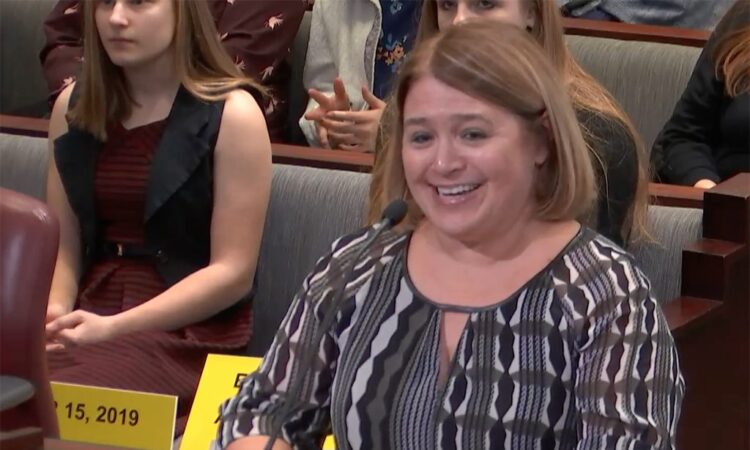
Arlington’s treasurer is taking a more conservative stance on investments amid fears that local tax revenue could run short in the coming months.
“I have decided to make all of our investments fairly short-term,” Carla de la Pava told County Board members at a March 3 budget hearing. “Right now, it has been the wisest [action]. The safety of having liquid assets during this time of chaos has been really important.”
Depending on the time of year, the treasurer’s office has between roughly $400 million and $1 billion in its coffers. Because of difficult economic conditions and their impact on the county’s revenue sources, the dollar amounts have been lower over the past year.
In addition to assessment declines for commercial real estate, the local economy is also taking hits at the retail level, de la Pava told Board members.
“What we see a lot of right now is closing restaurants, businesses that are struggling,” she said.
Virginia’s 133 cities and counties are limited under state law in the investments they can make with revenue. While localities are allowed to put money in investment-grade corporate securities, Arlington has moved away from that over the past year — moving toward more “overnight” investments that can be cashed out almost immediately if necessary.
At the end of December, when about $594 million of county cash was invested, the majority of it — $330 million — was in the Virginia Investment Pool, a consortium managed by the Virginia Municipal League and Virginia Association of Counties.
An additional $91 million was invested through the state government’s Local Government Investment Pool, with $56 million in money-market accounts at local banks.
While other investments, including longer term securities, totaled $115 million, the amount of cash in that category was down two-thirds from a year before.

In normal economic times, moving to short-term securities would reduce the return on investment. But in the current economy, the reverse has been true.
“We haven’t lost any money. We’ve made money based on that decision,” de la Pava told Board members.
“Over the past year, investments under one year have had the highest returns,” she told ARLnow in a follow-up interview. “Since last January, we have earned a total return on our cash and investment balance of approximately 4.69%.”
At a recent community event sponsored by Advance Arlington, County Manager Mark Schwartz raised the specter of having to cut programs or furlough staff between now and the end of the 2026 fiscal year on June 30.
“We don’t want to do that,” Schwartz said, but added that it may be necessary.
In 2025, the county government ended the year with only $1 million left out of a budget of nearly $1.7 billion. It was too close for comfort, said Schwartz, who has been county manager for a decade.
“You can’t end up that close,” he told participants at the Advance Arlington event. “That really freaked me out.”
Arlington and most Virginia counties have an elected treasurer who answers to voters and the state government rather than directly to the local governing body. Several times per year, de la Pava discusses the current financial situation with the County Board.
At the work session with Arlington’s Board members, there seemed to be a general consensus that de la Pava was acting in the community’s best interest.
Her rationale was “quite reassuring,” Board member Takis Karantonis said.
Expectations that interest rates on investments like bonds and money market funds would decline throughout 2026 may prove wrong, de la Pava noted during the presentation.
“Now that we’re faced with what looks to be a war, I’m not sure that interest rates will go down,” she said.
That could be moderately good news for the county government, as higher interest rates will translate to somewhat more revenue.


