RAMALLAH /West Bank — PNN
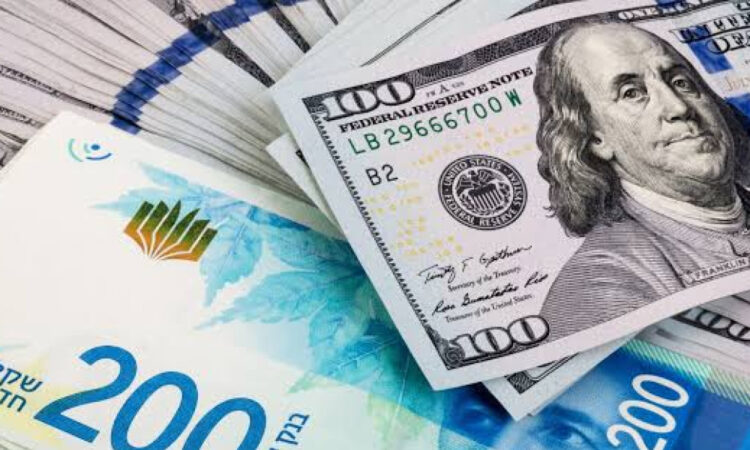
Economist Nabil Kukali said the strengthening of the Israeli shekel against the U.S. dollar and the Jordanian dinar is intensifying economic pressure on Palestinian households, amid a deep economic slowdown and structural reliance on foreign currencies.
Kukali, founder and head of the Palestinian Center for Public Opinion (PCPO), said that while a strong currency is typically seen as a sign of economic stability, in the Palestinian context it has become a direct burden on citizens due to structural imbalances and the use of multiple currencies.
He noted that a large segment of Palestinians earn income in dollars or dinars—through salaries, remittances or savings—while most daily expenses are paid in shekels, leading to an erosion of purchasing power whenever foreign currencies weaken.
Polls conducted by PCPO in 2025 and 2026 show rising levels of economic anxiety, with a significant share of Palestinians describing their conditions as “difficult” or “very difficult,” reflecting growing uncertainty about their financial future.
The warning comes as the Palestinian economy faces a sharp downturn. Data from the Palestinian Central Bureau of Statistics indicate that gross domestic product contracted by about 24% compared with 2023 levels, despite modest growth recorded in 2025, underscoring continued economic decline.
Eroding incomes despite stability in earnings
Kukali said households that receive income in dollars were able to obtain higher value in shekels in the past than they do now, meaning “the same income no longer provides the same standard of living.”
Economic reports suggest that while the dollar’s decline against the shekel does not affect those paid in the Israeli currency, it places additional strain on employees and savers who depend on foreign currencies.
Drivers of shekel strength
Analysts attribute the shekel’s strength to the relative resilience of the Israeli economy, supported by foreign investment inflows, particularly in technology and financial services, as well as monetary policies that have helped stabilize and strengthen the currency.
Recent data show the shekel has gained roughly 12% since early 2025, driven by investment flows and a relatively weaker dollar globally.
An economy without policy tools
Kukali said Palestinians face these shifts without independent monetary tools, as the absence of a national currency or effective monetary policy leaves the economy directly exposed to shekel movements and Israeli financial decisions.
The World Bank has said the Palestinian economy effectively relies on the shekel as its primary currency, making it vulnerable to exchange rate fluctuations amid complex financial and banking constraints.
Meanwhile, the Palestine Monetary Authority has warned of the risks posed by the accumulation of shekels in Palestinian banks, which limits their ability to finance trade and adds pressure on financial stability.
Growing social impact
Kukali said the effects of exchange rate volatility extend beyond finances, affecting social and psychological well-being, as many families are forced to cut spending and delay future plans.
He added that Palestinians increasingly experience economic hardship not just as reduced income, but as a gradual erosion of security and stability.
Uncertain outlook
Kukali said the shekel is likely to remain strong in the near term unless major shifts occur, such as direct intervention by Israel’s central bank or a significant global rebound in the dollar.
He concluded that the core of the crisis goes beyond exchange rates, pointing to structural weaknesses in the Palestinian economy and its dependence on Israel.
“Palestinians are not only losing the value of the dollar,” he said, “but also part of their ability to endure within an economy they do not control.”