
Stock Market Today (LIVE): Lilly Pens $7B Deal for Cancer Tech; Marvell Rockets on Google Chip Rumors

📌 Top story — scroll down for more updates
Lilly’s $7B Pivot Into Cancer Tech
12:30 pm — LLY flat
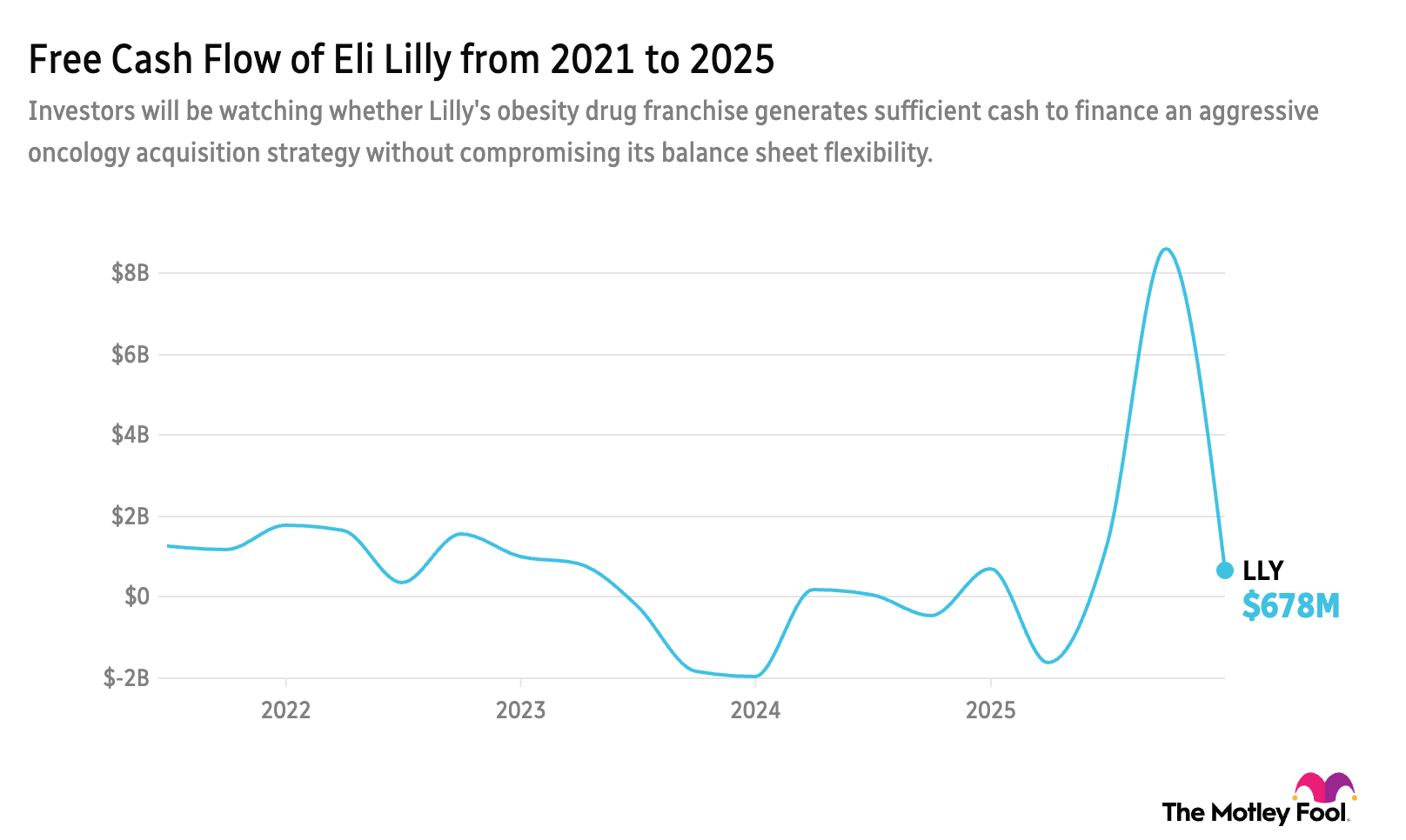
Eli Lilly (LLY 0.20%) is diversifying its portfolio beyond blockbuster obesity drugs with a deal to acquire Kelonia Therapeutics for up to $7 billion. The agreement includes a $3.25 billion upfront payment for Kelonia’s “in vivo” CAR-T technology, which reprograms T-cells inside the patient’s body to attack cancer. This approach eliminates the weeks of lab engineering and harsh preconditioning chemotherapy required by current treatments from rivals like Johnson & Johnson (JNJ 0.72%) and Gilead (GILD 0.99%). By utilizing the massive cash flows from its GLP-1 business, Lilly aims to dominate hematology with a therapy that can be administered in standard clinics rather than specialized academic centers.
- Logistics Disruption: Traditional CAR-T requires harvesting and shipping cells to a lab, but Kelonia’s one-time intravenous infusion simplifies the process entirely. This shift could democratize advanced cancer care, significantly expanding the addressable market for cell therapy.
- Capital Allocation Shift: Management is pivoting toward later-stage, “de-risked” acquisitions to ensure tangible drug launches follow their recent spending spree. This strategy uses the financial strength of the diabetes franchise to build a multi-pillared pharmaceutical powerhouse.

Rivian Scrambles to Resume Production
12:25 pm — RIVN -2.2%
Rivian Automotive (RIVN 1.80%) is assessing damage after a tornado struck its Normal, Ill., manufacturing facility over the weekend. CEO RJ Scaringe confirmed that the storm impacted a new section of the plant dedicated to parts storage and logistics for the upcoming R2. While assembly lines remain operational and no injuries were reported, the timing is sensitive as the R2 is a critical vehicle for Rivian’s growth, slated for a spring debut. Scaringe expects logistics operations to resume this week, though “Building 2” remains closed. Investors are monitoring for potential supply chain hiccups that could derail the high-stakes launch.
- Logistics Bottleneck Fears: The damaged area specifically housed components for the R2, meaning any inventory loss could tighten the window for the spring rollout. Shareholders should watch for updates on whether parts replacement will impact initial delivery targets.
- Infrastructure Resilience: Despite roof and wall damage reported in the new construction, the core assembly operations were spared. This suggests the primary production capacity for existing R1 models remains intact, limiting immediate revenue disruption.

Today’s Change
(-1.80%) $-0.31
Current Price
$16.92
Key Data Points
Market Cap
$21B
Day’s Range
$16.76 – $17.14
52wk Range
$10.85 – $22.69
Volume
323K
Avg Vol
29M
Gross Margin
-276.59%
Marvell and Google Team Up for AI
11:20 am — MRVL +4.3%
Marvell Technology (MRVL +4.35%) shares surged over 4% Monday following reports of a strategic collaboration with Alphabet (GOOG 0.78%) to develop custom AI silicon. According to The Information, the duo is co-designing two specialized processors: a memory processing unit to enhance Google’s existing Tensor Processing Units (TPUs) and a dedicated chip for AI model inference. With designs slated for completion by 2027, this partnership deepens Marvell’s integration into the Google Cloud ecosystem. Marvell remains a top semiconductor performer in 2026, with shares climbing 60% year-to-date as hyperscalers seek alternatives to Nvidia (NVDA 1.14%) hardware to handle massive machine learning workloads.
- Silencing the Nvidia Monopoly: By developing proprietary memory units, Google aims to bypass the supply bottlenecks and high costs associated with off-the-shelf components. This vertical integration strategy provides Marvell with a stable, high-volume revenue stream shielded from broader market volatility.
- The Long-Term Design Lock: Finalizing architecture by next year secures Marvell’s position in Google’s data centers for the next hardware generation. This early-stage collaboration ensures that Google’s machine learning infrastructure is fundamentally built around Marvell’s specialized processing capabilities.
Adobe Fights Back With AI Enterprise
10:30 am — ADBE +2.0%
Adobe (ADBE +1.68%) launched its “CX Enterprise” AI suite Monday, aiming to reclaim momentum after a 30% year-to-date share decline. The new system utilizes AI agents to automate corporate marketing and customer interactions, directly challenging the “autonomous” disruption from startups like Anthropic. In a strategic shift, Adobe is partnering with rivals and infrastructure giants including Amazon (AMZN 1.43%), Microsoft (MSFT 0.89%), and Nvidia (NVDA 1.14%) to ensure cross-platform compatibility. This launch arrives just days after Anthropic debuted “Claude Design,” a tool that threatens Adobe’s core creative territory by generating prototypes and slide decks through simple chat prompts.
- Ecosystem Agnosticism: By ensuring CX Enterprise functions across the hardware and cloud environments of its biggest competitors, Adobe is attempting to become the universal operating system for corporate AI marketing. This interoperability could prevent enterprise clients from migrating toward standalone startup tools.
- Creativity Under Siege: The rise of experimental visual generation in chatbots has sparked investor fear that Adobe’s high-margin subscription moat is leaking. Management is betting that deep enterprise integration and “safe” corporate guardrails will prove more valuable to CFOs than the raw speed of unproven AI challengers.

Today’s Change
(1.68%) $4.10
Current Price
$248.55
Key Data Points
Market Cap
$99B
Day’s Range
$245.41 – $251.60
52wk Range
$224.13 – $422.95
Volume
144K
Avg Vol
5.9M
Gross Margin
88.77%
Top of the Morning
9:50 am

By Morning Show host Jim Gillies
Earnings season is upon us — what are you looking forward to seeing?
For me, a small-cap investing specialist and lover of odd and often forgotten companies, here’s a sampling of the things I’m looking forward to:
- The book-to-bill ratio reported by Medpace Holdings (MEDP +0.47%). The book-to-bill is arguably the most important number Medpace reports, since everything else in the quarter flows from it. Last year, a book-to-bill above 1.0 accompanying quarterly numbers meant the stock soared — and vice versa. In Q4 we saw an unexpected pullback; will it carry over into 2026?
- If AerCap Holdings (AER 0.86%) continued to get well above book value prices for asset sales. We already know they signed 202 new lease agreements in Q1 2026, completed 32 purchases, made 52 sales transactions, completed $3 billion of new financing transactions, and continued to cannibalize themselves at a fast pace, buying in another 5.4 million shares for $745 million (average price $139). Sale prices above book value would signal continued high prices for resale assets in the space.

Today’s Change
(-0.86%) $-1.27
Current Price
$146.18
Key Data Points
Market Cap
$25B
Day’s Range
$145.68 – $147.26
52wk Range
$93.28 – $154.94
Volume
13K
Avg Vol
1.4M
Gross Margin
56.41%
Dividend Yield
0.82%
8:15 am

By Morning Show host Nick Sciple
Team Rule Breakers
It was supposed to be a de-escalation weekend. Friday looked like a breakthrough. President Trump and Iranian officials said the Strait of Hormuz (the narrow waterway connecting the Persian Gulf to the open ocean, through which about 20% of the world’s oil flows) was reopening. Oil dropped nearly 10% and the S&P 500 ripped higher on relief that the worst was behind us.
Then the weekend happened.
By Saturday, Iran had slammed the Strait shut again, accusing the U.S. of violating the ceasefire by maintaining its naval blockade of Iranian ports. Revolutionary Guard gunboats fired on a tanker and two Indian-flagged vessels got caught in the crossfire. On Sunday, the USS Spruance intercepted the Iranian-flagged cargo ship Touska in the Gulf of Oman. After a six-hour standoff where the crew ignored repeated warnings, the Navy put rounds from its 5-inch gun into the engine room. U.S. Marines now have custody of the vessel, the first ship seizure since the blockade began a week ago.
Oil is doing what you’d expect. WTI is around $89 this morning, up roughly 6% overnight. Brent is back near $95. ADNOC’s CEO (ADNOC is the Abu Dhabi National Oil Company, one of the world’s largest state-owned energy producers) called Iran’s behavior a “protection racket” and said the 50-day disruption has blocked nearly 600 million barrels from moving through the waterway. Vessel transits through Hormuz fell to zero on Sunday. Pre-war, over 100 ships a day were making that trip. The ceasefire expires Wednesday and it’s not clear Iran even shows up to the next round of talks in Islamabad.
Here’s where it gets interesting for investors.
Opening Bell
9:35 am
The S&P 500 and Nasdaq Composite pulled back Monday as a weekend ship seizure by the U.S. reignited Middle East volatility. After the Nasdaq’s historic 13-day winning streak, West Texas Intermediate crude jumped 4% to over $87, reflecting fears that the vital Strait of Hormuz will remain restricted. President Trump’s threat to target Iranian infrastructure if a deal is not reached this week has introduced fresh uncertainty into a market that was recently pricing in a permanent de-escalation. While major averages fell 0.2%, some analysts argue the underlying trajectory still favors a deal despite the aggressive rhetoric.
American Calls United Merger Bid Anti-Competitive
8:00 am — AAL -3.13%, UAL -3.04% in pre-market trading
American Airlines (AAL 4.50%) shares dipped in Monday premarket trading after the carrier firmly rejected a blockbuster merger proposal from United Airlines (UAL 2.69%). United CEO Scott Kirby recently pitched the tie-up to the Trump administration as a way to bolster American competitiveness against Middle Eastern carriers on international routes. However, American dismissed the idea as “negative for competition,” citing significant antitrust hurdles that would give the combined entity a 40% domestic market share. While Department of Transportation officials have signaled openness to industry consolidation, critics warn a deal of this magnitude remains a regulatory non-starter.
- Antitrust Fortress: Legal experts suggest a combination would face unprecedented scrutiny, as the “Big Four” already control 80% of U.S. capacity and would dominate key hubs like Chicago and Dallas by up to 70%.
- Strategy Over Scale: Despite the rebuff, United may pivot toward smaller acquisitions or asset “peel-offs” to satisfy an administration that favors landmark deals but remains wary of consumer pricing monopolies.
This Morning’s Breakfast News
7:30 am — TSLA -0.85% in pre-market trading
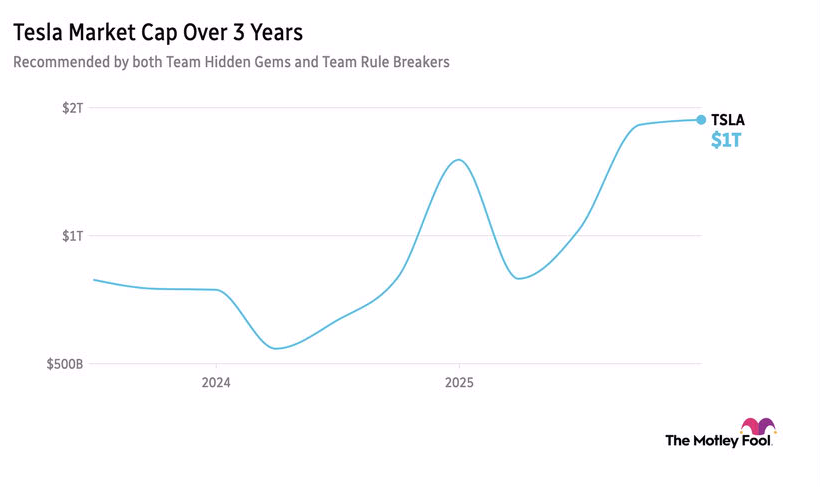
Tesla (TSLA 2.12%) is due to report its first quarter of fiscal 2026 on Wednesday, with the stock down 11% year to date. It’s been picking up in April, as CEO Elon Musk makes the headlines with the upcoming SpaceX IPO – now widely expected mid-June. Analysts are predicting an uptick in Tesla profit, even after 358,000 vehicle deliveries in Q1 fell short of the expected 370,000.
- Terafab to move at “light speed”: Elon Musk has been urging haste from potential suppliers for his Terafab AI chip-making project, says Bloomberg. The joint venture between Tesla and SpaceX – intended to produce a terawatt of annual computing capacity – could cost over $25 trillion in capital expenditure, analysts estimate.
- “Tesla is not valued based on how many cars it can sell this or next quarter”: Fool analyst Emily Flippen last month pointed out Tesla is “valued on optionality, the sheer breadth of what this business could become and the potential for those bets to compound into durable cash flows over decades.”
Earnings Preview: Intuitive Surgical
6:00 am — ISRG -0.15% in pre-market trading
Intuitive Surgical (ISRG 0.49%), a global leader in robotic-assisted surgery systems, is expected to report its first-quarter 2026 earnings on Tuesday, April 21, 2026, after the market closes.
What to Watch in Q1 FY2026’s Report
- Procedure growth and seasonality impact: Investors should monitor how procedure volumes trend in the first quarter, which historically sees a dip due to insurance deductible resets in the U.S. and holiday-related slowdowns internationally.
- da Vinci 5 adoption and upgrade cycle: Watch for updates on placements of da Vinci 5 systems, including the pace of upgrades and international rollout, as well as customer feedback on new features like Force Feedback instruments.
- Gross margin trends and tariff effects: Pay attention to gross margin performance, especially as tariffs are expected to have a larger impact in 2026 and as the product mix continues to shift toward newer platforms and refurbished systems.
- Recurring revenue and digital subscription uptake: Look for signs of continued growth in recurring revenue streams, including early data on paid renewals for digital subscriptions (such as My Intuitive+), which could become a new source of revenue.
- Competitive developments and international market dynamics: Updates on pricing and competitive pressures in China, as well as progress on going direct in Italy, Spain, and Portugal (expected to close by end of Q1), will be important for assessing the company’s international growth outlook.
Morgan Stanley Sees CPUs as Next AI Winners
5:30 am
As the artificial intelligence boom matures, Morgan Stanley (MS +0.64%) predicts a fundamental shift from simple content generation to “autonomous action,” a transition known as agentic AI. This evolution is expected to pivot hardware demand toward central processing units (CPUs) and high-performance memory, potentially adding $60 billion to the data center CPU market by 2030. While Nvidia (NVDA 1.14%) has long reigned supreme with its graphics chips, analysts argue the next wave of AI will be defined by coordination and system-level planning, repositioning Intel (INTC 4.15%), AMD (AMD 1.81%), and Arm (ARM +1.83%) as critical control-layer providers.
- Memory and Manufacturing Edge: The surge in general-purpose compute intensity is set to boost pricing power for suppliers like Micron (MU 2.16%) and TSMC (TSM 0.73%), as supply constrained manufacturing becomes a strategic bottleneck.
- The “Autonomous” Premium: Agentic systems require complex multi-step reasoning, favoring companies that bridge the gap between raw power and specialized orchestration, including equipment leaders like ASML (ASML +0.53%).
QXO and TopBuild Unite in $17B Mega-Merger
5:00 am — BLD +19.91%, QXO +3.00% in pre-market trading
QXO (QXO 5.14%) has signed a definitive agreement to acquire TopBuild (BLD +17.69%) in a landmark transaction valued at $17 billion. The move creates the second-largest publicly traded building products distributor in North America, with a combined pro forma revenue exceeding $18 billion. By merging TopBuild’s leading insulation business with its own roofing and lumber divisions, QXO aims to capture a $300 billion addressable market. The deal follows QXO’s $2.25 billion purchase of Kodiak Building Partners earlier this month and offers TopBuild shareholders a 23.1% premium over the April 17 closing price.
- High-Margin Strategy: Management expects $300 million in annual synergies by 2030, leveraging TopBuild’s 18% adjusted EBITDA margins to scale complex projects like data centers.
- Flexible Payout: TopBuild stockholders can elect $505 in cash or 20.2 QXO shares, with a proration target of 45% cash and 55% stock to maintain balance sheet flexibility.

Today’s Change
(17.69%) $72.59
Current Price
$482.90
Key Data Points
Market Cap
$12B
Day’s Range
$474.62 – $487.58
52wk Range
$273.87 – $559.47
Volume
135K
Avg Vol
357K
Gross Margin
29.01%
Lilly’s $2B Kelonia Buy Bolsters Cancer Pipeline
4:15 am — LLY -0.60% in pre-market trading
Eli Lilly (LLY 0.20%) is reportedly in advanced discussions to acquire Boston-based Kelonia Therapeutics for more than $2 billion, according to The Wall Street Journal. The deal would pivot the pharmaceutical giant further into the high-growth CAR-T cell therapy space, utilizing Kelonia’s genetic medicine pipeline to bolster an oncology portfolio that already includes heavyweights like Verzenio. While Lilly remains the dominant force in the obesity market with Zepbound, this acquisition follows a string of diversification plays–including the recent $2.4 billion purchase of Orna Therapeutics–as the company aggressively scales its presence in gene editing and complex cancer treatments.
- Strategic Diversification: The potential deal shifts investor focus toward Lilly’s oncology pipeline, aiming to offset future competitive pressures in the weight-loss sector.
- Milestone Incentives: The structure reportedly includes “bio-bucks” or additional payments tied to clinical successes, protecting Lilly’s balance sheet while incentivizing Kelonia’s research breakthroughs.

Today’s Change
(-0.20%) $-1.86
Current Price
$925.17
Key Data Points
Market Cap
$876B
Day’s Range
$912.81 – $929.64
52wk Range
$623.78 – $1133.95
Volume
35K
Avg Vol
3.1M
Gross Margin
83.04%
Dividend Yield
0.67%
Before the Opening Bell
4:00 am
Stock futures retreated Monday morning after President Trump confirmed the Navy intercepted an Iranian vessel, reigniting fears of a broader conflict. The incident, involving the vessel Touska, comes just as the S&P 500 reached record highs on hopes for a permanent ceasefire. Tensions in the Strait of Hormuz have sent Brent crude prices surging 5% toward $95, threatening to stoke inflation and reverse recent market gains. As the geopolitical “war discount” returns, investors are bracing for a critical stretch of earnings from Tesla (TSLA 2.12%), Intel (INTC 4.15%), and United Airlines (UAL 2.69%) that will test the resilience of the current bull market.
- Earnings High Stakes: Investors are looking to Tesla’s April 22 report for robotaxi updates to offset cooling EV delivery numbers, while Intel faces margin pressure as it reports on April 23.
- Infrastructure Threats: Trump’s warning of “no more Mr. Nice Guy” specifically targeted Iranian energy assets, a move that could permanently disrupt global supply chains if diplomacy in Pakistan fails.


