
April 21, 2026, 5:00 a.m. CT
- The Migratory Bird Treaty Act of 1918 makes it illegal to move or destroy active nests of native U.S. birds.
- Property owners may not relocate any active bird nests, which are those containing eggs or young birds.
- Empty or abandoned nests can be removed, but they must be destroyed and cannot be kept.
Spring has sprung, yards are green again, flowers are blooming, and birds are nesting. What happens if they build a nest somewhere you don’t want them to? Can you just move it?
According to the Migratory Bird Treaty Act of 1918 (MBTA), no, you can’t.
Florida is home to more than 500 species of birds, according to the Audubon Society. Some migrate, some spend their winters here, and some birds live in the Sunshine State all year round. All of the native ones are protected by the MBTA, whether they migrate or not.
Here’s what to know before you touch a nest.
Are bird nests protected in Florida?
The MBTA prohibits any intentional take of native U.S. birds, their eggs, nests, or young without proper authorization. It also protects Canadian, Mexican, Japanese, and Russian birds in those countries; it’s a treaty to ensure the sustainability of protected migratory bird species.
Bird habitats are disappearing worldwide through development and the collapse of local ecosystems, according to the 2025 State of the Birds report from Cornell University. “About a third of all American bird species are of high or moderate concern due to low populations, declining trends, or other threats,” the report said.

Can I remove a bird nest if it’s in an inconvenient place?
No. Property owners may not relocate, remove, or destroy any bird nests they find on their property, no matter how annoying, if they are active nests.
The Migratory Bird Treaty Act makes it illegal to touch, move or destroy a nest that contains eggs, chicks, or young birds that are still dependent on the nest for survival, according to the U.S. Fish and Wildlife Service (FWS). It is also illegal for anyone to keep a nest they take out of a tree or find on the ground unless they have a permit.
Invasive bird species are not protected by state or federal laws, but it can be difficult to tell the difference.
Can I remove an empty nest?
You may remove and destroy nests that birds have just started creating, or nests that have been abandoned and have no birds or eggs in them, according to the FWS. You must destroy it, though, you’re not allowed to keep it.
While it’s an active nest and eggs or young birds are present, it’s federally protected and off-limits.
How do I prevent birds from nesting on my property?
You can make your area less attractive or convenient for birds, according to a report from Better Homes & Gardens, by taking some steps:
- Remove old nests: Birds sometimes reuse old nests or build new nests on top of old ones. Take down abandoned nests and clean the area thoroughly.
- Add deterrents: Place bird spikes, shiny CDs, and other bird-safe scares and deterrents near old nesting spots.
- Seal entry points: Install chimney caps and dryer vent screens, and seal off entry points into your home or garage.
- Offer alternatives: Install birdhouses in your garden and grow native sheltering trees to provide safer nesting spots.
What do I do if there’s a bird nest in my home or garage?
If birds take up residence in an awkward place, such as above a door, near a walkway, or inside a garage, CornellLab’s NestWatch suggests the following:
- Avoid the area: If the nest is near an entry, use a different door, if possible
- Warn others away: Leave a note for guests or delivery people not to get too close
- Be careful around it: If you have to use the entrance, try to be slow and quiet, and avoid sudden movements
- Ignore it: Avoid looking directly at the nest when you pass by to prevent startling the adult off the nest
You can also put up a temporary fence or other barrier to keep curious kids and pets away, and keep pets indoors, especially when the baby birds are about to leave the nest.
How long does nesting last?
Most songbird nests last about a month once egg incubation begins, NestLab said. You can look up common nesting times here.
What if the nest is in a dangerous spot?
In very limited emergencies, or when the bird poses a risk to human health and safety (or the health and safety of the birds), you can request to have the nest moved. Contact a local certified wildlife rehabilitator or the U.S. Fish & Wildlife Service.
What do I do if I find a baby bird on the ground near its nest?
First, determine if it’s a nestling or a fledgling. Fledglings (young birds that have left the nest but can’t fly yet) are fully feathered and alert, and can be left alone, the NestLab said. Keep pets indoors. Either the bird is on its way to flight, or the parents will collect it.
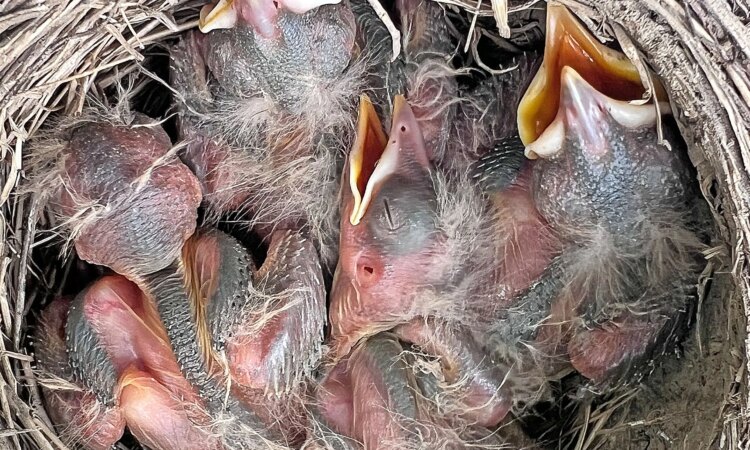
Nestlings are baby birds that are not yet capable of hopping, walking, or gripping tightly to your finger, and will often still have some bare skin showing. Nestlings cannot survive on their own. Carefully put the bird back in its nest as soon as possible (your scent won’t make a difference). If the bird is injured or you’re sure it’s orphaned, contact a wildlife rehabilitator.
Amanda Wallace, NorthJersey.com, contributed to this story.
C. A. Bridges is a journalist for the USA TODAY Network-Florida’s service journalism Connect team. You can get all of Florida’s best content directly in your inbox each weekday day by signing up for the free newsletter, Florida TODAY.


