
AuthorAarav Shah|Published at:
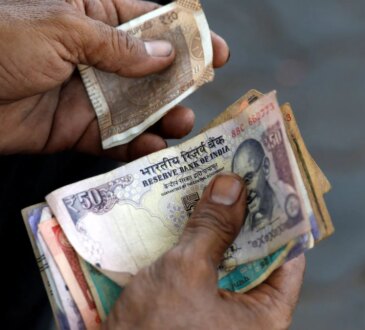
On April 29, 2026, the Indian Rupee neared the 95 mark against the US Dollar, hitting a one-month low. The decline stemmed from several factors: Sun Pharmaceutical Industries’ $11.75 billion all-cash acquisition, which increased demand for dollars. High crude oil prices around $111 per barrel and ongoing foreign investor (FII) selling in Indian stocks also pressured the rupee. Slowing industrial production growth added to economic concerns. The Reserve Bank of India (RBI) stepped in to support the currency, but pressure remained ahead of the US Federal Reserve’s policy decision.
- Rupee Drops Amid Major Deal and Investor Selling
The Indian Rupee opened weaker on April 29, 2026, trading around 94.74 against the US Dollar and approaching its recent low of 95.22. This depreciation prompted intervention from the Reserve Bank of India (RBI) to slow the rupee’s slide. Increased dollar demand was immediately driven by Sun Pharmaceutical Industries’ announcement on April 27, 2026, to acquire global firm Organon & Co. for $11.75 billion in an all-cash deal. This large overseas acquisition requires significant dollar outflows. The timing is difficult as foreign institutional investors (FIIs) have been net sellers of Indian stocks, creating dual pressure on dollar availability and worsening the imbalance in currency flows. As of April 28, 2026, FIIs had sold shares worth Rs 2,103.74 crore in a single session and nearly Rs 58,000 crore in April alone. - Oil Prices and Slowing Growth Add to Currency Pressure
High crude oil prices are weighing on the rupee, with Brent crude futures near $111 per barrel and West Texas Intermediate (WTI) above $99. This reflects ongoing geopolitical instability, as the critical global energy route near the Strait of Hormuz is disrupted by the US-Iran conflict, affecting India, a major oil importer. Higher oil prices mean more dollars are needed for imports. This backdrop is worsened by a slowdown in India’s industrial activity. The Index of Industrial Production (IIP) grew by only 4.1% in March 2026, down from 5.2% in February and marking a five-month low. While manufacturing and mining showed strength, a sharp drop in electricity generation dragged growth. This suggests rising costs and economic uncertainty are impacting real economic activity. - Structural Concerns and Analyst Outlook for the Rupee
The Indian Rupee has been weak among Asian currencies since 2025 and faces ongoing pressure in 2026. Some analysts expect the rupee to strengthen to ₹86 by late 2026, if trade tensions ease and oil prices stabilize. Others predict continued volatility. MUFG Research forecasts USD/INR near 92.00 by Q3 2026, citing its underperformance, while Cambridge Currencies expects ₹91-93. The RBI’s own forecast of USD/INR at 94 for FY2026-27 reflects these challenges. Historically, oil price spikes have led to rupee depreciation, such as in 2013 and 2018. The rupee is nearing its March 2026 all-time high of 99.82. The RBI has intervened before, with measures in early April 2026 providing temporary intraday gains. However, current pressures are complex. Despite strong economic growth and domestic demand, the rupee has structural weaknesses. Sustained FII outflows are a major worry, as FDI inflows have reportedly slowed. The large Sun Pharma deal siphons dollars at a crucial time, potentially worsening the imbalance. The geopolitical crisis poses a constant risk to oil prices, draining India’s reserves via higher import costs. The RBI’s ability to intervene faces immense pressure from these combined global and domestic challenges. Past aggressive interventions suggest official actions may only offer short-term relief against strong market forces. The current account deficit remains vulnerable to shocks from energy price swings. Analysts have mixed views on the rupee’s path for the rest of 2026, with projections ranging from appreciation to 86-88 by year-end, to a base case of 91-93, or weakness to 94-95. CoinCodex predicts USD/INR could reach 105.84 by late 2026. The RBI’s forecast of 94 for FY2026-27 suggests ongoing currency management challenges. Key factors to watch are the US Federal Reserve’s policy guidance and the evolving Middle East situation, which will influence dollar strength and oil prices.
Disclaimer:This content is for educational and informational purposes only and does not constitute investment, financial, or trading advice, nor a recommendation to buy or sell any securities. Readers should consult a SEBI-registered advisor before making investment decisions, as markets involve risk and past performance does not guarantee future results. The publisher and authors accept no liability for any losses. Some content may be AI-generated and may contain errors; accuracy and completeness are not guaranteed. Views expressed do not reflect the publication’s editorial stance.