
Governments across Asia are scrambling to cushion their economies from a deepening energy crisis triggered by the Iran war, as disruptions to oil flows drive up costs and strain public finances.
The region, which accounts for the bulk of global oil imports, has been hit particularly hard by the near-closure of the Strait of Hormuz a key route for around a fifth of the world’s oil and gas supplies.
According to data from Kpler, Asia’s oil imports plunged 30% year-on-year in April, falling to their lowest level since October 2015.
The economic fallout is already becoming visible. The Asian Development Bank has cut its growth forecast for developing Asia and the Pacific to 4.7% this year and 4.8% in 2027, down from earlier estimates of 5.1%.
At the same time, it raised its inflation outlook to 5.2% for this year, reflecting rising fuel and transport costs across the region.
Governments Step In
To contain the immediate shock, governments have rolled out subsidies, cut fuel taxes and tapped into reserves.
“The first line of defence is governments absorbing the shock through subsidies or excise duty cuts,” said Hanna Luchnikava-Schorsch of S&P Global Market Intelligence.
In India, state-run refiners have kept fuel prices stable despite surging crude costs, absorbing losses of roughly ₹100 per litre on diesel and ₹20 on petrol. Analysts, however, warn that price hikes could follow after recent state elections.
Across the region, authorities have also moved to curb fuel use, prevent hoarding and restrict exports to protect domestic supply.
Currency Pressure and Fiscal Strain
The crisis is putting additional pressure on Asian currencies and government finances.
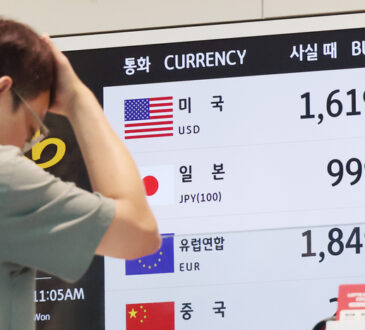
Emerging market currencies have weakened sharply, with the Philippine peso, Indian rupee and Indonesian rupiah all hitting record lows against the dollar since the war began.
Countries such as Pakistan, Bangladesh and Sri Lanka are among the most vulnerable, given their limited fiscal buffers and heavy reliance on energy imports.
Pakistan, for instance, has returned to global markets to secure liquefied natural gas at significantly higher prices, highlighting the mounting cost pressures.
Diverging Strategies Across Asia
Countries are adopting different strategies to cope with the disruption.
China has relied on large reserves and a diversified energy supply chain, while also curbing exports of fuel and fertilisers to protect domestic markets.
Japan, heavily dependent on Middle Eastern oil, has increased purchases from the United States and begun releasing crude from its strategic reserves.
Meanwhile, Indonesia is prioritising domestic energy supply over exports and exploring alternative sources from Africa and Latin America.
Resilience Tested
Despite the strain, analysts say the region is better positioned than during previous energy shocks, such as the one triggered by the Ukraine war in 2022.
However, uncertainty remains over how long governments can sustain subsidies and draw down reserves without deeper economic consequences.
“The key question is whether current resilience reflects structural strength or simply the depletion of buffer stocks,” analysts at Goldman Sachs noted.
(with inputs from Reuters)