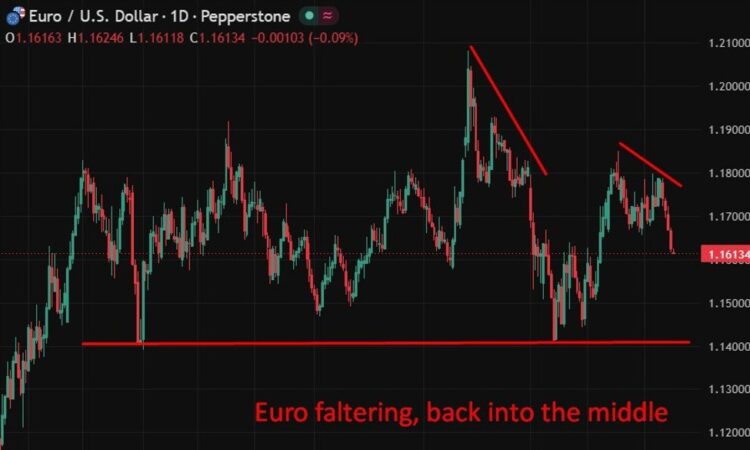
RBC Capital Markets expects the dollar to drift higher within its 2026 trading range, recommending buys against the euro and Swiss franc on yield, flows, and energy insulation.
Summary:
- RBC Capital Markets foreign exchange strategists said the dollar is likely to drift higher but remain within its 2026 trading ranges, citing the currency’s relative yield advantage in G-10, consistent inflows into US assets, and its safe-haven status, according to the bank’s note.
- RBC also argued the dollar is better insulated than European and Asian currencies from the current energy price shock, given that the US is a net oil exporter.
- The bank recommended buying the dollar against lower-yielding currencies in the near term, specifically the euro and the Swiss franc.
The US dollar is likely to grind higher in the coming months without breaking out of the trading ranges established so far this year, according to foreign exchange strategists at RBC Capital Markets, who laid out a case for near-term dollar strength built on yield, capital flows and energy insulation.
In a note to clients, RBC’s strategists argued there was no clear catalyst to sell the dollar at current levels. With the greenback offering a relatively high yield within the G-10 currency universe, attracting consistent inflows into US assets, and retaining its safe-haven function, the conditions that typically pressure the dollar are largely absent, even if its haven credentials are not operating from a position of particular strength.
The bank also pointed to a structural advantage that has received less attention in currency markets: the United States is a net oil exporter, meaning the sharp rise in energy prices triggered by the disruption to Strait of Hormuz shipping is affecting the dollar very differently from currencies tied to import-dependent economies. Europe and Asia are absorbing the energy shock as a terms-of-trade deterioration, weighing on their current accounts and putting pressure on their currencies. For the dollar, the same shock is comparatively benign and in some respects supportive.
On that basis, RBC recommended that clients buy the dollar against lower-yielding currencies in the short term, with the euro and the Swiss franc the preferred expressions of the trade. Both currencies are exposed to the energy price headwind and offer less carry than the dollar, making them natural candidates for underperformance if the bank’s central scenario plays out.
The call stops short of forecasting a breakout move, with RBC framing the outlook as a drift rather than a rally, consistent with a market environment where uncertainty remains elevated but the balance of near-term forces favours the dollar over its major peers.
—
RBC’s call adds institutional weight to a broadly constructive near-term dollar view, with the bank’s recommendation to buy against the euro and Swiss franc likely to attract attention from short-term macro traders. The energy insulation argument is particularly relevant in the current environment, where elevated oil prices are acting as a tax on import-dependent economies in Europe and Asia while generating positive terms-of-trade effects for the United States. If consistent inflows into US assets continue alongside the rate differential, the path of least resistance for the dollar remains higher, at least within the ranges established so far this year.