
My day two started early as I was keen to secure a ringside seat for one of the best sessions of UKREiiF, the annual ‘The rest is politics live’ panel with Rory Stewart and Alistair Campbell, hosted by Related Argent.

Susan Freeman
It appears that Rory Stewart had a better offer this year, but this didn’t detract from what was a really entertaining event featuring Related Argent chief executive Tom Goodall, Tracy Brabin, West Yorkshire Combined Authority mayor, and Anna Leach, chief economist of the Institute of Directors.
Campbell is such a professional and handles the audience and his panel with aplomb. He began the session with an audience poll on whether people want a change in the leadership of the Labour Party. From the audience reaction, it seems a change is not wanted as business craves stability. Tom made the point that rather than stability, volatility is the new normal, so we have to focus on creating micro level stability. Aside from the disruption caused by the recent local elections, it seems there is generally more stability in local government than at national level at the moment.
 Turning to the barriers to housing development, Tom commented that planning is too expensive and takes too long. He also said changes are needed to the Building Safety Regulations, which are not fit for purpose, quoting stats showing that the second staircase requirements will only save one life in (I think he said) 6,163 years, but holds up thousands of new homes that could themselves save lives. The government needs to take this on, he said.
NLA chief executive Nick McKeogh raised a great audience question. He said he had been prompted by Rory Stewart’s comments at last year’s panel to commission a report on the size and extent of the built environment, which showed it to be a massive 25% of the UK economy. He called for the government to designate the built environment as a priority growth sector. This was well received by Campbell, who described it as a good idea, combining campaign and policy, which “could be a runner”. This must have been music to Nick’s ears! Anna Leach suggested that it could be wrapped in with infrastructure strategy.
We finished with another searching question, this time from Debra Yudolph, founder and chief executive of SAY. Debra asked how we get quality people into politics who can actually answer questions. Campbell said one of the deterrents was the abuse politicians get, especially women.
 For something completely different I sat in on an intriguing session called ‘Marketing is a form of innovation’ with marketing luminary Rory Sutherland, vice chairman of Ogilvy UK. He highlighted some great marketing success stories such as Uber, which made waiting for a car an informed and regularly updated experience.
He explained that marketing has been largely ignored in business schools and pointed to the shortage of innovation in housing. He suggested we should be more overt about the negatives. Sellers tend to list only the positives when they would apparently do better to list the negatives. Good luck with that! He also highlighted the perils of corporate isomorphism and said developers should differentiate more, rather than making all housing the same.
He finished with a mention for one of my favourite and recently discovered books, Unreasonable Hospitality by Will Guidara, the gist of which is that anyone in the service industry should give people more than they expect.
The presentation finished somewhat abruptly as secretary of state for housing Steve Reed was ready to take to the stage together with Pat Ritchie, chair of Homes England. The theatre was packed to capacity for this session, with people even sitting on the floor.
Ritchie reported that Homes England delivered 40,000 homes last year. Reed referenced the pent-up demand for social housing and that “events overseas” may call for further support for housing. He recognised that there was a huge agenda to deliver and we need to integrate public services locally. But there were no policy announcements. There was reference to the new £16bn National Housing Bank as a game changer that will crowd in much more funding.
Reed’s reply to an audience question on when the National Planning Policy Framework would be finalised was “shortly”, but he said he did understand the urgency. Another audience member asked whether the impact on SME builders is understood by government. Reed recognised the need for more support, which promoted enthusiastic clapping from the audience. Let’s hope that Reed is still in post come next year’s UKREiiF.
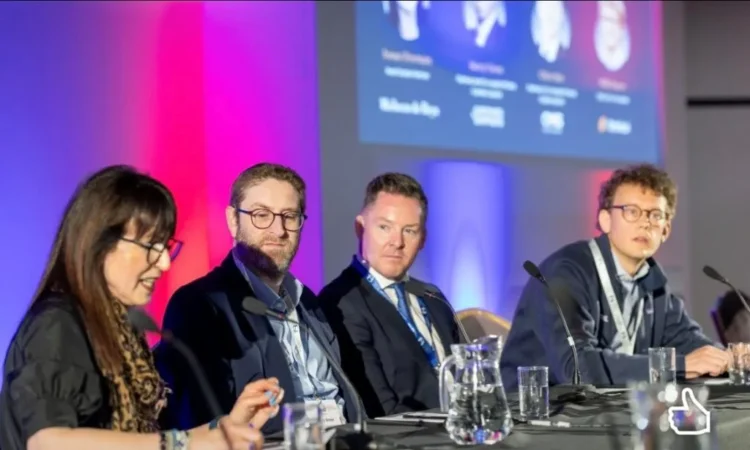
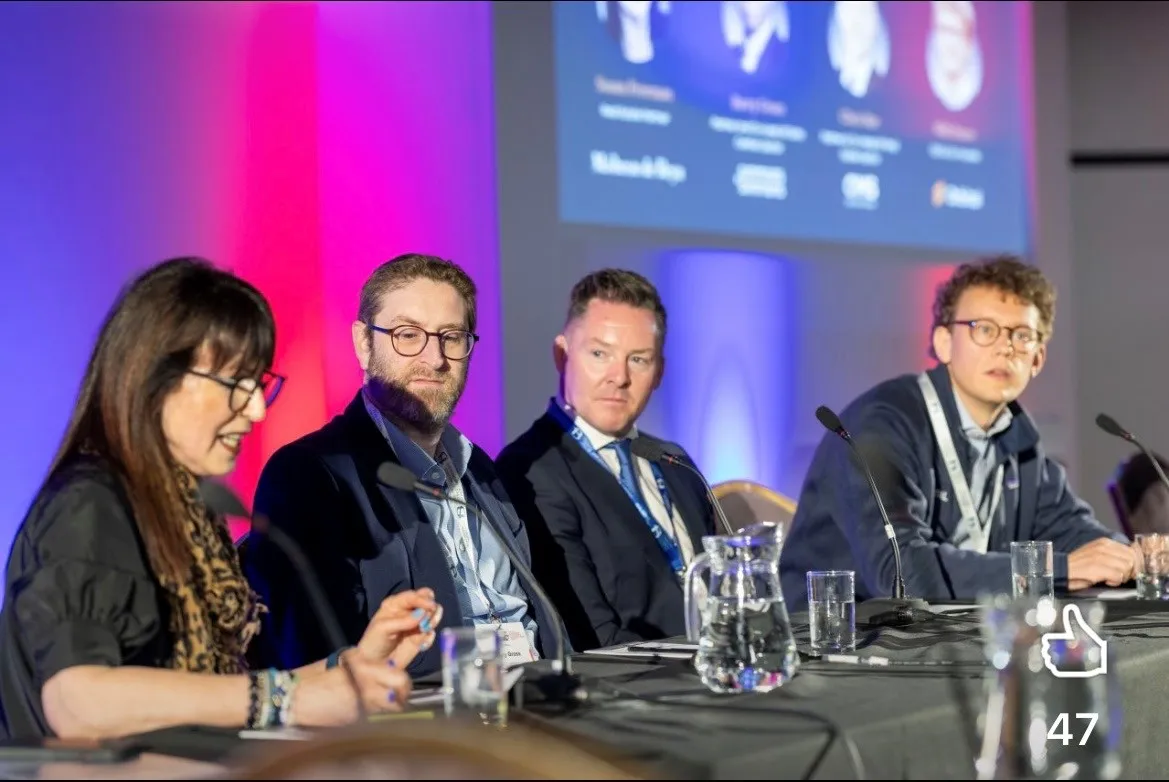
 I was delighted to chair a panel for AI real estate company Orbital on the effect of AI on real estate. My excellent panelists were Orbital co-founder and chief executive Will Pearce, Barry Gross, partner at law firm Simmons & Simmons, and Chris Rae, co-head of real estate at CMS Law. We had a fascinating discussion about the challenges and opportunities for data centre development and a look into the future. This sector is moving at such speed and is being held back by planning, grid capacity and the lack of an overarching plan.
I was pleased to run into Greenwich Council leader Anthony Okereke, who was positive about UKREiiF as an event that enables him to generate investment in his borough. Our encounter was shortly before he attended the much-talked-about dinner hosted by communications agency LCA, which assembled many of the new council leaders, bringing together politicians from the different parties, which is always a risky business. The assembled guests included the new Mayor of Lewisham, Liam Shrivastava, from the Green Party; apparently the political differences made for some heated debate.
Elsewhere in Leeds, leading sustainable retrofit developer MORE caused quite a stir with their vintage red Mini which it drove up to conference. It was chosen for being exactly the same age as the building at 1 Poultry which MORE is reftrofitting and although the car is not a heritage building, it was chosen as a well-designed product that deserves a future.
It was good to catch up with James Saunders, just a few weeks into his new position as chief executive at Battersea Power Station. It sounds like an exciting role that will enable him to use his exceptional skills in placemaking that were apparent at Wembley Park when he was chief executive of its developer, Quintain.
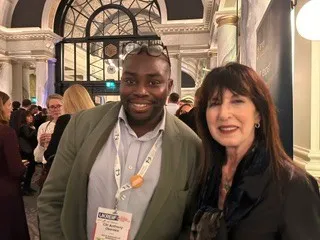 My final event was the Mishcon de Reya UKREiiF drinks party, which attracted quite a crowd and despite starting at 6pm, continued into the early hours of the morning, fuelled by some exemplary Aperol spritzes and espresso martinis, along with some mouthwatering Indian snacks
So, some final thoughts on UKREiiF 2026. It is clearly a success story, with the numbers growing every year. I don’t know the delegate numbers, but people were guessing 16,000-plus. With the number of Leeds hotel rooms estimated around 4 ,000 to 5,000, Leeds infrastructure is having difficulty coping.
The event attracted not only ministers Steve Reed and Matthew Pennycook, but also chancellor Rachel Reeves – even if she only announced bus passes for children. This is important, as I don’t think we had any ministerial presence at Mipim this year. Local and regional government was also there in force, which is important, particularly for the development sector. Many of the panels discussed the progress of AI and technology, so it was ironic that we struggled to get an internet connection. Hopefully the issues will be sorted out for next year. If not, let me know, as I did find a work around. See you all next year and thank you for reading.


