
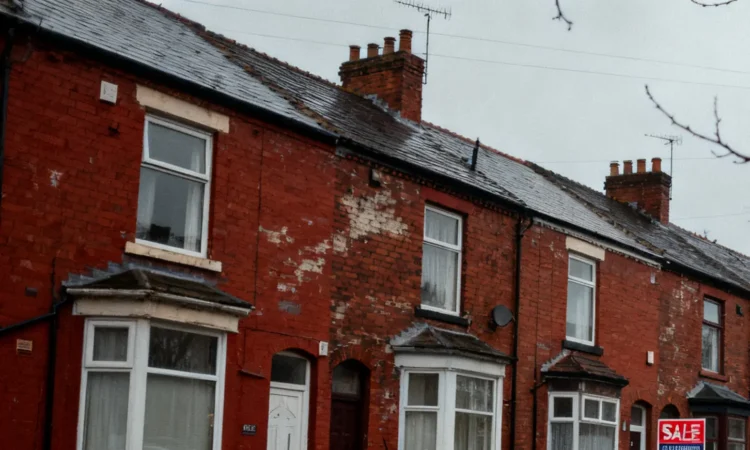
UK house prices fell 0.1% in May to £298,806, marking the third consecutive monthly decline, according to data from Halifax. The drop defied analyst expectations of a 0.1% rise and follows decreases of 0.1% in April and 0.5% in March.
The monthly decline comes as mortgage rates remain elevated due to geopolitical tensions in the Middle East, with the average two-year fixed mortgage rate standing at 5.66% on Thursday, up from 4.83% at the start of March. Five-year fixed rates reached 5.62%, compared to 4.95% earlier in the year, according to Moneyfacts.
Annual growth misses forecasts
On an annual basis, house prices grew by 0.5% in May, up marginally from 0.4% in April but significantly below the 1% growth analysts had forecast. Halifax has halved its forecast for annual house price growth this year in response to market conditions.
Amanda Bryden, head of mortgages at Halifax, said: “Property price trends continue to reflect the uncertainty linked to developments in the Middle East. Despite recent cuts to mortgage rates, higher inflation expectations have kept borrowing costs above the level seen at the start of the year, continuing to stretch affordability for many buyers and temper demand.”
Buyers’ market emerges
Jason Tebb, president of OnTheMarket, characterised current conditions as “the strongest buyers’ market we have seen in many years, with plenty of stock to choose from.” He noted that stable pricing suggests buyers and sellers are adjusting expectations rather than losing confidence in the market.
However, Bryden indicated that growth in activity among first-time buyers has been “more subdued,” despite steadier prices potentially reducing the risk of being priced out of the market.
Amy Reynolds, head of sales at estate agent Antony Roberts, described the market as defined by “cautiously motivated sellers [and] cost-conscious buyers with genuine negotiating power,” adding that the market requires both stability and transaction volume.
Inflation concerns persist
UK inflation slowed to 2.8% in April, the lowest rate in over a year, partly due to a reduction in the household energy price cap. However, economists anticipate inflation will rise in coming months, driven by a 13% increase in the energy price cap from July to £1,850 annually.
Earlier this week, Nationwide reported its first monthly house price decline of the year in May, using a different methodology to Halifax. The convergence of data from both lenders suggests broader pressure on the UK property market as borrowing costs remain elevated and affordability constraints persist.
Bryden stated that house prices are expected to “remain broadly stable” in the coming months, though the trajectory will depend on mortgage rate movements and inflation trends.


