
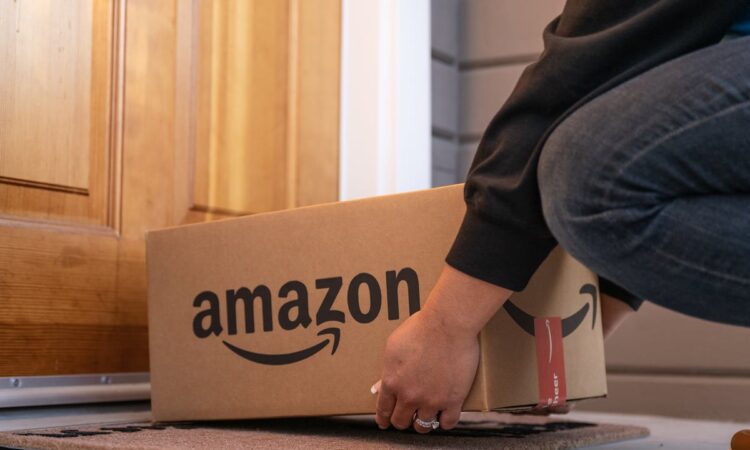
It’s the most wonderful time of the year — if you love shopping on Amazon (AMZN 0.38%). The e-commerce giant is having its annual midyear blowout sale from June 23 to June 26. Amazon will offer discounts across its marketplace to shoppers who subscribe to its Prime membership.
More than 180 million Americans subscribe to Prime, making Prime Day a truly nationwide retail event. It also makes Prime Day an excellent indicator of how strong U.S. consumers are midway through 2026. Here are the companies that win or lose on Prime Day, and why the stakes are high for much of Wall Street.
Image source: Amazon.
Which companies win or lose on Amazon Prime Day?
Amazon’s Prime Day has a massive gravitational pull on consumer spending. According to Adobe Analytics, last year’s event generated roughly $24.1 billion in total online sales across U.S. retailers. That’s more than twice what Americans spent online for Black Friday later that year. For many companies, a strong Prime Day bodes well for business, and that goes far beyond the brands that sell on Amazon.
That would include payment processing companies such as Visa and Mastercard. People don’t shop online with cash, meaning these companies rake in the transaction fees from the event. Prime Day deals often lead to impulse purchases, benefiting credit card companies like American Express and Capital One, as well as Buy Now, Pay Later companies like Affirm, which sits in Amazon’s online checkout.
There are some potential losers, too. In a way, Amazon’s Prime Day is a power move against its competitors, which, for Amazon, is everyone else. Amazon is attacking traditional retailers that historically feast on the holiday shopping season. Last year, Amazon extended Prime Day to four days for the first time, and, unsurprisingly, it will be four days again this year.

Today’s Change
(-0.38%) $-0.92
Current Price
$244.30
Key Data Points
Market Cap
$2.6T
Day’s Range
$240.41 – $250.42
52wk Range
$196.00 – $278.56
Volume
481
Avg Vol
44.3M
Gross Margin
50.60%
Why the stakes are high across the board
Prime Day has grown large enough to send signals to Wall Street about the typical U.S. consumer. A strong Prime Day means consumers still feel confident enough about their finances to spend on things they may want but don’t necessarily need. That can have implications for various industries, from restaurants to home improvement. If Prime Day sales disappoint or the data shows too many people funding their purchases with debt, it can indicate stress in household finances, an ominous sign.
Either way, Amazon is the runaway leader in U.S. e-commerce, and its Prime Day is one of the major incentives to subscribing to Prime. Amazon’s subscription services (Prime) generated $13.4 billion in high-margin revenue in the first quarter of 2026 alone; it’s a crucial profit center that enables the company to sell goods at low prices and thin margins, further cementing its e-commerce dominance.
American Express is an advertising partner of Motley Fool Money. Justin Pope has positions in Mastercard. The Motley Fool has positions in and recommends Adobe, Amazon, American Express, Mastercard, and Visa. The Motley Fool recommends Capital One Financial and recommends the following options: long January 2028 $330 calls on Adobe and short January 2028 $340 calls on Adobe. The Motley Fool has a disclosure policy.


