
These are the early headlines and other items poised to influence the market at the start of the trading day. As we share this collection of market drivers, U.S. equity futures point to a mixed start to the trading week.
1. Iran said it was nearing a final pact with Oman defining new shipping lanes between them through the Strait of Hormuz but repeated that the U.S. must meet other conditions, including compensation and an end to sanctions and military threats, before the strategic waterway is reopened. (Reuters)
President Donald Trump signaled he’s prepared to let economic pressure on Iran build rather than launch fresh military strikes, saying the US was only “semi-negotiating” with Tehran on the Strait of Hormuz. “We are just watching Iran with its huge inflation and the fact they have no money,” Trump told Axios in an interview on Sunday, saying that a US naval blockade of the country was deepening its financial woes. “We are low keying it.” (Bloomberg)
Oil prices rose on Monday as hopes dimmed for a breakthrough in the standoff between the United States and Iran over the Strait of Hormuz. (NY Times)
While the Trump administration may be “low keying it,” barring any near-term developments, it means the duration of the U.S.-Iran war and the disruption to energy prices and supply chains is poised to continue. That’s arguably a sizable reversal from the administration’s claims a few times last week that a deal was imminent. We will continue to track the number of vessels passing through the Strait of Hormuz, which per data from maritime data company Kpler, were about about a dozen ships per day compared to an average of 130 ships used the route daily before the war.
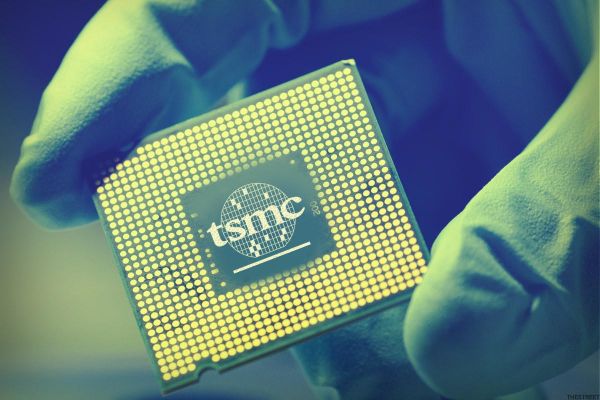
2. Taiwan Semiconductor Manufacturing Co. reported a 45% rise in its monthly sales, a sign of sustained demand for AI hardware in the face of market volatility… Last month, TSMC raised its spending and revenue projections for the year, reflecting confidence that torrid growth in demand for chips powering AI development would extend into 2027 and beyond. TSMC now expects its capital expenditure to reach a record level of $60 billion to $64 billion in 2026 and forecasts its full-year sales to grow slightly above 40% in US dollar terms. (Bloomberg)
On a month-over-month basis, the July revenue reported by Taiwan Semiconductor (TSM) is up another 6%, the same figure posted in June, and for some added context those figure for April and May were -1% and 2%, respectively. This means the TSM is seeing an upswing in demand, which reflects the increasing spending in AI and data center capex. Very supportive for the chip stocks and related AI and data center plays we have in the Portfolio.
There is also the seasonal pick up ahead of new smartphone and related consumer electronics. Comments from Foxconn last week pointed to that ramp once again happening. Reading between the lines, it means Apple (AAPL) is readying its newest iPhone models for their debut in the coming month or so.
And that tees up our next item…
3. TrendForce’s latest smartphone industry research reveals that escalating component costs — led by memory — are expected to significantly raise production expenses for Apple’s next iPhone 18 series. For the 256 GB model, the BOM cost is estimated to increase by about 38% YoY, making higher retail prices unavoidable. Apple may offset some of these costs by reducing gross margins to prevent weakening consumer demand, aiming to keep prices manageable, maintain shipment volumes, and grow market share… If memory prices continue their upward trajectory, the BOM cost of the iPhone 18 Pro 256 GB is expected to increase even further in 2027. (TrendForce)
Given the rise in memory costs so far this year and Apple’s recent price hikes for other hardware products, many have been expecting the upcoming iPhone models to carry higher price tags with a big one for the company’s first foldable model. The starting price for the first foldable iPhone is speculated to be around $2,000, but that’s for the base memory model.
We’ve previously pointed out the logic behind the timing of Apple’s new Apple Upgrade program, which shifts the risk to Klarna (KLAR), and extends payment cycles to 24 to 36 months depending on the Apple product. In the face of higher iPhone price tags, we suspect Apple will showcase the Apple Upgrade program alongside these new models sometime in September as it showcases its new software platforms that include the revamped Apple Intelligence and Siri AI.
Here’s the thing: While the TrendForce spotlight is on Apple and the iPhone, other smartphone and consumer electronic devices will be feeling the same cost pressure. That likely means higher prices and consumers hanging onto their existing devices longer than usual.
4. Meta Platforms Inc. introduced a new AI model that’s light enough to run on a single computer, allowing users to download and customize the technology. The new Muse Glimmer is a distilled version of the company’s Muse Spark 1.2 model, designed with a focus on efficiency to minimize system requirements, Meta said on Monday. (Bloomberg)
Called Muse Glimmer, it is nearly identical to Muse Spark and can generate code, text and images. Muse Spark, which debuted in July as a “closed” A.I. model that people pay to access, will remain closed. (NY Times)
In a wide-ranging essay, the Meta Platforms chief executive outlined a new course of action he presented as a way to spread the wealth and opportunity from AI to users around the world, and to residents of the communities that host the data centers powering it. (WSJ)
Following reports Meta (META) has been ordered to pay $942 million to address harm to kids from social media, we’re not all that surprised by the company’s move to position itself as spreading the AI wealth, while also trying to catch up to competitors like OpenAI and Anthropic. In a essay that accompanied the introduction of Muse Glimmer, Zuck also laid out several policy recommendations for AI and discussed how the U.S. needs to invest in infrastructure as it competes with China to develop super intelligence computer systems.
All in all, we see the above as Meta aiming to regain its positioning, but for investors the larger question to be answered centers on the cloud computing business the company teased earlier this summer. That move, which would see it competing with the likes Microsoft (MSFT), Amazon (AMZN) and Google (GOOGL), would also help defray its AI and data center buildout and help alleviate corresponding funding questions.
5. OpenAI said on Friday it cannot rule out that its upcoming AI model, Astra, has “critical” cybersecurity capabilities, prompting the startup to pause some internal development and trigger safety protocols. Under OpenAI’s safety guidelines, a model reaches the “critical” threshold if it can autonomously identify and exploit severe, real-world software vulnerabilities, known as zero-day exploits, or execute complex cyberattacks against highly secure targets without human intervention. (Reuters)
A North Korean hacking group built large language model tools and collected software that could help automate cyberattacks, analyse stolen material and produce more convincing phishing campaigns, a South Korean cybersecurity firm said on Monday. (Reuters)
Building on the signals we shared with you over the weekend, the above supports our view that AI, especially in the hands of bad actors, will expand the vector and velocity of cyberattacks. That is a powerful tailwind for cybersecurity spending, and keeps us bullish on our position in the First Trust Nasdaq Cybersecurity ETF (CIBR).
6. The Senate voted 90-6 early Saturday to pass a short-term funding bill to remove the threat of a government shutdown before the midterm elections. The legislation, advanced in a late-night session that stretched into the early hours, would keep federal funds flowing through Dec. 11 at existing levels to give time to negotiate a full-year deal…
The bill now goes to the House, which needs to approve it and send it to Trump to become law by Sept. 30 in order to avert a shutdown beginning Oct. 1. (NBC News)
Hopefully this paves the way to avoid the brinksmanship that in recent years has led to last minute deals and a few shutdowns. Our thinking is with an anti-incumbency mood in the air, sitting Republicans and Democrats are looking to risk political consequences before early November. Assuming the House signs off, the next hurdle will be for the White House. With Congress returning to a full legislative session the week of August 31, there is room for some late in the game maneuvering. If that happens, and there is little progress in the U.S.-Iran war, we could be in for another bout of market volatility.
7. Economic data today per TipRanks: There are no market moving economic data points being published on Monday.
8. Companies reporting today per TipRanks: Open: Barrick Mining (B), Ceva (CEVA), Monday.com (MNDY), Surgery Partners (SGRY). Close: Beazer Homes (BZH), Hims & Hers (HIMS), Plug Power (PLUG), Rocket Lab (RKLB), Simon Properties (SPG)
More Pro Portfolio
At the time of publication, TheStreet Pro Portfolio was long AAPL, AMZN, CIBR, GOOGL, META and MSFT.


