
The digital euro has moved a step closer to reality, with the European Parliament (EP)’s economic and monetary affairs committee having given a green light to the eurozone central bank digital currency (CBDC).
The high-profile digital money initiative has been spearheaded by European Central Bank (ECB) over the five-plus years. But political and legislative buy-in is required before it can launch across the 21-member eurozone as a central bank-backed alternative to cash.
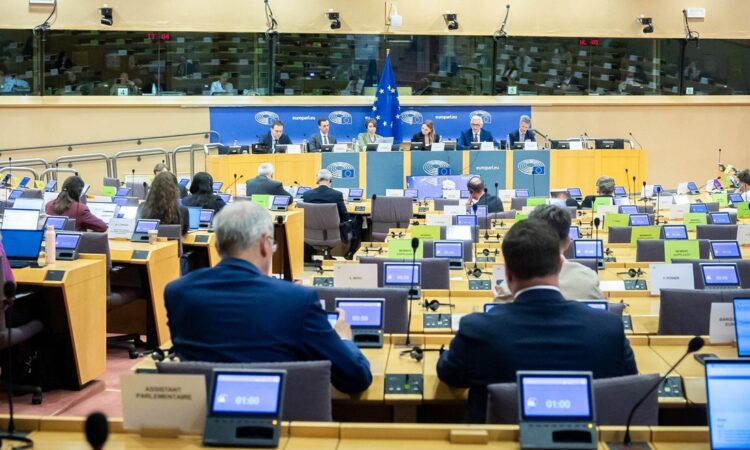
The parliamentary committee adopted its position on the single currency package, which comprises three files, on 23 June. The file on the establishment of the digital euro was adopted by 43 votes to 14, with one abstention.
Negotiating mandates for the three texts will be announced at the start of the EP’s July plenary session. Final legislation will have to be negotiated with the European Council before coming into force.
Under an assumption that Europe’s co-legislators adopt a regulation on the establishment of the digital euro this year (2026), pilot activity and ‘initial transactions’ remain slated to take place as of ‘mid-2027’. The Eurosystem – which comprises the ECB and the national central banks of the 21 European Union (EU) member states whose currency is the euro – ‘should then be ready for a potential first issuance of the digital euro during 2029,’ the central bank said last October.
RELATED ARTICLE ECB’s Cipollone emphasises ‘autonomy and security’ of prospective digital euro – a news story on European Central Bank (ECB) executive board member Piero Cipollone highlighting the prospective digital euro’s ability to “bolster Europe’s unity, safeguard our autonomy and strengthen our resilience” (29 September 2025)
‘Reducing reliance on non-EU providers’
The EP committee, chaired by French MEP Aurore Lalucq, regularly meets senior ECB figures to discuss the digital euro initiative.
Its members adopted a second file on the provision of digital euro services by payment services providers (PSPs) incorporated in member states whose currency is not the euro by 43 votes to nine (with six abstentions).
This would allow banks and PSPs from non-euro EU countries to distribute the digital euro, subject to the same rules, while the ECB would retain the power to restrict access and use. Non-euro EU member states would also need to appoint a national authority to monitor any impact on their own currency.
A third file, on legal tender of euro banknotes and coins, was adopted by 46 votes to four (with eight abstentions). This would oblige euro area countries to keep cash accessible and plan for digital payment disruptions. Businesses would not be allowed to ban cash through ‘no cash’ signs or standard contract terms. Member states would also need to check cash availability ‘regularly’, ceding ‘special attention’ to vulnerable groups, such as the elderly, low-income individuals and the unbanked.
A European Parliament press release, issued after the committee’s vote, described the digital euro as offering citizens and businesses a ‘private, secure and innovative way to pay, while reducing reliance on non-EU providers.’
RELATED ARTICLE Eurosystem rolls turf to invite payment service providers to join digital euro pilot – a news story (2 December 2025) on plans to involve companies in pilot activity in 2027
How the digital euro would work
The digital currency’s main features are summarised in the EP’s announcement.
These include that the digital euro would work online and offline. Online payments would be processed through an account-based system, while offline payments would work directly via local storage devices. ‘The offline functionality would be equivalent to using physical cash, as losing the device would mean losing the offline money with no refund possible,’ the EP states.
Privacy-by-design and privacy-by-default principles would be built into the digital euro, it continues. ‘Cutting-edge technologies, such as “zero-knowledge proofs”, would allow transactions to be verified without exposing personal data, which would be processed only to the extent strictly necessary for the system to function,’ it continues, adding that the ECB would not have access to personal identification data.
All PSPs, including banks, e-money providers, post offices and regulated crypto-asset providers could distribute the digital euro across the EU; and ‘most’ businesses would be required to accept it. Exceptions would apply to the self-employed, and small and micro enterprises that do not accept other digital payments, it said.
Temporary refusals, such as during a power outage, would also be allowed under ‘specific conditions’, it says. Visitors, tourists and, ‘in some cases’, people living outside the euro area would also be able to use it.
RELATED ARTICLE ECB teams up with Spanish foundation for digital euro app accessibility – a news story (2 March 2026) on the ECB signing a non-remunerated ‘collaboration agreement’ with the Madrid-based ONCE Foundation for Cooperation and Social Inclusion of People with Disabilities as it looks to make an app for the CBDC ‘easily accessible for everyone’
Holding limit planned
Basic services, such as opening an account, holding and managing funds, would be free of charge. But PSPs could charge for extra services, with the exception of account maintenance inactivity penalties or service bundling, the EP states. Fees for merchant and ‘inter-provider’ would be capped, while offline payments would be fee-free.
There would be a cap on how many digital euros any person could hold. MEPs proposed the EU ceiling should be set by the Commission, based on ECB recommendations, and reviewed at least every two years. MEPs want the Parliament to have full decision-making powers in this process.
Businesses would not be allowed to hold digital euros, except to accumulate incoming payments for up to 24 hours. The digital euro would not earn (or cost) any interest.
Before the launch, the ECB should finalise a rulebook, build the infrastructure, run real-life pilot tests, and iron out liability rules with particular attention to offline risks, such as double-spending.
Once authorised, a rollout period of ‘at least 24 months’ would follow, in order to give banks, providers and users time to prepare.
Governments and providers would also run awareness campaigns.
RELATED ARTICLE ECB preps for digital euro launch in 2029 – a news story (4 November 2025) on the ECB Governing Council giving the nod to move to the latest phase of its digital euro preparations
‘More than another payment app’
“With the single currency package, we are protecting citizens’ freedom to choose how they pay,” said Spanish MEP and rapporteur (lead lawmaker steering the legislation) Fernando Navarrete Rojas.
“We are strengthening access to and acceptance of cash, while making central bank money available in digital form,” he continued. “The digital euro will complement cash, never replace it. No one should be forced away from cash, and no one should be left without a secure, resilient and genuinely European digital payment option.”
“Europe does not have to choose between the digital euro and successful private payment solutions. We need both to work together. The agreement rightly recognises the dual approach: existing standards and infrastructure should be reused wherever possible. This will allow European payment solutions to connect to a common acceptance infrastructure and become interoperable across borders,” he said.
“The agreement also ensures that privacy will be built into the digital euro from the outset. Europeans will gain a secure digital payment option while remaining in control of both their money and their personal data.”
Finance Watch, an independent European non-profit association dedicated to ‘reforming finance in the interest of citizens’, welcomed the committee’s vote.
“Parliament has found a majority for a digital euro that is more than another payment app,” said senior research and advocacy officer Peter Norwood. “The text keeps the original ambition of the project alive: ensuring inclusive access to public money in an increasingly digital payments landscape, all while protecting European sovereignty.”
RELATED ARTICLE ECB picks digital euro service providers with potential maximum spend above €1 billion – a news story (3 October 2025) on the announcement of companies selected to provide ‘components and related services’
CBDCs’ mixed global trajectory
Just a handful of nations are fully live with a CBDC but none are proving popular.
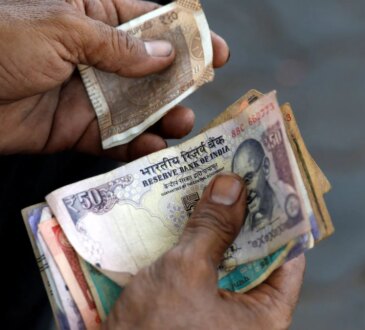
China’s authorities continue to progress the rollout of a digital yuan, however, while India is moving towards full issuance of a digital rupee.
In the UK, the Bank of England and HM Treasury are currently in a multi-year ‘design phase’ exploring the creation of a digital pound. No final decision has been made on whether to launch it.
In the US, a CBDC is currently off the table: president Donald Trump issued an executive order almost 18 months ago (January 2025) on digital financial technology stating that his administration would ‘tak[e] measures to protect Americans from the risks of CBDCs, which threaten the stability of the financial system, individual privacy, and the sovereignty of the United States, including by prohibiting the establishment, issuance, circulation and use of a CBDC within the jurisdiction of the United States.’