Yen Breaches 162 to Hit 40-Year Low, Asian Currencies Tumble; Taiwan Dollar Closes at NT$31.874 — BigGo Finance
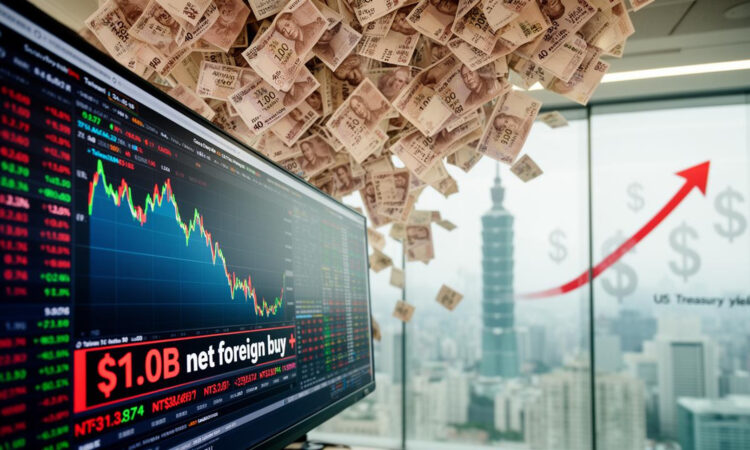
Asian currencies faced broad-based pressure on the first trading day of the third quarter, with the Japanese yen weakening past the 162 level against the US dollar to hit a nearly 40-year low, while the South Korean won simultaneously plunged to levels not seen since the global financial crisis. Dragged down by the collapse in the yen and won, the Taiwan dollar—despite support from a nearly 1,000-point surge in Taiwan’s stock market and foreign institutional investor buying—ultimately reversed early gains to close at NT$31.874, down 3.7 cents and snapping a two-session winning streak.
Currency analysts noted that stronger-than-expected US labor market data reinforced market expectations that the Federal Reserve will maintain high interest rates or even hike further, driving both US Treasury yields and the US Dollar Index higher. Against the backdrop of a widening US-Japan interest rate differential, pressure from yen carry trades intensified, becoming the core factor dragging Asian currencies lower in tandem.
The yen briefly touched 162.84 against the US dollar during intraday trading on July 1, marking a fresh low since the 1986 Plaza Accord nearly 40 years ago. Market sources indicated that Atsushi Mimura, Japan’s top currency official at the Ministry of Finance, had verbally intervened, stating that intervention measures taken two months prior had proven effective and had gained understanding from some US officials. However, the market did not stop testing Japanese authorities’ resolve, with the yen continuing to hover at depressed levels above 162.5.
Chidu Narayanan, Head of Asia-Pacific Macro Strategy at Wells Fargo, stated that the market is now very close to a zone where the Japanese government may intervene again, emphasizing that the focus is not entirely on a specific exchange rate level but rather on Japan’s Ministry of Finance needing to demonstrate its determination to maintain policy credibility; otherwise, the market will continue to challenge official red lines. Joey Chew, Head of Asia FX at HSBC, also noted that Japan’s Ministry of Finance appears to have a higher tolerance for yen depreciation than in the past, partly because the US dollar has strengthened broadly against major currencies and because the decline in international oil prices has reduced imported inflation pressures for Japan.
The South Korean won was similarly hit by risk-averse sentiment and the knock-on effects of yen weakness. In Seoul’s foreign exchange market, the won briefly rose to ₩1,559.2 per US dollar (approximately $1.0138), not only breaching the critical psychological level of ₩1,550 but also threatening the ₩1,560 mark (approximately $1.0143). The won’s closing price marked the highest level since the global financial crisis, with foreign investors extending their selling streak in South Korean stocks to nine consecutive sessions amid heavy cumulative selling pressure.
Compared to the sharp volatility in the yen and won, the Taiwan dollar has recently been consolidating within a range of NT$31.6 to NT$32, showing relatively stable performance. On July 1, Taiwan’s stock market surged 893.08 points, driven by heavyweight stocks, to close at 47,018.99, with foreign institutional investors turning net buyers in the concentrated market to the tune of NT$32.38 billion (approximately $1.0 billion). However, stock and currency market movements clearly diverged. The Taiwan dollar strengthened to NT$31.801 in early trading, but as foreign investors shifted their operations in the foreign exchange market in the afternoon, coupled with broad-based weakness in major Asian currencies, Taiwan’s central bank was reluctant to let the Taiwan dollar “stand out alone” and eased its regulatory efforts, allowing the currency to close weaker.
According to Taiwan’s central bank statistics, as of 4:00 PM on July 1, the US Dollar Index edged up 0.1%, the Japanese yen tumbled 0.25%, the Singapore dollar depreciated 0.13%, while the Taiwan dollar, South Korean won, and Chinese yuan all fell 0.12% in tandem.
Currency traders pointed out that the Taiwan dollar’s trajectory in the second half of the year will continue to hinge on two key variables. First is the Federal Reserve’s monetary policy path, with markets closely watching upcoming non-farm payrolls and unemployment rate data. If the labor market continues to show resilience, market expectations for further Fed rate hikes will intensify again, potentially keeping the US Dollar Index elevated and subjecting non-US currencies to ongoing capital outflow and depreciation pressure.
Second, the July-August period marks the peak season for dividend payouts by Taiwan-listed companies, and the direction of capital flows after foreign institutional investors receive cash dividends will be a crucial factor influencing the Taiwan dollar. Historical patterns show that seasonal demand for foreign investors to repatriate dividends in the third quarter often creates a bias where the Taiwan dollar is “prone to depreciation and resistant to appreciation.” However, Taiwan’s high-tech industry has benefited from the AI boom this year, with robust export momentum, and exporters’ foreign exchange settlement demand is expected to provide some support for the currency. If AI-related themes continue to gain traction and attract foreign investors to keep some dividends in Taiwan for reinvestment in the stock market, this could help offset some repatriation pressure and mitigate depreciation risks for the Taiwan dollar.
Looking back at the first half of the year, the Taiwan dollar accumulated a depreciation of NT$0.399, or 1.25%. Among major Asian currencies, the South Korean won was the worst performer with a plunge of 6.91%, the Japanese yen depreciated 3.51%, the Singapore dollar edged down 0.64%, while only the Chinese yuan bucked the trend with a gain of 3.02%. The Taiwan dollar outperformed both the won and the yen, demonstrating relative resilience. Looking ahead to the third quarter, currency traders expect the Taiwan dollar to consolidate within a range of NT$31 to NT$32.5, not ruling out a test of the NT$32 handle in the near term, though the probability of a sharp depreciation remains low.