This article first appeared in The Edge Malaysia Weekly on June 29, 2026 – July 5, 2026
WHILE most of Lembaga Tabung Haji’s (TH) residual legacy issues have been addressed in the last few years, there remain a few loose ends that need to be tied up for the pilgrims’ fund to achieve better returns.
These include TH’s disproportionate property investments in the UK, says its chairman Tan Sri Abdul Rashid Hussain.
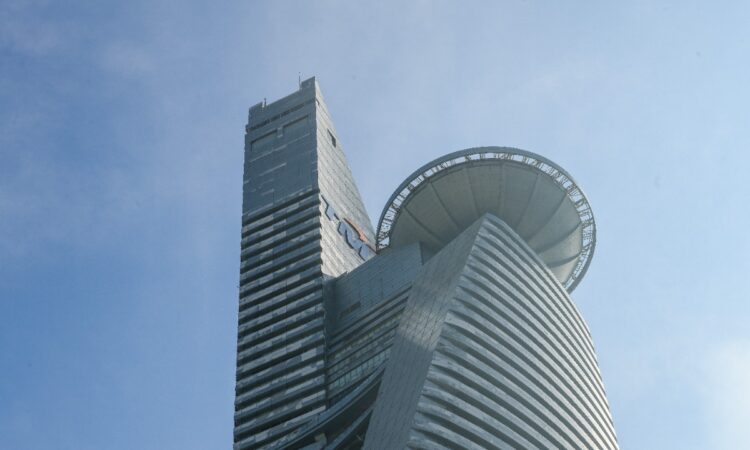
Being a sukuk holder of Menara ABS Bhd, TH also has to manage its exposure to the special purpose vehicle (SPV). Menara ABS defaulted on its sukuk in 2023 and the pilgrims’ fund is now looking for a buyer to take over the SPV that owns the 55-storey Menara TM.
TH invested in real estate in the UK in 2022, before British interest rates peaked. Via LTH Property Holdings 3 Ltd, it bought Great Minster House in Central London for £247.5 million (about RM1.32 billion then) from Sinarmas Land Ltd, which was taken private by Indonesia’s Widjaja family last year.
The fund has six property investments in the UK, making up a good portion of its foreign property portfolio, which also includes Saudi Arabia and Australia. “It’s one of the legacy issues that haven’t been resolved. It is bleeding us, and we have to find a solution,” Rashid tells The Edge when asked about its real estate investments in the UK.
The 2022 acquisition comes with many positives: the freehold asset is located in Central London, has the UK’s transport ministry as a tenant, and comes with long-term rental that increases yearly. But it was just “sheer bad timing” as rising interest rates ate into yields and property values, Rashid explains.
In 2023, LTH Property Holdings 3 incurred RM278 million in losses, led by impairment of investment properties.
Rashid says, however, that the situation is showing some improvement — UK interest rates have come down from 5.25% in 2023-2024 to 3.75% today. “Whether we have seen light at the end of the tunnel? Difficult to say.”
As for Menara ABS, TH was the largest subscriber of its RM1 billion sukuk. The papers were issued by Menara ABS as part of the securitisation of four properties that it acquired from Telekom Malaysia Bhd (KL:TM) and leased back to the telco.
As tenancy issues emerged, Menara ABS’ trustee sold its other assets but failed to sell Menara TM (for a reported asking price of RM700 million) and the SPV defaulted on its papers in 2023.
This prompted the setting up of a recovery plan that entails TH taking over Menara ABS and injecting capital into the entity through share subscription, which is then used to redeem any outstanding sukuk. ABS sukukholders include the Employees Provident Fund (EPF).
“[It’s] not so simple,” says Rashid, when asked about TH taking over Menara ABS. “We’re still at the negotiation stage … There is already a buyer for ABS. It’s just a matter of finalising the valuation and the price. We already [know] the valuation.”
The matter is expected to be resolved in the coming months, he adds. “But it is almost there. I don’t think it’s a major problem.”
UJSB refinancing ‘a sensible arrangement’
The value of the underperforming assets on TH’s books is relatively small compared with the RM11 billion hole that the pilgrims’ fund had to deal with back in 2019, when its liabilities exceeded its assets due to mismanagement.
The 2019 episode put TH at risk of having to halt its dividend payouts under the law for the first time, but it avoided the crash as the government stepped in. It set up SPV Urusharta Jamaah Sdn Bhd (UJSB) to take over RM10 billion worth of TH’s underperforming assets. Minister of Finance Inc-owned UJSB injected RM300 million cash and issued government-backed, zero-coupon sukuk — Series 1 worth RM10 billion at a 4.05% rate, which has been refinanced, and Series 2 worth RM9.6 billion at a 4.1% rate due May 2029.
Leading up to the maturity date, there were concerns about whether TH would have to take back the underperforming assets and, if not, whether UJSB, and by extension, the government, had the appetite to redeem such a huge sum.

The Series 1 Islamic paper, which was due for redemption last month, carried a nominal value of around RM12.5 billion at maturity. The paper was refinanced with the issuance of a new RM11.5 billion sukuk with a coupon rate of 3.825%, with another RM965 million offset through the transfer of a land parcel in Tun Razak Exchange (TRX) for future development, and an estate in Sarawak.
“We’ve come to a sensible arrangement … basically to keep it (Series 1 sukuk) alive and refinance it. I mean, that’s fine. And that’s the way it is. In the financial world, the banking world is full of refinancing, restructuring, all that. It’s normal. Nothing unusual,” says Rashid.
He also clarifies that TH is not obligated to take back the assets from UJSB, but the pilgrims’ fund has the right of first refusal if those assets are put up for sale.
“For your information, we actually bought it cheaper than we sold it (to UJSB), contrary to some of the social media nonsense,” Rashid says, confirming that the transaction price of the 0.63ha TRX plot was slightly below RM400 million. TH bought the land from 1Malaysia Development Bhd (1MDB) for RM188.5 million in 2015.
Could Series 2 also be refinanced? “That’s many years away,” Rashid replies. “I’m getting 4.1% yield on that. I’m quite happy to let it run [its course].”

Revisiting equities after eight conservative years
With an improved balance sheet, TH is ready to have a bigger exposure to equities, but with a portfolio approach rather than owning large shareholdings, save for in strategic investments such as its 48.9%-owned Bank Islam Malaysia Bhd (KL:BIMB), from which it received RM160 million in dividends last year, and 30.8%-owned Syarikat Takaful Malaysia Keluarga Bhd (KL:TAKAFUL).
“We are quite happy with Bank Islam, with Takaful,” Rashid says. “I think Bank Islam is a profitable bank. It can be more profitable; it has got a bigger role to play in the development of Islamic banking in Malaysia.”
The prudent approach has been learnt from past painful lessons when its more aggressive exposure to listed companies, especially those in the oil and gas sector, turned sour when oil prices crashed. TH’s RM10 billion worth of underperforming assets then comprised 80% equities and 20% properties.
TH Heavy Engineering Bhd was among the investments that fell flat and TH had it transferred to UJSB. The company went under and was ordered to undergo compulsory winding-up.
At one point, TH was supposed to record an impairment of RM164.58 million on its exposure to TH Heavy Engineering, whose share price had dropped sharply in 2017. But the impairment did not materialise.
Other public-listed companies that TH invested in include Icon Offshore Bhd (now Lianson Fleet Group Bhd [KL:LFG]) and Sapura Energy Bhd (now Vantris Energy Bhd [KL:VANTNRG]), both of which had to be recapitalised, resulting in steep stock dilutions and losing billions in market capitalisation in the process.
UJSB also took up shares in companies such as Pelikan International Corp Bhd (now PBS Bhd [KL:PBS]), Parkson Holdings Bhd (KL:PARKSON) and Lion Industries Corp Bhd (KL:LIONIND), some of which have been disposed of.
As at end-2024, UJSB had total assets of RM11.44 billion and total liabilities of RM23.86 billion, a reminder of the scale of the clean-up that followed TH’s earlier investment excesses.
With TH now operating with a clean slate, it is hoped that depositors’ hard-earned money saved for pilgrimage will see higher returns. Meanwhile, TH must not forget the past so that it will not repeat the mistakes that took the fund nearly a decade to rectify.
Save by subscribing to us for
your print and/or
digital copy.
P/S: The Edge is also available on
Apple’s App Store and
Android’s Google Play.