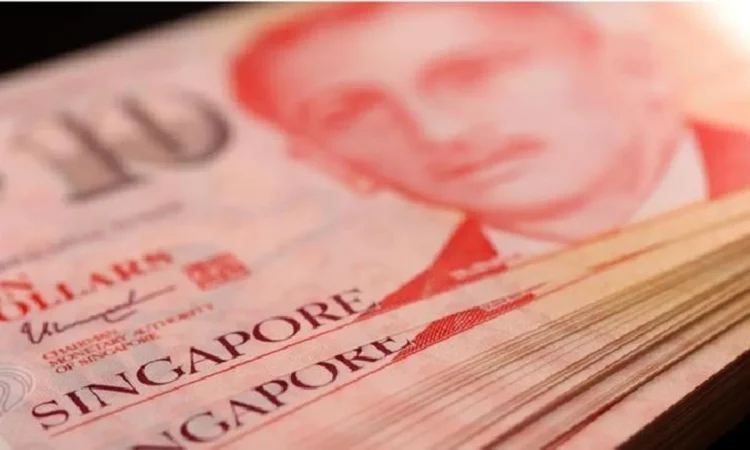
[SINGAPORE] Singapore’s strong currency is having an uneven impact on local businesses, with consumer-facing firms feeling the effects more directly compared with many manufacturers, who say the currency’s strength has had little impact on their operations.
The Singdollar has remained firm after the Monetary Authority of Singapore (MAS) tightened monetary policy in April by allowing the currency to appreciate more quickly against a basket of other currencies. Many economists expect this stance to remain unchanged at MAS’ next meeting later in July.
The stronger Singdollar has presented both benefits and challenges for firms here.
On the one hand, a stronger currency serves as a crucial buffer against global inflationary pressures, helping businesses manage their baseline operating costs.
On the other hand, it also dampens revenue for export-oriented and domestic lifestyle businesses by reshaping consumer spending habits and shifting demand away from the local market.
“The strengthening of the Singdollar makes Singaporean offerings relatively more expensive, eroding their price competitiveness on the global stage,” said Ang Yuit, president of the Association of Small and Medium Enterprises.
That encourages more Singaporeans to use their local currency overseas, particularly during school holiday periods such as June and December, diverting spending away from the domestic economy and adding pressure on retailers and food and beverage businesses already operating in a soft market, he added
.That has been the experience of Tanasak Sukkhiao, chef and restaurant manager at Thai Tantric in Orchard Road.
He said a stronger Singapore dollar has encouraged more Singaporeans to dine and shop in Johor Bahru, where prices are significantly lower.
And while a weaker Thai baht has reduced the cost of importing ingredients such as curry paste, fish sauce, dried herbs and spices, jasmine rice and other speciality products from Thailand using the stronger Singapore currency, the savings are relatively limited.
SEE ALSO

“The bigger challenge remains the rising cost of food imports, labour, rent and utilities within Singapore,” he said.
Che Bingxin, owner of Rong Fu Ji Seafood Restaurant in Chinatown, said customer footfall has fallen by about 10 per cent over the past year, and noted that the stronger Singdollar could be one reason for the drop.
Not all businesses are suffering, though.
For Sreenivas Saba, managing director of Bhavani Stores, the stronger Singapore dollar has reduced the cost of importing products from India, prompting his company to look at bringing more Indian brands into Singapore.
Bhavani Stores distributes ready-to-eat and ready-to-cook Indian food products imported by packaged food company MTR Foods to retailers such as FairPrice. It also has its own snack brand, Taj Mahal Keropok, which is manufactured in India and imported for sale here.
“Since the Indian rupee is depreciating and the Singdollar is strengthening, we want to look at other brands that we can import from India and sell in Singapore,” said Sreenivas.
At the 1900 Hotel in Chinatown, general manager Hu, who asked to be identified only by her surname, said the stronger Singapore dollar has not dented demand from key regional markets.
“Even with (the strong Singapore dollar), we’ve continued to see good demand from neighbouring markets such as Malaysia, Thailand, China and Vietnam… Things like proximity and business travel activity (often outweigh the impact of exchange rates),” said Hu.
“Currency movements can be a factor sometimes, but from what we’ve observed, events like concerts and Formula 1 have a bigger impact on our business,” she added.
OCBC Bank foreign exchange strategist Christopher Wong said a stronger Singapore dollar may weigh modestly on tourism by making hotels, dining, shopping and attractions more expensive in foreign currency terms, particularly for price-sensitive leisure travellers from markets whose currencies have weakened against the Singapore dollar.
Still, he noted that a meaningful share of visitors to Singapore comes for business travel, aviation connectivity and premium experiences, where currency sensitivity can be lower.
“In that sense, a firm Singdollar may weigh on discretionary spending at the margin, but it is unlikely to derail the broader tourism recovery on its own.”
Economists expect the MAS to leave monetary policy unchanged at its July review, although they noted that the central bank could tighten again if inflationary pressures re-emerge.
Softer-than-expected core inflation readings in April and May, easing energy prices and MAS’ pre-emptive tightening in April have reduced the urgency for another policy move, said OCBC’s Wong.
“The case for less urgency to tighten becomes stronger, if the inflation trajectory continues to ease into the first half of 2027,” he said.
But that tightening risk remains alive if June inflation shows renewed services inflation, sticky inflation expectations or broader pass-through from earlier import-cost pressures.
Wong also expects the Singapore dollar to remain relatively stable against regional currencies such as the Japanese yen, Taiwan dollar and Thai baht.
Zavier Wong, market analyst at eToro, said the central bank’s decision to keep its full-year inflation forecast unchanged despite softer recent inflation readings suggests policymakers remain wary of renewed price pressures.
“It’s possible that MAS tightens as insurance against that risk resurfacing, rather than waiting for another spike to force its hand,” he said.
If that happens, the Singapore dollar could strengthen further, making imports and overseas travel cheaper for Singaporeans but weighing on exporters and tourism operators competing with regional peers whose currencies have weakened.
“That gap will be easy to absorb for a quarter or two, but if kept up over a longer stretch, Singapore’s export-facing sector will feel the brunt of it,” said eToro’s Wong.
For now, the effects of a strong Singdollar have been less pronounced for manufacturers and material importers because they have been largely insulated by long-term contracts.
“Most manufacturers are taking a wait-and-see approach for now, given how fast conditions are shifting — especially with tariff uncertainty still in play,” said Lennon Tan, president of the Singapore Manufacturing Federation.
“Many long-term contracts already have built-in protection: prices are adjusted only if the exchange rate moves past an agreed threshold… As long as it stays within that range, manufacturers simply absorb the difference rather than repricing,” he said.
Lim Jing Hong, director of steel fabricator Anderco, said the stronger Singapore dollar has not prompted the company to increase its imports despite the lower cost of overseas purchases.
The company imports steel, construction materials and architectural finishes, but purchases are largely made on a project-by-project basis rather than to take advantage of favourable exchange rates.
This is because structural steel and architectural specifications vary significantly from project to project, making it impractical to pre-order or hold stock in anticipation of future jobs.
“We hold only a small amount of inventory because of the project-specific nature of our business, so swings in the Singapore dollar do not significantly influence how much more we import,” said Lim.
Bryan Oh, chief executive and founder of local battery recycling start-up NEU Battery Materials, said the strong Singdollar has had little impact on the company’s day-to-day operations because most of its cash reserves and overseas expenses are denominated in US dollars.
While a stronger Singapore dollar reduces the value of its US dollar holdings in Singapore dollar terms, the company also pays for international projects and research and development equipment in US dollars, offsetting much of the currency risk.
“Our real exposure is limited to the US dollars we convert into Singdollar to run local operations,” said Oh.
“Despite the fluctuations in the currencies, we still procure the same quantities needed to operate our business – our demand for our materials is fixed. It’s just part of the risk of operating our business,” he added. THE STRAITS TIMES