
IBM just had its worst day on the market in decades — and the CEO blames a spending shift he didn’t see coming
Moneywise and Yahoo Finance LLC may earn commission or revenue through links in the content below.
IBM (NYSE: IBM) shares dropped 24% on July 14 after the tech giant unexpectedly released preliminary second-quarter earnings a week ahead of schedule (1).
It marks the stock’s steepest one-day decline since Black Monday in 1987, when IBM fell 23.7% during the worst day in U.S. stock market history (2).
Must Read
-
JPMorgan still sees gold hitting $5,000/oz by Q4 — and savvy investors are protecting their wealth with a tax-advantaged Gold IRA. Learn more with a free guide from Priority Gold
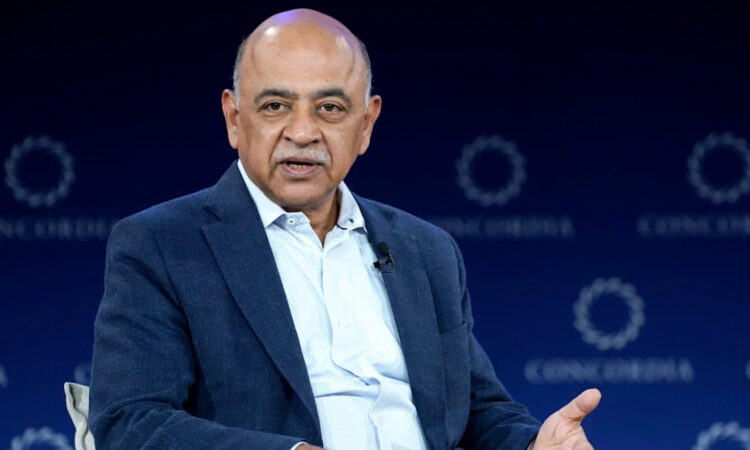
“This quarter we faltered,” CEO Arvind Krishna wrote in a letter to investors published on July 14, acknowledging the company “did not adapt and move quickly enough” as customers redirected technology budgets toward AI servers, storage and memory (3).
IBM reported preliminary second-quarter revenue of $17.2 billion, up 1% from a year earlier (3). Krishna said IBM expected some disruption from supply-chain constraints, but underestimated how dramatically customers would shift their spending. The shift hurt IBM’s infrastructure business, delayed several large deals and weighed on quarterly results.
IBM did not immediately respond to Moneywise’s request for comment.
AI spending squeezes other technology budgets
As businesses raced to secure AI servers, storage and other data center equipment, many pulled spending away from other technology projects. The biggest hit came in the company’s infrastructure division, where revenue fell 7% during the quarter, even as software revenue rose 5%.
Krishna said IBM expected some disruption from supply-chain constraints but underestimated how dramatically customers would shift their spending.
“While we anticipated some supply chain-related impact in our expectations, we did not anticipate the magnitude of the capex reprioritization,” Krishna said (3).
The CEO acknowledged IBM also bears responsibility for the disappointing quarter.
“These are not excuses, but they are realities,” he wrote.
The shift also hurt sales of IBM’s flagship z17 mainframe (4). IBM had expected the product to build on what it described as the strongest launch of any mainframe in its history. Instead, customers delayed purchases and several large deals failed to close before the end of the quarter.


