
Stock Market

IBM just had its worst day on the market in decades — and the CEO blames a spending shift he didn’t see coming

Moneywise and Yahoo Finance LLC may earn commission or revenue through links in the content below.

IBM (NYSE: IBM) shares dropped 24% on July 14 after the tech giant unexpectedly released preliminary second-quarter earnings a week ahead of schedule (1).

It marks the stock’s steepest one-day decline since Black Monday in 1987, when IBM fell 23.7% during the worst day in U.S. stock market history (2).

Must Read

  • JPMorgan still sees gold hitting $5,000/oz by Q4 — and savvy investors are protecting their wealth with a tax-advantaged Gold IRA. Learn more with a free guide from Priority Gold

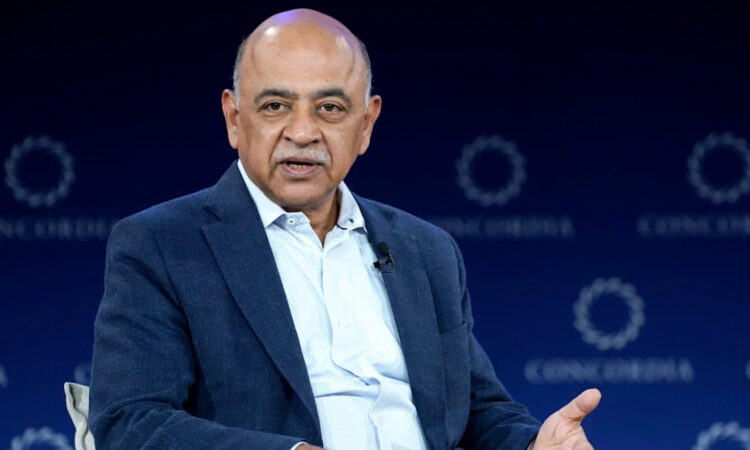
“This quarter we faltered,” CEO Arvind Krishna wrote in a letter to investors published on July 14, acknowledging the company “did not adapt and move quickly enough” as customers redirected technology budgets toward AI servers, storage and memory (3).

IBM reported preliminary second-quarter revenue of $17.2 billion, up 1% from a year earlier (3). Krishna said IBM expected some disruption from supply-chain constraints, but underestimated how dramatically customers would shift their spending. The shift hurt IBM’s infrastructure business, delayed several large deals and weighed on quarterly results.

IBM did not immediately respond to Moneywise’s request for comment.

AI spending squeezes other technology budgets

As businesses raced to secure AI servers, storage and other data center equipment, many pulled spending away from other technology projects. The biggest hit came in the company’s infrastructure division, where revenue fell 7% during the quarter, even as software revenue rose 5%.

Krishna said IBM expected some disruption from supply-chain constraints but underestimated how dramatically customers would shift their spending.

“While we anticipated some supply chain-related impact in our expectations, we did not anticipate the magnitude of the capex reprioritization,” Krishna said (3).

The CEO acknowledged IBM also bears responsibility for the disappointing quarter.

“These are not excuses, but they are realities,” he wrote.

The shift also hurt sales of IBM’s flagship z17 mainframe (4). IBM had expected the product to build on what it described as the strongest launch of any mainframe in its history. Instead, customers delayed purchases and several large deals failed to close before the end of the quarter.

The z17 is designed to handle high-volume transactions while using AI to detect fraud in real time. According to IBM, the system powers everyday financial activity, including credit card purchases, ATM withdrawals and stock trades.

Read More: Millionaires under 43 hold only 25% of their wealth in stocks. Here’s where their money is actually going

More than one headwind

IBM’s results come as businesses pour record amounts of money into AI infrastructure. Research firm IDC expects global AI infrastructure spending to reach $487 billion in 2026, up 53% from a year earlier, as companies continue investing in equipment needed to power AI systems (5).

IBM isn’t the only technology company navigating changing AI spending patterns. Microsoft, Meta, Amazon and Alphabet have collectively committed hundreds of billions of dollars toward AI infrastructure this year as they race to expand computing capacity (6).

The rapidly evolving cybersecurity concerns caused some customers to delay purchasing decisions, pushing several large deals beyond the end of the quarter.

The company said it has already moved to respond, launching Lightwell, an open-source security platform designed to help organizations identify and fix software vulnerabilities (7).

Despite the disappointing quarter, Krishna said he remains confident in IBM’s long-term strategy. The company is scheduled to release its final quarterly results and hold its earnings call on July 22, when investors will get a fuller picture of its outlook.

Rotating out of tech

For years, Big Tech has seemed almost unstoppable. The AI revolution has transformed the stock market, turning a handful of technology companies into some of the world’s most valuable businesses.

But cracks are emerging. Companies have collectively invested hundreds of billions of dollars in AI infrastructure, much of it financed with borrowed money, betting that future demand will justify today’s spending.

The problem? Investors are becoming less convinced those massive investments will translate into equally massive profits.

“We are seeing signs of fatigue, with end-user demand for AI becoming more price sensitive and the market starting to penalize companies that are ramping spending too aggressively,” said Angelo Kourkafas, senior investment strategist at Edward Jones (8).

“We view this volatility as a signal that the AI theme is likely maturing rather than breaking, which is a healthy part of how transformative investment cycles evolve,” he added.

Rather than trying to predict exactly when the enthusiasm will fade, consider building a more balanced portfolio that can weather the market ups and downs.

Get expert advice

Knowing when to trim your tech exposure is often easier said than done.

Selling too early could mean missing further gains, while holding on too long could expose your portfolio to a painful correction. And the fear of missing the next Nvidia-style winner can tempt investors to stay concentrated even when valuations start looking stretched.

That’s where objective research can be valuable because it can help remove some of that emotion from the decision-making process. Rather than chasing whichever AI stock is dominating headlines, investors can lean on professional analysis to uncover companies with stronger fundamentals and more reasonable valuations.

That’s where platforms like Moby come in.

Moby’s team of former hedge fund analysts and experts spend hundreds of hours each week sifting through financial news and data to provide you with breaking stock recommendations and market shifts, helping you reduce the guesswork behind choosing stocks and ETFs.

Moby’s success speaks for itself. The platform’s stock picks have outperformed the S&P 500 index by about 11.9% over the past four years.

Plus, their reports are easy to understand for beginners, so you can become a smarter investor in just five minutes.

Stick to a basket of stocks

Concentrated portfolios often deliver bigger gains during bull markets — but they can also produce much steeper losses when sentiment shifts.

You can easily reduce that risk by owning a broad-market index fund that tracks the S&P 500. This allows you to spread your investment across 500 of the largest U.S. companies in 11 sectors, rather than betting on a few expensive tech stocks. That broader mix can help smooth out returns when one sector falls out of favor.

Apps like Acorns allow users to invest spare change from everyday purchases automatically in index ETFs — helping them steadily build a diversified portfolio without constantly reacting to market headlines.

All you have to do is link your cards and Acorns will round up each purchase to the nearest dollar, investing the difference — your spare change — into a diversified portfolio of ETFs managed by experts at leading investment firms like Vanguard and BlackRock. Over a lifetime, a little bit of consistency can go a long way.

With Acorns, you can invest in an S&P 500 ETF built and managed by experts with as little as $5 — and, if you sign up today and set up a recurring investment, Acorns will add a $20 bonus to help you begin your investment journey.

Safer alternatives to consider

Diversifying doesn’t have to stop with stocks.

If your portfolio has become heavily tilted toward technology, adding assets that tend to behave differently can help cushion the impact of market swings.

Gold has earned that reputation over decades.

The precious metal has long been considered a safe-haven investment because its performance is often driven by inflation, interest rates and investor sentiment rather than corporate earnings. When uncertainty rises, many investors turn to precious metals to help preserve wealth.

Opt for gold

If you’re curious about adding precious metals to your broader inflation-hedging strategy, a gold IRA from Goldco lets you hold physical gold and other metals while still getting the tax advantages of an IRA.

They also offer a guaranteed buyback program, meaning they’ll repurchase your metals at the highest price according to market value if you ever decide to sell.

If you’re curious whether this is the right investment to diversify your portfolio, you can download your free gold and silver information guide today.

You can also get up to 10% in free gold or silver on qualifying purchases.

Add real estate to the mix

Real estate offers another way to diversify beyond an increasingly expensive stock market.

Unlike technology stocks, whose prices can swing dramatically based on earnings expectations and investor sentiment, property values are driven by factors such as housing demand, limited supply and local economic conditions.

And today, investing in real estate doesn’t necessarily mean taking out a mortgage, saving for a massive down payment, or dealing with tenants. Mogul now allows you to invest in shares of single-family rental homes nationwide.

Founded by former Goldman Sachs real estate investors, their team handpicks the top 1% of single-family rental homes nationwide for you. This way, you can invest in institutional-quality offerings for a fraction of the usual cost — while receiving monthly rental income, real-time appreciation and tax benefits.

Mogul’s experts carefully vet each property, requiring a minimum 12% return even in downside scenarios. Across the board, the platform features an average yearly return of 18.8%. Their cash-on-cash yields, meanwhile, average between 10% to 12% annually. With investments typically ranging between $15,000 and $40,000 per property, offerings often sell out in under three hours.

Getting started is a quick and easy process. You can sign up for an account and then browse available properties. Once you verify your information with their team, you can invest like a mogul in just a few clicks.

– With files from Victoria Vesovski.

You May Also Like

Join 250,000+ readers and get Moneywise’s best stories and exclusive interviews first — clear insights curated and delivered weekly. Subscribe now.

Article Sources

We rely only on vetted sources and credible third-party reporting. For details, see our ethics and guidelines.

CNN (1); Federal Reserve History (2); IBM News Room (3); IBM (4), (7); IDC (5); Yahoo Finance (6); CNBC (8)

This article provides information only and should not be construed as advice. It is provided without warranty of any kind.


Source link

Leave a Response