In most cases, the excuse is written in the small print: not enough tickets sold to meet the threshold. A lump sum, often a proportion of the total revenue raised and typically well below the value of the property on offer, is the usual consolation prize.
However, the platforms hosting the competitions take a share of the proceeds whether there is a home winner or not. This means there is little incentive to pull up the drawbridge.
As the average house price approaches eight times the average income, it raises the question of whether raffling platforms and the individuals who dangle their homes in front of disillusioned Britons are selling a homeownership dream that simply doesn’t exist.
A rise in independent prize draws
Like so many trends of the past few years, the property raffle boom began during Covid-19.
With little else to do but sit at home, stories of ordinary people winning multimillion-pound mansions for the price of a pint captured an otherwise bored public.
“It was a distraction from being locked up in the house all day,” says Jason Dale, the founder of Loquax, which has been tracking lotteries and raffles since 1998. “A couple of houses went up, and they sold really well. So there was a bit of a snowball effect.”
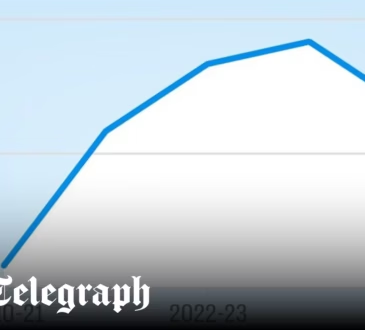
Between 2019 and 2021, the number of “win a house” raffles jumped by nearly 900pc, from 13 to 127.
Although corporate property raffles had been running in the UK since at least 2017, the pandemic opened the door to a flurry of less-polished independent prize draws.
Where the likes of house draw company Omaze offered properties usually reserved for film stars and Premier League footballers, ordinary people started using the raffle format as an alternative way to sell their relatively modest homes, bypassing estate agents and seizing the possibility of generating more than the property was worth.
In most instances, a minimum-entry target is set with the caveat that should entries fall short, the “winner” will receive 50pc of total ticket proceeds instead of the property. Platforms such as Raffall take a 10pc cut for hosting.
But as more and more raffles flooded the market, the number of competitions successfully hitting their target dropped off a cliff.
Despite Raffall prize draws resulting in 17 home winners between 2020 and 2021, the next four years yielded just one. They won the keys to 52-year-old Imelda Collins’s cottage in Ireland, which was successfully raffled off in 2025 after the New York Times picked up her story. This is despite Raffall having hosted some 55 competitions during that time.