In our How I Manage My Money series, we aim to find out how people are spending, saving and investing money to meet their costs and achieve their goals.
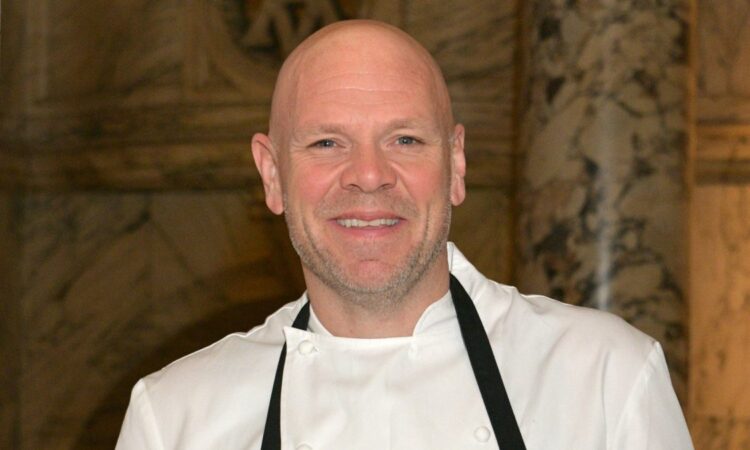
This week, in our celebrity edition, we speak to chef and restaurateur Tom Kerridge, who talks about growing up in a single-parent household, earning £7,500 a year when he first worked in a restaurant and losing £1.5m on a business during the pandemic.
What was money like in your household when you were growing up?
Zero, there was none there. I grew up in a single-parent family on an estate in Gloucester. It was my mum, myself and my brother. My mum had two jobs – she worked as a secretary for the council, and then washed up in the evenings.
Shorts


But where I lived and everyone else that I lived around, were all in the same sort of position. So, it wasn’t a feeling of being the odd one out.
There were so many hand-me-downs and swapsies and it wasn’t weird. There was no social media; there were only four or five channels on the telly. As a young kid growing up, you didn’t really have anything to measure it against.
What was your first job?
I had a part-time job when I was 15 working in the local co-op at the weekends.
Between the ages of 16 and 18, I ended up weirdly doing some acting jobs through being in a youth theatre. I ended up getting paid about £500 for two weeks’ work filming a Christmas special, Miss Marple, for the BBC.
With that money, I bought my first car, an MG Montego, and I had it for two weeks before I wrote it off in a head-on collision.
Then I walked into a job in a kitchen as an 18-year-old, earning £7,500 a year.
What has been the most lucrative part of your career?
It’s hard to explain. There may be one job that’s paid a lot of money, like externally media wise, I could do an advert or an appearance or corporate event stuff.
But the reality is they wouldn’t exist if it wasn’t for the energy that you build with teams of people around you.
For me, the most lucrative part of it all is the foundation of building a business.
Do you feel financially secure now?
I am financially stable. I have five restaurants, a television production company, a consultancy company and a media company.
If it all went wrong and we had to sell everything – then we’d be all right. But none of it is paid off [in full] and I have the responsibility of over 200 people who are work colleagues and friends, so there is a huge pressure in making sure that business works and it operates.
The responsibility of it weighs heavy. But I’m much more secure and in a way better place than my mum was when we were growing up. I know I’m in a much more comfortable position than most.
How do you invest your money?
I don’t invest in any stocks or shares. It is all in property.
Both myself and my wife, Beth, have always thought it has been the best investment process.
It’s the one thing that probably grows faster than the rate of inflation. And so, we’ve always invested in that and tried to get mortgages paid.
I have no pension. I have a small savings account and a portfolio with two personal properties and five business properties at The Hand and Flowers [a fine dining restaurant run by Tom].
Tell me about your first property investment
I think I was 27 when we bought our first flat. It was a small flat in Crouch End, and it cost us £80,000.
It was a studio flat, but we built a glass partition wall through the middle and made it one bedroom. We bought it and redid it ourselves.
We’ve always bought relatively battered houses that need work doing to them and then did the work ourselves.
We managed to sell that flat for £150,000 a few years later.
What’s the best purchase or investment you’ve made?
I’m married to an artist, and my dad was an art lecturer. I’ve always been keen on art.
We own some expensive pieces – not like Banksy-style expensive, but we like to buy art that we like to look at.
My son and I are both big fans of motorsport. We both love cars. I half-own a race car – not an expensive one – with another chef that we do track days and racing with.
What’s your biggest money weakness?
White trainers – that’s basically all I wear. I have about 30 pairs of them.
It’s one of those purchases that when they turn up, we are just like, oh, another pair that looks the same as the other ones.
What’s the biggest amount you’ve lost on a business?
Loads, my God, loads. We lost £1.5m on a business. It was an events company and we sold it, but we took a massive hit.
It was post-Covid, so there was nothing we could do. The business was working quite well until then. But without that business, I wouldn’t have made any connections with M&S, who sell our pies.
What do you think retirement will look like for you?
I have no idea what retirement would be like. I can’t imagine. I had a small operation about two weeks ago and I was supposed to be resting for a week or so, but by day two, I was so bored. I just can’t believe people actually look forward to sitting down and watching a box set.
What money advice would you give a young chef?
Back yourself; find investors who are investing in you, not necessarily a business model or a plan.
And if you’re super young, spend all your money on eating out, eating in great places, go and see as many different things as possible -spend it all on enjoying being part of that industry.
Spend it, spend it, spend it. Spend it all on learning as much as possible, then build that investment on that knowledge.