
AI traffic reshapes subsea cable networks, drives hyperscaler investments, ETDatacenters

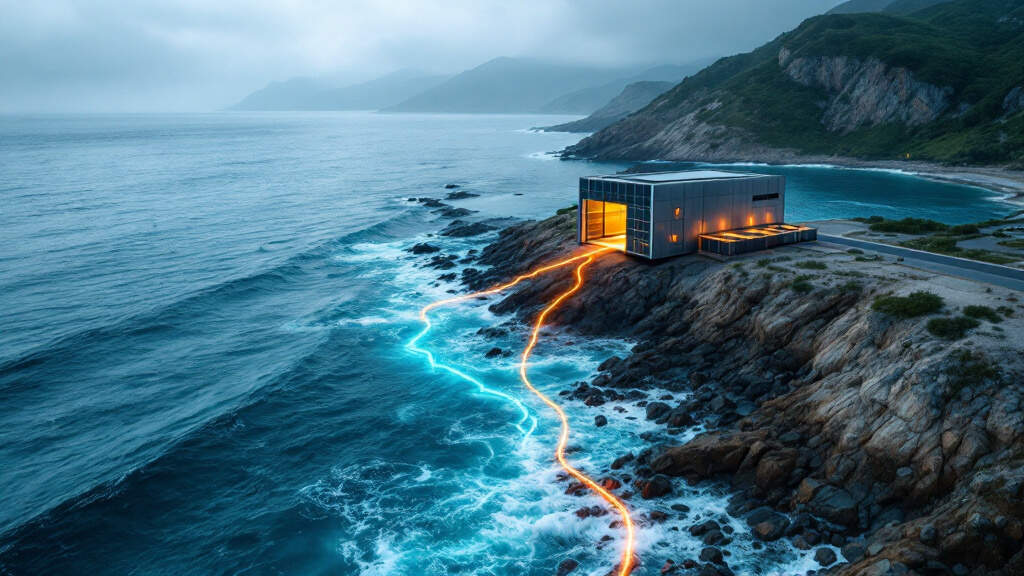
The digital infrastructure sector is increasingly citing AI demand as a primary driver for new subsea cable investments, moving beyond traditional internet growth narratives. This shift is evident in recently launched projects designed to accommodate the data-intensive AI workloads expected to dominate the next decade, accelerating existing demand for international connectivity driven by cloud computing, streaming, and enterprise digitalisation.
Hyperscalers drive new capacity
Hyperscalers are at the forefront of this trend. On 21 September, Meta announced Petal, a 7,000km transatlantic cable connecting the US and France, slated for service in 2029. This project is positioned as the world’s first petabit-capacity subsea cable, delivering 1 petabit per second (Pbps), and the first to deploy multi-core fibre technology at scale. Meta previously linked its Project Waterworth investment to the AI rush, emphasising the need for infrastructure development to prevent future AI growth from straining existing cables. This reflects a broader trend where hyperscalers are becoming direct owners and developers of global infrastructure.Similarly, Exa Infrastructure’s 6,552km Exa Meridian cable, linking New Jersey, USA, and the UK with up to 500Tbps capacity, is justified by demand from hyperscalers and cloud providers seeking to support AI-powered bandwidth growth. Australian developer SUBCO also announced three new Indo-Pacific cable systems spanning over 24,000km, explicitly targeting the surge in AI-driven bandwidth demand across the region. Bevan Slattery, founder and co-CEO of SUBCO, commented, “AI factories are dead without massive subsea connectivity to carry tokens from factory to customer.”
Convergence of infrastructure
Another key development is the increasing intertwining of cable infrastructure and data centre infrastructure. Telxius opened a new carrier-neutral, AI-ready landing gateway and edge data centre in Cancun, designed as the landing point for the upcoming Tikal cable while also housing computing resources. Mónica Martínez, CMO at Telxius, described this as a convergence of subsea connectivity, terrestrial networks, and edge infrastructure, enabling lower latency, greater resilience, and faster access to cloud, content, and AI-driven services.Digital Realty also plans a new cable landing station at its LAX12 facility in Los Angeles, which will interconnect with terrestrial networks and offer full landing and powering services for subsea cable systems. This initiative aims to strengthen connectivity between Asia-Pacific and North America, creating a scalable environment for international traffic in the AI era. These projects underscore that as AI workloads become distributed, optimising international connectivity through convergence is increasingly valuable.While AI is a significant factor, not all new subsea cable investment is purely AI-driven. Projects like EllaLink’s deployment of submarine branching units for future connections into Brazil, part of the ‘Mais Conectado’ project, focus on regional development and improving connectivity for underserved communities. Similarly, upgrades to the Africa Coast to Europe (ACE) consortium cable, now exceeding 30Tbps, aim to serve broad demand growth and enhance digital inclusion across Africa, even as AI contributes to overall traffic growth. Ultimately, AI is accelerating demand and becoming an infrastructure planning standard, influencing capacity deployment and positioning the subsea sector as a pivotal backbone for future AI infrastructure.


